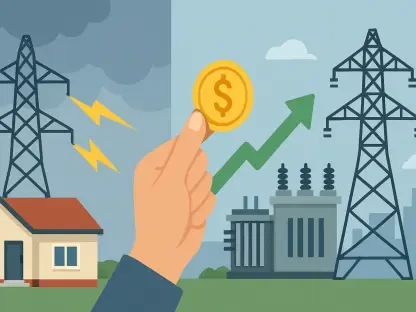

The International Monetary Fund warns that income per capita in Yemen has plummeted to critical levels, leaving over half the population in need of humanitarian aid. This economic freefall has been accelerated by a series of shocks that have left the nation’s infrastructure in tatters and its people in a state of perpetual uncertainty. While the conflict has been a long-standing issue, the recent convergence of global energy shifts and localized military movements has created a scenario where even the most basic survival is becoming a luxury. The stability of the riyal has become a relic of the past, as the currency loses its purchasing power against the backdrop of a relentless inflationary cycle. For the average citizen, the cost of living is no longer a matter of budgeting but a daily battle against hunger. This crisis is being driven by a complex web of geopolitical tensions that extend beyond borders, turning a localized struggle into a central point of regional instability.
The Drivers of Rising Energy Costs
Regional Volatility: The Price of Escalation
The decision by the Houthi-run Yemen Petroleum Company to raise the price of petrol from 4,750 to 5,250 Yemeni riyals represents a significant shift in the economic landscape. For nearly four years, fuel prices in the capital city of Sanaa had maintained a level of relative stability that provided a thin layer of predictability for residents. However, the sudden ten percent increase has shattered this fragile equilibrium, reflecting mounting pressures on the rebel administration. Officials within the petroleum company attributed this adjustment to the rising costs of global energy markets, yet the local reality is much more complex. The price hike is not merely a fiscal correction but a direct consequence of the escalating military activities along the Red Sea coast. As the conflict intensifies, the cost of securing and transporting fuel through contested zones has risen sharply, forcing the administration to pass these expenses to a population that has no remaining financial cushion.
Global Tensions: Impacts of Military Conflict
Beyond the immediate borders of Yemen, the energy crisis is deeply tethered to the volatile geopolitics of the Middle East, particularly the ongoing tensions involving the United States, Israel, and Iran. These regional frictions have created a ripple effect that impacts local market prices and disrupts established supply chains that were already struggling to function. The Houthi capture of strategic coastal areas and renewed strikes on neighboring territories have further rattled international investors and local merchants, leading to a climate of extreme economic uncertainty. As global oil prices fluctuate in response to these military developments, Yemen remains uniquely vulnerable due to its heavy reliance on imports and the absence of a unified national financial policy. The storm of regional instability and domestic combat has ensured that the country’s economy is now a primary theater of conflict. Until regional tensions de-escalate, fuel costs will remain a volatile and unpredictable burden.
The Cascading Effects on Daily Life
Economic Strain: Food Insecurity and Inflation
The increase in fuel costs serves as a hunger multiplier, as petroleum products are essential intermediate inputs for almost every sector of the Yemeni economy. When the price of petrol rises, the cost of transporting food from ports to markets increases proportionally, leading to an immediate spike in the retail price of staples. For a father working as a taxi driver, this marginal shift translates into a daily crisis where he must choose between paying rent or providing meals for his children. With over eighteen million Yemenis already facing acute food insecurity, these price hikes are pushing entire communities toward the brink of starvation. The inflationary wave triggered by the energy crisis is not limited to luxury items but affects bread, vegetables, and clean water, which are becoming increasingly out of reach for the working class. This erosion of purchasing power is forcing families to adopt desperate measures, such as reducing their daily food intake to just one or two small meals.
Service Decay: Agriculture and Utility Resilience
The agricultural sector, which provides a livelihood for a significant portion of the rural population, has been hard-hit by the rising cost of diesel used for crop irrigation. Many farmers find themselves unable to power the generators necessary to draw water from deep wells, leading to crop failures and a reduction in the domestic food supply. This decline in local production further increases the country’s dependence on expensive imports, creating a vicious cycle of poverty and scarcity. Simultaneously, public utilities and small businesses are facing an existential threat. Water and electricity services, often provided by private diesel-powered grids in the absence of a functioning state infrastructure, have become prohibitively expensive for most households. Small shopkeepers, operating on thin profit margins, are forced to raise prices to cover their own rising logistics costs, which alienates their customer base and leads to closures. These systemic failures are hollowing out the local economy.
Logistical Challenges and Supply Chain Disruptions
Fragmentation: The Rising Cost of Transport
The physical and political fragmentation of Yemen has turned the movement of goods into a risky and prohibitively expensive endeavor. Truckers tasked with delivering essential supplies must navigate a landscape riddled with shifting front lines, checkpoints, and destroyed infrastructure. To avoid active combat zones and the dangers of seizure or crossfire, drivers are frequently forced to take circuitous and much longer routes. A delivery that once took three days to reach central markets now frequently takes over a week, significantly increasing overhead costs for merchants. These delays are not merely logistical inconveniences; they represent a direct increase in the price of perishables and essential medicine. The higher fuel consumption required for these journeys, combined with the rising price of petrol, creates a compounding effect on the final retail price of goods. Consequently, transport companies are becoming unwilling to service areas where risks to drivers and equipment outweigh profits.
Scarcity: The Burden on Urban Trade Routes
This logistical paralysis has resulted in a marked decline in the volume of trucks reaching major urban centers like Sanaa, creating artificial scarcity that further drives up the cost of living. Merchants and importers are increasingly hesitant to risk their valuable inventory in high-conflict areas, leading to a situation where staples like flour, sugar, and baby milk are frequently out of stock or sold at exorbitant prices. This breakdown in the supply chain does not only impact the commercial market but also poses a challenge to international humanitarian efforts. Relief organizations must contend with rising fuel costs and dangerous routes when attempting to deliver aid to those in desperate need. The increased expense of logistics means that humanitarian budgets are stretched thinner, resulting in fewer people receiving the assistance required to stave off famine. As internal borders continue to harden, the ability to maintain a consistent flow of goods is a primary determinant of survival for millions of people.
The Macroeconomic Toll and Humanitarian Outlook
Systematic Collapse: Economic Vulnerability
International financial institutions and humanitarian agencies have issued increasingly dire warnings regarding the systematic collapse of Yemen’s macroeconomic framework. The International Monetary Fund and the UN Refugee Agency have highlighted that persistent instability has led to a drastic reduction in income per capita, leaving more than half the population in a state of urgent need. The destruction of public infrastructure, combined with frequent disease outbreaks and mass displacement, has created a tragedy that continues to deepen with every economic shock. The fuel price hike acts as a catalyst for this broader decline, stripping away the remaining safety nets for the nation’s most vulnerable residents. Without a unified approach to currency stabilization and a centralized effort to manage energy imports, the country faces the prospect of total financial insolvency. This macroeconomic vulnerability is a lived reality for families who find their life savings wiped out by hyperinflation and the lack of jobs.
Strategic Recovery: Solutions for Future Resilience
The synthesis of these economic pressures established a clear narrative of a nation that reached its breaking point under the weight of localized war and global market volatility. To address this crisis, it was concluded that international stakeholders had to prioritize the stabilization of the fuel supply and the implementation of a unified monetary policy. Actionable next steps for the coming years included the establishment of a transparent fuel subsidy program and the rehabilitation of key ports to lower the costs of essential imports. It was also determined that humanitarian aid must transition from emergency food delivery to supporting sustainable local agriculture and energy-efficient infrastructure. By investing in solar-powered irrigation and localized micro-grids, the dependency on expensive diesel could be mitigated over time. Diplomatic channels were urged to decouple the internal economy from broader regional conflicts. Only through structural reforms could the cycle of hunger be broken.