
The landscape of American healthcare is currently undergoing one of its most significant structural transformations as state agencies race to integrate mandatory work requirements into their Medicaid programs following the passage of federal HR 1 legislation. With an estimated 18.5 million able-bodied adults aged 19 to 64 now required to engage in at least 80 hours of qualifying activities per month, the administrative burden on state governments has reached an unprecedented level of complexity. These activities, which include traditional employment, vocational training, and community service, represent a fundamental shift in the Medicaid value proposition, moving it from a purely health-based benefit to a more holistic social service model. As the December 31, 2026, compliance deadline looms, state administrators are facing the dual challenge of overhauling legacy technical systems while simultaneously ensuring that eligible residents do not lose coverage due to bureaucratic hurdles. The urgency of this transition is compounded by the need to minimize “administrative churn,” a process where individuals who are technically eligible for benefits are dropped from the rolls because they cannot navigate the new reporting requirements. Success in this environment requires more than just policy changes; it demands a sophisticated reimagining of how state governments interact with their most vulnerable citizens through digital-first strategies and human-centered design principles.
Integrating Mandates into Existing Digital Infrastructure
One of the most effective strategies for states to achieve compliance without collapsing under administrative weight is the seamless integration of work requirements into existing Medicaid application and renewal workflows. Rather than attempting to build standalone reporting portals or separate questionnaires that exist outside the primary eligibility system, state leaders are finding success by weaving these new mandates directly into the current digital architecture. This approach prevents the fragmentation of data and ensures that state eligibility workers do not have to manually cross-reference multiple forms or disparate databases to confirm a resident’s status. By maintaining a single source of truth for each beneficiary, states can significantly reduce the risk of data entry errors and the resulting application backlogs that often plague large-scale policy shifts. This integration also allows for a more cohesive communication strategy, as residents receive updates and notifications through the same channels they have already established for their health benefits, creating a sense of continuity and trust in the system.
Building on the foundation of existing legacy systems through iterative updates is not only an administrative preference but a fiscal necessity in a time of tightening state budgets. The cost associated with developing a parallel, independent tracking system for work requirements is often prohibitively high, especially when considering the long-term maintenance and cybersecurity needs of such a platform. Furthermore, state technical personnel are already stretched thin by the demands of federal compliance, making the prospect of managing two distinct systems nearly impossible for many agencies. By leveraging the infrastructure already in place, states can achieve significant cost efficiencies and deploy updates much faster than if they were starting from scratch. This method also allows for more agile responses to shifting federal guidance, as developers can tweak existing workflows rather than having to redesign entire software modules. Ultimately, the goal is to create a backend environment that supports the policy change without becoming a source of friction for the workers responsible for its day-to-day execution.
Optimizing the Resident Experience through Strategic Design
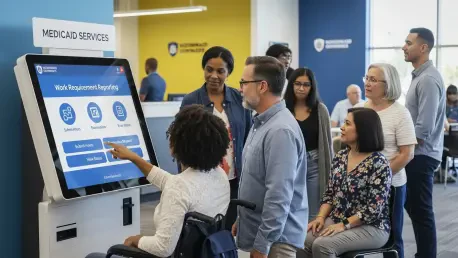
The success of HR 1 implementation is largely dependent on the “frontend” experience, or the interface through which residents report their activities and seek exemptions. Modern state systems are increasingly utilizing “conditional skip logic,” a sophisticated technical functionality that allows digital applications to adapt in real-time based on the user’s specific answers. This means that if a resident indicates they are a full-time student or a primary caregiver, the system automatically bypasses the dozens of questions related to work reporting that do not apply to their situation. Such a tailored approach is essential for reducing “form fatigue,” a common issue where applicants become overwhelmed by the sheer volume of questions and eventually abandon the process altogether. By making the reporting journey as intuitive and efficient as possible, states can ensure higher completion rates and more accurate data collection, which in turn leads to a more stable and predictable Medicaid population.
A critical component of this design philosophy is the strategic prioritization of exemption-related questions within the application flow. By presenting questions regarding pregnancy, chronic medical conditions, or disability status at the very beginning of the process, states can identify exempt individuals before they ever encounter the more rigorous work reporting sections. This “exemption-first” logic serves as a vital filter, protecting vulnerable populations from unnecessary administrative burdens while simultaneously streamlining the workload for state eligibility staff. When a resident is correctly identified as exempt early in the process, it reduces the amount of irrelevant data that must be reviewed, allowing workers to focus their attention on the cases that truly require manual intervention. This design choice reflects a broader shift toward empathy-driven government services, where the system is built to accommodate the lived realities of the people it serves rather than forcing them to conform to rigid, outdated bureaucratic structures.
Balancing Self-Attestation with Data-Driven Verification
To maintain enrollment stability during this massive transition, many states are turning to “self-attestation” as a primary intake method for work and exemption data. This policy allows residents to report their work hours or specific life circumstances without the immediate requirement of uploading physical documentation, such as pay stubs or medical notes. Self-attestation is a powerful tool for preventing procedural denials, which often occur when residents lack the immediate technical means to scan documents or the financial resources to mail physical forms. By accepting the resident’s word at the point of application, states can ensure that healthcare coverage remains continuous while the necessary backend checks are performed. This approach acknowledges that the primary goal of Medicaid is to provide health security, and that administrative requirements should not serve as an accidental barrier to that fundamental objective.
While self-attestation provides the flexibility needed at the point of entry, it must be supported by robust backend data verification to ensure program integrity and federal compliance. States are increasingly integrating their Medicaid systems with a wide array of existing government databases, including those managed by the Social Security Administration, state departments of labor, and vocational training centers. This “data-driven” verification model shifts the burden of proof away from the individual resident and onto the state’s technical infrastructure. For example, if a resident reports a certain number of work hours, the system can automatically cross-reference wage reports from the Department of Labor to verify the claim without requiring any further action from the beneficiary. This automated process preserves state resources by reducing the need for manual audits and ensures that the Medicaid program remains a stable pillar of the social safety net, even as its requirements become more complex.
Managing Operational Constraints and Federal Deadlines
The current environment for state administrators is defined by a high-pressure race against the December 31, 2026, deadline, often while working with federal guidance that continues to evolve. This situation has necessitated a move away from traditional, siloed policy development toward a more collaborative model that leverages nonprofit toolkits and peer-state best practices. Many agencies are finding that they do not have the time to reinvent the wheel, leading to a surge in the adoption of shared design patterns and standardized reporting modules. This collaborative spirit has helped to bridge the information gaps that often exist between federal mandates and state-level execution, allowing for a more unified and effective national response to the HR 1 requirements. By looking to successful models in other jurisdictions, states can avoid common pitfalls and focus their limited resources on the specific technical challenges unique to their own populations.
There is now a broad consensus that a digital-first approach is the only viable method for managing the millions of residents impacted by these new mandates. Paper-heavy processes are increasingly being recognized as a primary driver of administrative failure, as they are slow, prone to loss, and difficult to track at scale. Consequently, states are investing heavily in mobile-friendly applications and automated notification systems that keep residents informed of their status in real-time. This modernization effort is no longer viewed as an elective technology upgrade; it is a fundamental requirement for the functional operation of the American social safety net under the new legal framework. As states phase out manual processes in favor of automated solutions, they are building a more resilient and responsive government interface that is capable of handling future policy shifts with far greater agility.
Strengthening Social Safety Nets through Modernization
The successful implementation of Medicaid work requirements required a fundamental shift in how state governments approached the intersection of healthcare and social services. State leaders discovered that the transition was not merely a matter of adding new checkboxes to a digital form, but rather a complex redesign of the entire beneficiary journey. By prioritizing integration over isolation, agencies managed to maintain stable enrollment numbers while fulfilling the rigorous mandates of the HR 1 legislation. The focus on human-centered design played a pivotal role in this process, as it allowed states to protect the most vulnerable populations from unnecessary administrative hurdles. Through the use of conditional skip logic and exemption-first flows, the reporting process became a manageable task rather than an insurmountable barrier, ensuring that the health and stability of the population remained the top priority throughout the transition.
The final roadmap for state success involved several actionable phases that were completed before the end of the 2026 compliance period. Administrators initiated comprehensive audits of their digital application flows to identify the most logical points for inserting work-related questions without disrupting the user experience. They also established critical API connections with labor and disability databases to enable the automated, backend verification that replaced manual documentation requirements. By adopting broad self-attestation rules during the initial rollout, states effectively prevented a spike in uninsured rates and provided a buffer for residents to adjust to the new reporting cycle. These steps collectively transformed Medicaid into a smarter, more data-driven program that used modern technology to reduce friction and improve the delivery of services. The lessons learned during this period provided a blueprint for future government modernizations, demonstrating that with the right mix of design and data, federal mandates could be met without sacrificing the well-being of the citizens they were meant to serve.