
A political savant and leader in policy and legislation, Donald Gainsborough is at the helm of Government Curated, where he navigates the complex and often contentious intersection of law and public health. As the Supreme Court considers a series of cases that pit First Amendment rights against the state’s traditional authority to regulate medical practice, his expertise offers a critical lens through which to understand the future of American healthcare. We’ll explore the mounting legal challenges to public health authority, from vaccine mandates to the disciplining of doctors for spreading misinformation, and discuss how a single court decision could set off a domino effect, reshaping the balance of power between physicians, patients, and the state for decades to come.
Public health experts describe recent legal challenges as a “judicial assault on science,” while others argue courts are reflecting cultural frustration with pandemic policies. How do you assess this fundamental conflict, and what specific precedents, like Jacobson v. Massachusetts, are most at risk of being overturned?
You’ve put your finger on the central tension we’re facing. On one side, you have legal scholars like Lawrence Gostin who see a calculated, political weaponization of the pandemic, arguing that the courts are being asked to dismantle over a century of established public health precedent. They see this as a radical move that will severely hamper our ability to protect the public from major health threats. On the other hand, you have advocates like Leslie Manookian, who believe the courts are simply catching up to the culture. They feel that many Americans experienced Covid-era policies as an overreach that violated personal freedoms, and that the judiciary is now reflecting that deep-seated frustration. The 1905 Jacobson v. Massachusetts decision, which has long upheld the state’s power to mandate immunizations, is squarely in the crosshairs. Groups are actively arguing that lower court interpretations of Jacobson have distorted its meaning, opening the door to what they call “limitless” state authority. This isn’t just a legal debate; it’s a fundamental clash of worldviews playing out in the highest court.
Let’s consider two distinct legal challenges: one involving doctors disciplined for public op-eds, and another concerning a doctor sanctioned for advice given to a patient. What is the fundamental legal difference here, and how could a ruling on public speech impact a state’s ability to regulate clinical care?
This is an absolutely critical distinction, and it gets to the heart of what’s at stake. The first scenario, which reflects the case out of Washington state, deals with what doctors say in the public square—in op-eds or public statements. The legal question there is whether a medical board can regulate a doctor’s opinions expressed outside the context of direct patient care. As one expert, Scott Burris, noted, this reflects an older view that physicians must be “morally upstanding” in all facets of life, a position that is much harder to maintain under the current Supreme Court’s broad interpretation of free speech. A ruling in favor of the doctors there might not fundamentally alter First Amendment doctrine.
The second scenario, involving Dr. Pierre Kory in California, is entirely different. That case involves advice given directly to patients within a clinical setting. When a state disciplines a doctor for promoting ivermectin to a patient as a Covid treatment, it’s not policing public opinion; it’s regulating the practice of medicine. As Burris powerfully put it, allowing that kind of misinformation is equivalent to letting a doctor treat bubonic plague with a glass of water. A ruling against the state in that case would be a monumental blow to the authority of regulatory agencies to protect patients from harm, potentially eroding the very foundation of standard-of-care enforcement.
With cases challenging conversion therapy bans and vaccine mandates before the courts, how might a Supreme Court ruling on one issue create a ripple effect, potentially shaping the legal landscape for state medical boards’ authority over a wide range of standard-of-care practices? Please explain the potential domino effect.
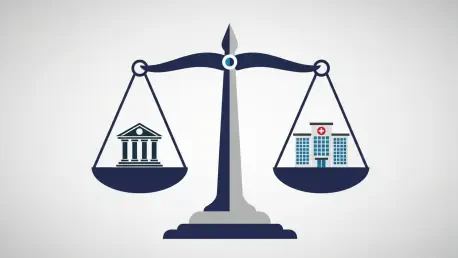
The domino effect is a very real and concerning possibility. These cases, while seemingly about different topics—conversion therapy, doctor’s speech, vaccine mandates—are all connected by a common thread: the tension between First Amendment protections and the states’ historical police powers to regulate health and safety. The justices’ forthcoming opinion on conversion therapy, especially if it strikes down the state’s ban, could send a powerful signal. It could establish a precedent that a professional’s speech, even within a therapeutic context, is shielded from state regulation if it’s considered outside the mainstream.
This logic could then be applied to the other cases. If a therapist can’t be stopped from practicing conversion therapy, could a doctor be stopped from advising against vaccination based on unproven theories? A ruling that expands speech rights for doctors in one area could be used as a lever to pry open others. This creates an indirect route to erode precedent on everything from vaccine mandates to standard-of-care enforcement for unproven cancer treatments. It’s how the court could use the First Amendment, as Gostin said, in the same way it has used the Second Amendment—to forge a radical new landscape that dismantles long-held principles of state authority in public health.
Allies of RFK Jr. have disparaged medical societies and defended doctors disciplined by state boards for promoting unproven treatments like ivermectin. What are the practical, day-to-day consequences for a state medical board if its authority to discipline physicians for spreading misinformation is significantly weakened by the courts?
The day-to-day consequences would be chaotic and deeply troubling for public health. A state medical board’s primary function is to be the gatekeeper of quality and safety in medicine. That license to practice medicine, as James Hodge points out, “comes with obligations.” If the courts strip away their authority to enforce those obligations, the very concept of a standard of care begins to crumble. Imagine a world where a board is powerless to act against a physician who is telling patients that proven vaccines are harmful or that a drug like ivermectin is a cure for a viral pandemic.
Practically, this means boards would be flooded with complaints they can’t address. Patients would be left vulnerable, unable to trust whether their doctor is providing advice based on scientific evidence or personal ideology. It would create a regulatory vacuum where misinformation could flourish within the clinical setting, directly harming patients. The public’s trust in the medical profession, which is already strained, would erode even further. Essentially, you’d be hamstringing the one body designed to protect patients from malpractice and dangerous advice, all under the banner of free speech.
What is your forecast for the balance of power between First Amendment protections for medical professionals and the states’ historical authority to regulate the practice of medicine over the next five years?
My forecast is that we are heading into a period of significant disruption where the balance will decisively shift toward a broader interpretation of First Amendment protections, at the expense of state regulatory authority. The Supreme Court has shown a consistent trend of embracing expansive free-speech rights, and its recent decision to send the Amish school vaccine case back to a lower court is a bright signal of its intentions. This, combined with the skepticism several justices have shown toward state rules in cases like Chiles, suggests a willingness to use the First Amendment to redraw the boundaries of state power.
Over the next five years, I anticipate a landmark ruling, likely stemming from one of these doctor speech cases, that will weaken the ability of state medical boards to police misinformation, particularly for speech that occurs in the public sphere. While they may preserve some authority over direct clinical advice, the lines will become increasingly blurred. This will empower a fringe element within the medical community and force a painful re-evaluation of how we ensure patient safety in an era where professional speech is given unprecedented constitutional protection. The states’ historical police powers, once a bedrock of public health law, will be significantly constrained.