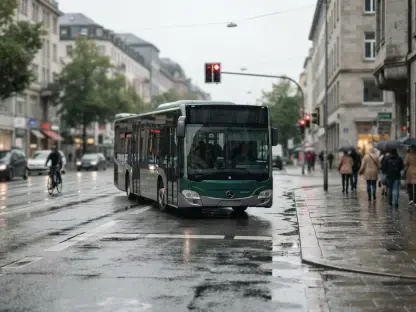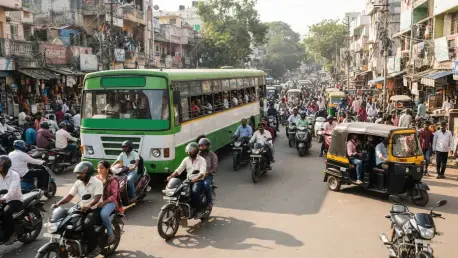

The Karnataka government’s challenge lies in balancing the economic survival of its transportation departments with the daily financial stability of the common citizen. This delicate equilibrium has been thrown into the spotlight following the announcement by Transport Minister Byrathi Suresh regarding a comprehensive fare revision for the state’s four major transport corporations. In the bustling metropolis of Bengaluru, the Bangalore Metropolitan Transport Corporation serves as the primary mode of movement for millions of residents who navigate the city’s complex geography every day. The proposed adjustments are significant, moving minimum fares from ₹6 to ₹10 and increasing the maximum ticket price for standard buses to ₹45. Furthermore, premium services like the Vayu Vajra airport lines are expected to see costs climb as high as ₹425 per trip. This decision has sparked intense debate over whether public transit should remain an affordable right or transition into a revenue-focused utility. The government’s stance suggests that without these increases, the quality of the fleet and the welfare of the transport employees could be severely compromised.
The Cumulative Burden: Impact on Daily Life
One of the most pressing concerns regarding the proposed hike is the cumulative financial weight it places on the shoulders of the average commuter. While an increase of four rupees on a base fare may appear inconsequential to a casual traveler, it represents a substantial monthly expenditure for those who rely on the bus for their daily livelihood. For a worker or student commuting twenty-five days a month, the daily round trip results in a noticeable reduction in disposable income. In a city where many individuals must take two or three different buses to reach their place of employment, these costs are not merely additive but multiplicative. Critics of the plan argue that the illusion of the minor increase masks a deeper reality where low-wage earners are forced to sacrifice other essentials like nutrition or healthcare to cover the rising cost of basic mobility. This economic pressure is particularly acute in Bengaluru, where the cost of living continues to climb at an aggressive pace, making every additional expense a potential point of failure for a household budget.
For a vast segment of the population, including housekeepers, security personnel, and small-scale entrepreneurs, the public bus system is the only viable method for professional and personal survival. These individuals do not view the bus as a choice but as a fundamental necessity that connects them to the economic heartbeat of the city. When fares rise without a corresponding increase in wages, the workforce’s ability to participate in the broader economy is hampered. The backlash from the public reflects a growing fear that the city’s most vulnerable residents are effectively being priced out of their own neighborhoods. Maintaining affordable transit is therefore seen as a safeguard for social equity, ensuring that geographic distance does not become a barrier to employment or education. Without this stability, the risk of economic stagnation among the lower-income brackets becomes a tangible threat to the region’s overall prosperity, potentially widening the gap between different socioeconomic classes as the city moves toward the 2026 to 2028 development cycle.
Urban Planning: Transit as a Community Service
There is a growing consensus among urban planners and social advocates that public transportation should be treated as a vital community service rather than a profit-driven business venture. Low-cost transit is an investment in the local economy, as it allows people to access healthcare, education, and employment more easily. By keeping fares affordable, the state effectively subsidizes economic activity, ensuring that a lack of transportation does not become a barrier to upward mobility for its citizens. Experts suggest that the benefits of a robust, affordable bus network far outweigh the immediate revenue generated by ticket sales. These benefits include reduced road wear, lower healthcare costs due to decreased pollution, and a more vibrant local commerce scene as people travel more freely throughout the city. Shifting the perspective from a balance sheet to a social welfare model requires the government to look at alternative funding mechanisms, such as corporate taxes or environmental levies, rather than placing the entire financial burden on the traveling public.
Beyond the social aspect, affordable bus fares play a critical role in managing Bengaluru’s notorious traffic congestion. If public transit becomes too expensive, commuters are more likely to switch to private two-wheelers or ride-hailing services, which further clogs the arterial roads. Such a shift would lead to more vehicles on the road, higher pollution levels, and increased strain on the city’s infrastructure. Therefore, maintaining low fares is essential for responsible and sustainable urban planning. A well-utilized bus system is the most efficient way to move large numbers of people across a sprawling landscape, and any policy that discourages bus ridership effectively sabotages the city’s climate goals. The government must recognize that every person who chooses a bus over a car is providing a service to the city, and the pricing structure should reflect that value. Promoting bus usage through competitive pricing is a long-term strategy that pays dividends in urban health and logistical efficiency, which is vital for the city’s continued growth.
Economic Pressures: Diesel and the Shakti Scheme
The Karnataka government has defended the proposed hike by citing external economic pressures that are difficult to ignore. Rising diesel prices and the increasing costs of vehicle maintenance and staff salaries have put a strain on the operational budgets of transport corporations. Additionally, officials have pointed to neighboring states like Maharashtra and Tamil Nadu, suggesting that Karnataka’s fare structure was due for a correction to maintain regional parity and financial sustainability. The volatility of global fuel markets means that the cost of running a fleet of thousands of buses can fluctuate wildly, often leaving the state with a deficit that must be covered by the general treasury. From an administrative standpoint, the hike is presented as a necessary measure to ensure that the transport corporations do not collapse under the weight of their own debt. Ensuring that drivers and mechanics are paid fair wages and that buses are safe for the public requires a steady stream of income that the current fare structure struggles to provide.
However, the discussion is complicated by the Shakti scheme, which provides free bus travel for women across the state. While this program has been praised for its social benefits and for increasing the independence of women, it has created a unique financial paradox. The burden of the new fare hike falls primarily on men, male students, and those using services not covered by the program. This has led to calls for the government to find alternative revenue streams or improve operational efficiency rather than placing the cost of social welfare programs on a specific segment of the traveling public. The challenge for policymakers is to maintain the integrity of the Shakti scheme while ensuring that the transport corporations remain solvent. Some suggest that the funding for such welfare programs should come from the state’s general budget rather than being cross-subsidized by increasing fares for other passengers. This approach would ensure that social goals are met without creating an unfair financial divide among the diverse groups of people who rely on public transit.
Future Solutions: Service Quality and Targeted Subsidies
As the government moves forward with the proposal, the public is demanding that any increase in price must be accompanied by a visible improvement in service quality. Currently, many commuters deal with overcrowded buses, frequent delays, and a lack of reliable information regarding bus schedules. There is a strong sentiment that if the public is expected to pay more, the state must commit to better maintenance, improved safety measures, and more consistent last-mile connectivity to residential neighborhoods. Modernizing the fleet with cleaner energy vehicles and integrating better technology for real-time tracking would go a long way in justifying the higher costs to the citizenry. Improving the user experience is not just about comfort; it is about respecting the time and dignity of the people who keep the city running. When passengers feel they are receiving value for their money, they are generally more accepting of price adjustments, provided the increases are moderate and transparently managed by the transport authorities.
The ultimate success of any transportation policy was measured by its ability to provide consistent value to the people it served while remaining solvent. Moving forward, the Karnataka administration needed to prioritize transparency in how the additional revenue was allocated to prevent the erosion of public trust. The analysis suggested that if the fare hikes were implemented, they had to be followed by a measurable increase in bus frequency and a reduction in peak-hour overcrowding. Strategic shifts toward targeted subsidies for laborers and low-income students remained the most viable path to mitigating the negative impacts of the hike. By the end of this evaluation period, it was clear that a thriving Bengaluru depended on a mobile and economically stable population. Ensuring that the humble city bus remained accessible was not just a fiscal decision but a fundamental requirement for the city’s long-term health. The government eventually recognized that every rupee added to a fare was a weight added to the progress of the common citizen, necessitating a more holistic approach to urban mobility.