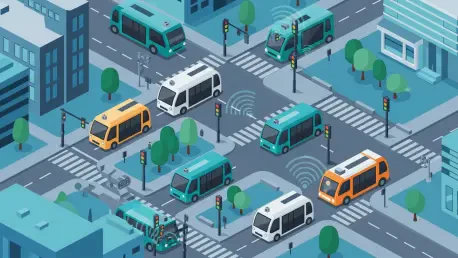

New Orleans, a city renowned for its historic streetcars and intricate French Quarter layouts, is currently navigating a sophisticated technological pivot toward autonomous transportation systems. As urban centers across the United States grapple with aging infrastructure and evolving commuter demands, the Big Easy has introduced a comprehensive roadmap designed to integrate driverless vehicles into its unique architectural landscape. This shift represents more than a mere upgrade in hardware; it is a calculated effort by the Department of Public Works and the Regional Transit Authority to address systemic mobility gaps that have historically plagued the city. By leveraging high-definition mapping and advanced sensor arrays, officials aim to create a cohesive network where traditional transit and autonomous shuttles coexist. The initiative prioritizes safety and reliability, ensuring that these high-tech additions do not disrupt the cultural fabric that defines the region’s identity while simultaneously pushing it toward a modernized future of efficient public travel.
Integrating Advanced Sensor Networks with Historic Infrastructure
Implementing autonomous systems within a city built on a delta requires a specialized approach to vehicle-to-infrastructure communication, often referred to as V2I technology. New Orleans is currently upgrading its traffic management systems along major arteries like Poydras Street and St. Charles Avenue to include intelligent roadside units that broadcast real-time data to passing vehicles. These units facilitate a dynamic exchange of information regarding traffic signal timing, pedestrian movements, and even surface conditions, which is critical in an environment prone to sudden weather shifts. Engineers are deploying LiDAR-equipped sensors at busy intersections to provide a secondary layer of environmental perception, effectively eliminating blind spots for autonomous shuttles. This digital layer acts as a fail-safe mechanism, allowing the onboard AI to anticipate hazards far beyond the reach of its internal cameras. By establishing this robust data backbone, the city ensures that the transition to automation is supported by a responsive environment that enhances the decision-making capabilities of every driverless unit.
Addressing the long-standing challenge of the last-mile connection remains a primary objective of the city’s current autonomous transit expansion, particularly in neighborhoods with limited access to traditional bus routes. The strategy focuses on deploying micro-transit pods that operate on flexible loops, connecting residential areas like New Orleans East to major transit hubs and employment centers. This approach significantly reduces the time residents spend commuting and lowers the barrier to entry for those without personal vehicles, fostering a more equitable economic environment. By utilizing electric autonomous shuttles, the city can provide frequent service without the overhead costs associated with full-sized buses or additional staffing during off-peak hours. These vehicles are designed to navigate narrower side streets that were previously inaccessible to standard public transit. This expansion is supported by a user-friendly interface that allows commuters to request rides via a localized app, ensuring that the technology serves the daily needs of a diverse population.
The initial implementation of these autonomous transit protocols provided a clear framework for balancing innovation with public safety and equitable access. Planners successfully integrated micro-mobility pods into the Regional Transit Authority’s network, which allowed for a more flexible response to the needs of residents in underserved areas like the Lower Ninth Ward. These efforts established a precedent for data-driven urban management, where real-time feedback loops helped optimize route efficiency and reduce overall traffic congestion. City officials demonstrated that the successful adoption of driverless technology depended on a combination of rigorous regulatory oversight and the deployment of electric vehicle charging infrastructure tailored for autonomous fleets. By focusing on last-mile connectivity and the revitalization of public transit corridors, the project underscored the importance of community-centric design in high-tech deployments. Future urban strategies now look toward this model as a blueprint for creating resilient transportation grids that prioritize reliability.