
The streets of Singapore, once renowned for their meticulous order and high safety standards, have recently witnessed a sobering shift as traffic-related fatalities and injuries climbed to their highest levels in a decade by the end of 2025. With a staggering 149 deaths recorded and over 1,000 more instances of mobile device violations within a single year, the Ministry of Home Affairs has felt an urgent need to intervene through the Road Traffic (Miscellaneous Amendments) Bill. This legislative proposal represents a decisive pivot in the government’s approach to public safety, moving beyond simple warnings to tackle the modern plague of digital distraction that has claimed far too many lives on the national road network. By updating these aging regulations, authorities aim to address the disconnect between traditional traffic laws and the ubiquitous presence of smartphones in every driver’s hand. This initiative is not just a policy update; it is a critical response to a growing public health crisis that threatens to undermine years of progress in road safety.
Streamlining Distracted Driving Prosecution: A Shift in Legal Standards
The core of the proposed amendment lies in its radical simplification of the legal framework surrounding distracted driving, shifting the burden of proof away from complex behavioral analysis. Under existing laws, the Traffic Police faced the daunting task of proving that a driver was not only holding a mobile device but was also actively engaged in a specific function, such as composing a text, making a call, or browsing the internet while the vehicle was in motion. This evidentiary requirement often created loopholes that allowed reckless motorists to escape accountability if their specific activity could not be confirmed. The new bill removes this usage clause entirely, making the mere act of holding a mobile communication device while driving a punishable offense. By focusing on the physical act of holding a device, the law acknowledges that any hand-held distraction fundamentally compromises a driver’s ability to maintain full control of the vehicle and react to the road.
This legislative shift significantly empowers the Traffic Police by allowing them to leverage sophisticated automated technology and high-definition surveillance systems with greater efficiency. In the past, officers were often required to witness a specific digital interaction in real time, a standard that was increasingly difficult to meet in fast-moving traffic or low-light conditions. With the focus now placed solely on the physical posture of the driver, authorities can utilize high-resolution photographic evidence and video submissions from dashcams or the general public to verify violations. This democratization of enforcement serves as a potent deterrent, as the ambiguity that once protected distracted drivers has been effectively eliminated. Furthermore, the ability to process these violations through automated means ensures that a higher volume of offenses can be addressed without draining manual patrol resources. This approach fosters a culture of universal accountability.
Defining Boundaries for Permissible Device Use
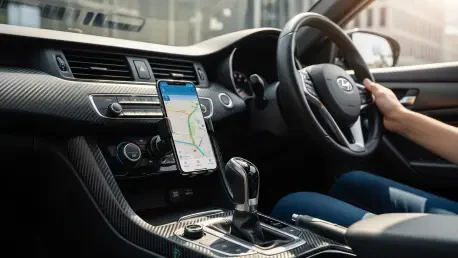
While the new regulations introduce a much stricter standard for on-road behavior, they are also designed to accommodate the practical realities of modern driving through specific exemptions. For instance, the bill clarifies that motorists are permitted to handle their mobile devices when the vehicle is completely stationary, such as when parked in a designated area. This distinction ensures that the law targets active driving hazards rather than static interactions that do not pose an immediate risk to public safety. Additionally, the use of devices that are securely mounted on a dashboard or the vehicle’s built-in infotainment systems remains legal for essential functions like satellite navigation and hands-free communication. Smartwatches are also generally exempt from the ban on holding, provided they remain strapped to the wearer’s wrist. These provisions demonstrate a balanced approach that seeks to eliminate the most dangerous forms of distraction while still allowing driver utility.
Despite these practical allowances, the penalties for violating the new rules have been structured to reflect the severity of the danger posed by distracted driving. A standard violation can now result in 12 demerit points and a fine of up to $500 for a first-time offense, which serves as a stern warning to casual offenders. However, the legal system reserves much harsher sanctions for repeat violators or those involved in serious incidents, including potential court appearances that can lead to significantly higher fines and even jail time. For individuals who continue to ignore these regulations, the maximum fine can double to $2,000, and the term of imprisonment can extend up to a year. These rigorous sanctions are intended to act as a powerful psychological deterrent, signaling to the public that the government views digital distraction as a major threat to human life. By imposing heavy costs on such behavior, the Ministry of Home Affairs aims to instill a deeper sense of responsibility among all drivers.
Analyzing Cognitive Demands and Psychological Pressures
Expert analysis into driver psychology reveals that the legislative changes are not merely administrative but are rooted in a deep understanding of human cognitive limitations. Many modern drivers operate within a culture of constant connectivity, experiencing a visceral psychological pressure to respond to digital communications the moment they occur. This compulsion often leads to a dangerous reliance on muscle memory, where the driver continues to steer the vehicle subconsciously while their conscious focus is entirely absorbed by their screen. This state of inattentional blindness means that even if a driver’s eyes are periodically on the road, their brain is not processing the visual information required to identify hazards. The new law addresses this by removing the physical catalyst for this cognitive drift—the device itself. By mandating that both hands remain free, the legislation helps break the loop of digital engagement, forcing the driver’s attention back to the road.
Neurologists have long argued that driving is one of the most taxing cognitive tasks a human can perform, requiring the simultaneous coordination of visual perception, motor control, and rapid decision-making. When a driver diverts their attention to a mobile device, even for a split second, they create a switching cost in the brain that significantly delays their reaction time during an emergency. Medical research indicates that the human brain cannot truly multi-task at the speeds required for safe operation of a heavy vehicle; instead, it rapidly toggles between tasks, leaving critical gaps in situational awareness. During these micro-intervals of distraction, a vehicle traveling at city speeds can cover dozens of meters while the driver is effectively blind to the road ahead. The legislative focus on banning the holding of devices is a direct effort to minimize these lapses in awareness. By aligning legal standards with neurological realities, the government seeks to ensure safety.
Strategic Implementation: Moving Toward Collaborative Road Safety
The successful adoption of the hands-free mandate relied heavily on the immediate availability of secondary safety technologies and corporate responsibility initiatives. Automotive manufacturers accelerated the rollout of standard-fit voice-control systems, while software developers introduced driving mode features that automatically silenced non-essential notifications when high-speed motion was detected. These technological interventions complemented the legal framework by removing the temptation to reach for a device in the first place. Public safety agencies also initiated widespread training programs for commercial fleet operators, ensuring that delivery and transport professionals adopted the safest possible digital habits. This collaborative strategy proved that legislation is most effective when it is supported by the very industries that create the digital tools in question. By making hands-free operation the default setting for the modern driving experience, the community effectively reduced violation rates.
Beyond immediate enforcement, the broader focus shifted toward long-term urban design and the integration of artificial intelligence to monitor road health and driver attention levels. Data collected from smart city sensors allowed traffic engineers to identify high-risk intersections where distracted driving was most prevalent, leading to targeted improvements in road signage and lighting. These infrastructure developments worked in tandem with the legislative changes to create an environment where safety was engineered into the landscape itself. The move to ban the holding of mobile devices served as a critical catalyst for a larger national conversation about the value of human attention in an increasingly automated world. Ultimately, the government successfully redefined the relationship between technology and transportation, prioritizing the preservation of life over the convenience of constant connectivity. This transition solidified the understanding that a safe road environment was achieved.