
A leading voice in policy and legislation, Donald Gainsborough is at the helm of Government Curated, where he deciphers the complex interplay between Washington and the nation’s most critical projects. Today, we delve into the high-stakes standoff over the Gateway Program, a $16 billion rail tunnel project vital to the Northeast corridor, now frozen by political maneuvering. This interview will explore how essential infrastructure has become a political bargaining chip, the devastating economic and logistical consequences of halting such a massive undertaking, the procedural justifications being used to mask political motives, and the costly lessons from a history of delays that seem to be repeating themselves.
The decision to halt Gateway funding has been explicitly linked to a key senator’s support for it. What does this reveal about using major infrastructure as political leverage, and what precedent might this set for future bipartisan projects?
It reveals a troubling and dangerous shift in how we approach nation-building projects. For decades, as people in the industry will tell you, transportation was seen as fundamentally bipartisan. You build a bridge, you pave a road—that benefits everyone, regardless of politics. But what we’re seeing now is the weaponization of infrastructure. The administration explicitly tied the fate of this project to a political feud with Senator Schumer. It’s not a subtle negotiation; it’s a public declaration that a vital economic artery can be severed to gain an advantage. This isn’t the first time, either; during his first term, the president tried to use Gateway as a bargaining chip to get his border wall built. The precedent this sets is chilling. It tells states and bistate commissions that no project is safe, no matter how critical, if it can be held hostage in the next political battle.
With construction pausing at most sites and a $500 million credit line exhausted, what are the immediate economic impacts on the workforce, and what specific logistical challenges arise from stopping and restarting such a massive project?
The immediate impact is a gut punch to working families and the regional economy. This project is slated to eventually employ 95,000 people. When work stops on February 6th at four of the five sites, those jobs don’t just go on hold; they vanish. You could feel the anxiety in that commission meeting room, packed with laborers who just want to work. They’re seeing their livelihoods used as a political football. Logistically, it’s a nightmare. You can’t just flip a switch off and on. Heavy machinery has to be demobilized, sites must be secured against weather and vandalism, and contracts are thrown into chaos. Restarting involves the monumental task of reassembling skilled teams who may have moved on to other jobs, recertifying equipment, and renegotiating with suppliers. Every day of delay is a day of burning money with zero progress, a slow-bleed of the $500 million credit line that was supposed to keep things moving seamlessly.
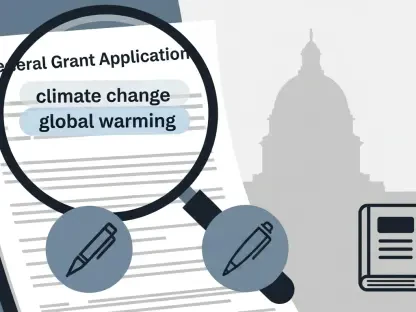
The justification for the funding hold has pointed to “unconstitutional DEI principles.” Could you explain the procedural basis for this claim and describe the typical steps transit agencies take to address such federal compliance concerns without jeopardizing a project of this scale?
Frankly, the “DEI principles” claim feels like a procedural smokescreen for a politically motivated decision. The White House budget director cited this as the official reason, but it came only after the president publicly and repeatedly linked the funding stop to his political adversaries. Normally, if the federal Department of Transportation has a compliance concern, it’s a collaborative process. They issue a notice, the agency—in this case, the Gateway commission or the MTA—responds with documentation, and they work together to rectify any issues. It’s an administrative dialogue. You don’t bring a $16 billion project, the lifeline for an entire region, to a screeching halt over a paperwork dispute that the agencies themselves say they are actively cooperating to resolve. The disproportionate response of a complete funding blockade suggests the justification is a pretext, not the core reason for the action.
The project’s costs have already increased by $2 billion due to prior delays. Given this history, how do repeated funding interruptions affect the final budget and timeline of a megaproject like Gateway?
They are absolutely devastating to both the budget and the timeline. That $2 billion figure from the last major delay is a stark reminder of the cost of inaction. These interruptions create a cascade of expensive problems. Inflation alone means that labor and materials will cost more next year than they do today. Contracts have to be renegotiated, often with penalties for the delay. Demobilizing and remobilizing crews and equipment costs millions. Think about the loss of institutional knowledge when skilled teams disband. All of this adds up. While every project is different, it’s not uncommon for these kinds of political delays on megaprojects to inflate the final cost by 15-20% or even more. We are not just pausing construction; we are actively making the project far more expensive for taxpayers down the road.
This isn’t the first time a major Hudson River tunnel project has been halted. How does the current situation compare to Governor Christie’s 2010 cancellation and previous delays? What lessons about regional economic stability should have been learned from those events?
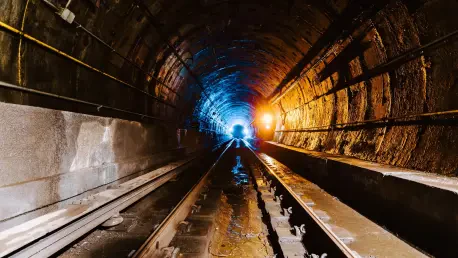
The comparison is both striking and deeply frustrating because it shows we’re failing to learn from the past. In 2010, Governor Christie pulled the plug on a similar project, citing state budget concerns. That decision set the region back over a decade and was widely seen as a massive economic blunder. The core lesson from that episode should have been crystal clear: the stability of the entire Northeast’s economy hinges on this transit link. The existing tunnels are over a century old and were badly damaged by Hurricane Sandy. A failure of one of those tubes would be catastrophic. The fact that we are here again, with a new generation of political leaders using the same critical infrastructure as a pawn in their games, shows a reckless disregard for that lesson. Both instances demonstrate that short-term political calculations are being prioritized over long-term, generational economic security.
What is your forecast for the Gateway project?
My forecast is cautiously optimistic, but contingent on a political resolution. The sheer economic necessity of this project makes it, in the long run, too big to fail. The consequences of not building it are simply unthinkable for the national economy. However, in the short term, the project will likely remain stalled as long as it serves as a useful point of leverage for the administration. I anticipate more economic pain and rising costs as the standoff continues, particularly if we face another government shutdown. Ultimately, I believe the immense pressure from a united front of business leaders, labor unions, and bipartisan state officials from both New York and New Jersey will force the funding to be released. But the timeline is uncertain, and unfortunately, the final price tag will be significantly higher because of this wholly avoidable political gamesmanship.