
As a political savant and leader in policy and legislation, Donald Gainsborough is currently at the helm of Government Curated, where he navigates the complex intersection of technology and public administration. With a career dedicated to refining how government entities serve their diverse populations, Gainsborough has become a leading voice on the integration of artificial intelligence in public safety. In this discussion, we explore the evolving landscape of language accessibility in law enforcement, specifically looking at how modern tools are being used to dismantle communication barriers, foster community trust in immigrant-heavy regions, and prepare for the logistical demands of global events.
In regions with high immigrant populations, fear of federal enforcement often discourages residents from reporting crimes. How does providing instant translation in dozens of languages specifically rebuild that trust, and what practical steps do deputies take to ensure people feel safe when requesting assistance?
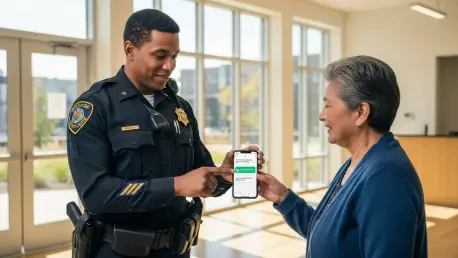
Trust is the foundation of public safety, and in a place like Santa Clara County where 41% of the population—roughly 767,800 people—are immigrants, that trust is often fragile. When a resident knows a deputy can communicate with them in their primary language among 92 supported options, it removes the immediate “othering” that happens during a crisis. Deputies are now using nearly a dozen dedicated handheld devices and mobile apps to signal that the agency is there to serve the individual, not just enforce statutes. By actively launching campaigns to reaffirm support for immigrants and providing tools that allow a victim to describe a suspicious incident in their first language, we are moving away from a culture of fear. The practical shift involves deputies showing up as helpers who have invested in the tech necessary to understand a resident’s specific needs, which is a powerful sensory and emotional signal of safety.
High-stakes public safety situations require immediate communication to prevent dangerous escalations. When a language barrier creates a delay during an emergency call, how do mobile translation tools alter the tactical response, and what specific metrics are used to measure the impact on officer safety?
In public safety, we often say that timing is everything because seconds truly do count when you are heading into a volatile environment. When a deputy can use a real-time audio and text translation tool, it eliminates the dangerous “dead air” where misunderstandings lead to escalated tensions or physical confrontations. Tactically, this allows for a much faster assessment of whether a person is a threat, a victim, or a bystander, which directly protects the officer from making errors based on incomplete information. During our year-long pilot phases, we look closely at response times and deputy feedback regarding the ease of these interactions to determine if the technology is effectively “bridging the gap.” While the immediate metric is the speed of communication, the emotional metric is the reduction in stress for both the officer and the civilian, ensuring that high-stakes encounters don’t spiral out of control due to a simple lack of vocabulary.
Implementing a year-long pilot for new communication hardware involves significant data management and privacy considerations. Could you explain the rationale behind a 24-hour retention period for translated conversations and describe the internal safeguards that prevent this data from being repurposed for investigative or enforcement actions?
Privacy is a paramount concern, especially when we are trying to encourage residents to report crimes without fear of their data being used by federal immigration authorities. The 24-hour retention period is a deliberate policy choice designed to ensure that the data exists long enough for immediate operational review if necessary, but is purged before it can be archived or mined. We have established clear internal safeguards stating that these translated conversations are strictly for facilitating communication and will not be used for investigative purposes or forwarded to other agencies. This $22,000 donation-funded pilot is about testing the utility of the hardware, not building a database of immigrant interactions. By keeping the data lifecycle so short and the purpose so narrow, we provide a concrete guarantee to the community that their voice is being used to help them, not to track them.
Global sporting events bring a massive surge of international visitors to local jurisdictions within a very short timeframe. How do agencies scale language accessibility for such an influx, and what are the primary logistical challenges of deploying translation technology across a multi-agency security operation?
Scaling for events like the recent Super Bowl LX or the upcoming FIFA World Cup and the 2028 Summer Olympics requires a level of linguistic agility that traditional human interpretation simply cannot match. Logistically, the challenge is ensuring that deputies across different beats—from stadium security to transit patrols—all have access to the same reliable translation platform on their county-issued phones. We are talking about tens of thousands of visitors from across the globe arriving simultaneously, many of whom do not speak English. The primary hurdle is the rapid deployment of hardware and ensuring that multi-agency partners are synchronized so that a visitor receives the same high level of service whether they are talking to a local deputy or a state trooper. It transforms the security operation from a rigid perimeter into a dynamic, service-oriented environment where information flows freely despite the massive diversity of the crowd.
Many local governments are now enacting specific language access laws and integrating AI-enabled software into existing police equipment. What are the biggest hurdles to the nationwide adoption of these technologies, and how should officials balance equipment costs with the long-term benefits of community engagement?
The momentum is certainly there, with nine states and 31 local jurisdictions enacting new language access laws since 2020, but the biggest hurdles remain funding and the “status quo” mentality. While Santa Clara benefited from a $22,000 advisory board donation, many smaller agencies struggle to find the room in their budgets for specialized hardware or AI-enabled body camera software like we’ve seen in Flagler County. Officials must view these costs not as a luxury, but as a fundamental investment in the effectiveness of government programs and the reduction of liability. The long-term benefits—increased crime reporting, better witness cooperation, and a more cohesive community—far outweigh the initial price tag of a few dozen devices. When you consider that cities like New York and Hartford are already leveraging these technologies for everything from city council meetings to police interactions, it becomes clear that the cost of not communicating is much higher in the long run.
What is your forecast for language accessibility in public safety?
I anticipate that within the next five years, real-time, AI-driven translation will become a standard feature in all public safety hardware, moving from a “tool in the belt” to a core component of body-worn cameras and dispatch systems. We are moving toward a future where “language access” is no longer a separate policy initiative but a built-in expectation of modern policing. As more jurisdictions follow the lead of places like Santa Clara and Flagler County, the technology will become more affordable and more accurate, eventually eliminating the “language barrier” entirely from the list of challenges that deputies face on the street. Ultimately, this will redefine the relationship between immigrant communities and the state, turning law enforcement agencies into true “bridge-builders” who can serve every resident with equal ease, regardless of the language they speak at home.