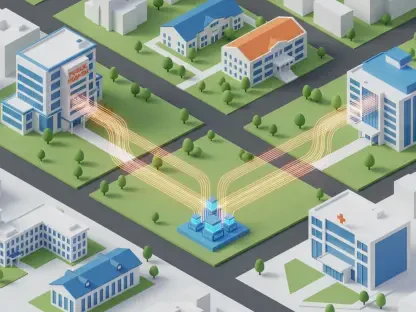

Every day, a silent, ever-expanding network of cameras captures and logs the movements of millions of vehicles, creating a digital map of public life that was once the domain of science fiction. The Automated License Plate Reader (ALPR) represents a significant advancement in the surveillance and data collection sector. This review will explore the evolution of the technology, its key features, performance metrics, and the impact it has had on various applications. The purpose of this review is to provide a thorough understanding of the technology, its current capabilities, and its potential future development.
An Introduction to ALPR Systems
Automated License Plate Reader technology provides a foundational overview of how surveillance intersects with mobility. The core principle involves a two-stage process: first, high-speed cameras capture images of vehicle license plates, and second, sophisticated software analyzes these images to extract alphanumeric characters. This data, timestamped and geotagged, is then stored in a searchable database. This simple concept powers a complex ecosystem of hardware and software designed for rapid data collection and analysis.
A complete ALPR system is composed of specialized cameras and a powerful backend processing unit. The hardware is typically ruggedized to withstand outdoor conditions and equipped with specific lenses and sensors optimized for capturing license plates on moving vehicles. The software component, the brain of the operation, uses Optical Character Recognition (OCR) to convert the visual data into text. Over time, this technology has evolved from standalone units on police cruisers to vast, interconnected networks of stationary cameras monitoring entire neighborhoods and transportation corridors, increasing its relevance for law enforcement, private security, and commercial entities.
Core Features and Technical Analysis
Camera and Imaging Hardware
The physical cameras are the eyes of any ALPR system, and their quality directly determines the system’s effectiveness. These devices utilize high-resolution sensors capable of capturing crisp images, even when vehicles are traveling at highway speeds. A critical specification is the shutter speed, which must be fast enough to freeze motion and prevent blurring, ensuring that the plate characters are legible for the software to process. Without a high-quality initial image, even the most advanced software will struggle to produce accurate results.
To ensure consistent performance around the clock, most modern ALPR cameras are equipped with powerful infrared (IR) illuminators. These components flood the field of view with light that is invisible to the human eye but perfectly visible to the camera’s sensor. This allows the system to capture clear, high-contrast images of license plates in complete darkness, through inclement weather like rain or fog, and even when dealing with the glare from headlights. This 24/7 operational capability is a key feature that makes ALPR a persistent surveillance tool.
Optical Character Recognition and AI Software
The software engine is what transforms a simple camera into an intelligent data collection tool. At its core, Optical Character Recognition (OCR) algorithms are responsible for identifying the license plate within a broader image and converting the characters into machine-readable text. This process is complicated by the vast diversity in plate designs across different states and countries, including variations in fonts, colors, and the presence of logos or special characters. Early OCR systems often struggled with these variables, leading to higher error rates.
Modern ALPR systems have largely overcome these challenges through the integration of artificial intelligence (AI) and machine learning models. These advanced algorithms are trained on enormous datasets containing millions of plate images captured under diverse conditions. This training enables the AI to accurately identify and read plates from difficult angles, compensate for environmental factors like shadows or glare, and even interpret plates that are partially obscured or damaged. This leap in software intelligence has dramatically improved the reliability and accuracy of ALPR technology.
Data Management and Network Infrastructure
Once a license plate is captured and digitized, its journey has only just begun. The data is transmitted to a central backend system, where it is instantly cross-referenced against various watchlists or “hotlists.” These lists may contain plates associated with stolen vehicles, wanted fugitives, Amber Alerts, or persons of interest in an investigation. If a match, or “hit,” is found, the system can generate a real-time alert, notifying officers in the field within seconds.
The backend infrastructure required to manage this data is immense. ALPR networks can capture millions of plate reads per day, accumulating billions of data points over time. This data is stored in massive databases that must be secure, searchable, and governed by data retention policies that dictate how long information on non-flagged vehicles is kept. The networking of these camera systems is also critical, as a robust and high-speed connection is necessary to transmit data and alerts without delay, enabling immediate action based on the intelligence gathered.
Recent Innovations and Emerging Trends
The ALPR landscape is continuously evolving, driven by advancements in technology and expanding use cases. A significant trend is the integration of ALPR systems with broader surveillance platforms, such as city-wide video management software (VMS). This allows data from a plate read to be correlated with video footage from other nearby cameras, providing richer contextual information for investigations. This interoperability creates a more unified and powerful public safety infrastructure.
Another major shift is the move toward cloud-based data storage and processing. Instead of maintaining costly on-premise servers, many agencies and companies now leverage the cloud for its scalability, accessibility, and reduced maintenance overhead. In parallel, advancements in AI are enabling predictive analysis, where algorithms analyze historical location data to identify patterns or anticipate criminal activity. This is complemented by the rapid growth of private ALPR networks, managed by entities like homeowners’ associations and commercial businesses, which create a dense, privately-owned surveillance mesh that often shares data with law enforcement.
Applications Across Industries
Law Enforcement and Public Safety
The primary and most impactful application of ALPR technology remains in law enforcement and public safety. Police departments deploy these systems to automate the process of checking every passing vehicle against watchlists, a task that would be impossible for human officers to perform. This has proven highly effective for recovering stolen vehicles, locating individuals with outstanding warrants, and identifying potential witnesses or suspects by placing a vehicle at the scene of a crime.
Case studies repeatedly demonstrate the technology’s value. For instance, an Amber Alert can be resolved when an ALPR camera flags the suspect’s vehicle hundreds of miles away, guiding officers to a precise location. In more complex investigations, detectives can query historical ALPR data to retrace a suspect’s movements in the days leading up to an incident, uncovering patterns and connections that might otherwise remain hidden. The technology also serves as a tool for traffic enforcement, monitoring for unregistered vehicles or drivers with suspended licenses.
Commercial and Private Sector Usage
Beyond policing, ALPR technology has found a wide range of applications in the commercial and private sectors, where it is used to enhance efficiency, security, and customer experience. In the parking industry, ALPRs have revolutionized revenue control by enabling ticketless systems where vehicles are identified by their plates upon entry and exit, with payment linked automatically. This streamlines operations and reduces fraud.
For corporate campuses, gated communities, and industrial facilities, ALPR systems function as a key component of access control. They can automatically grant entry to registered vehicles while flagging unauthorized ones, improving security without inconveniencing residents or employees. Furthermore, retail businesses and shopping centers are beginning to use ALPR data for customer analytics, tracking visit frequency and duration to better understand consumer behavior. In logistics, the technology helps manage large vehicle fleets by automating check-in and check-out processes at distribution centers.
Challenges and Ethical Considerations
Privacy and Civil Liberties Concerns
Despite its utility, ALPR technology is at the center of a fierce debate over privacy and civil liberties. The core issue is its capacity for mass surveillance. Because these systems capture data on every passing vehicle, not just those suspected of a crime, they create vast historical location databases. Civil liberties advocates argue that this allows the government to track the movements of innocent citizens, chilling free association and speech by potentially monitoring attendance at protests, places of worship, or sensitive health clinics.
The potential for misuse of this data is a significant concern. Documented cases have revealed law enforcement using ALPR systems to track political protesters or search for individuals using discriminatory criteria. The creation of a permanent record of a person’s movements without a warrant raises profound constitutional questions about unreasonable searches and the right to privacy, transforming a tool for targeted investigations into a mechanism for broad, suspicionless monitoring of the public.
Data Security and Regulation
The technical and legal frameworks governing ALPR technology have struggled to keep pace with its rapid deployment. The massive databases of location information represent a high-value target for cybercriminals, and security vulnerabilities have been discovered in major ALPR systems, exposing sensitive data. Furthermore, the accuracy of the technology is not infallible; errors in OCR can lead to false hits, potentially directing police attention toward innocent individuals whose data has been incorrectly recorded.
This technological fallibility is compounded by a patchwork of inconsistent regulations. There is no national standard for data retention, officer training, or auditing, leaving a “wild west” environment in many jurisdictions. Legislative efforts to introduce oversight, such as Arizona’s Senate Bill 1111, often contain contradictory provisions. While purporting to create “guardrails,” such bills can simultaneously shield all captured plate data from public records requests, effectively preventing journalists and watchdog groups from uncovering misuse and holding agencies accountable.
The Future of Vehicle Recognition Technology
The trajectory of ALPR technology points toward greater integration and enhanced analytical capabilities. The next frontier is the fusion of license plate data with vehicle make, model, and color recognition. This would allow authorities to search for, as an example, “a blue Ford pickup truck seen near the crime scene” even without a full plate number, dramatically expanding search parameters. The rollout of 5G networks will also play a crucial role, enabling faster transmission of high-definition video and data from cameras to command centers, further reducing latency for real-time alerts.
As these technological capabilities advance, the legal and constitutional landscape will be forced to evolve. Courts and legislatures are increasingly grappling with the implications of persistent, warrantless location tracking, with many legal experts arguing that accessing historical ALPR data should require a warrant, similar to the standard set for cell phone location data. The future will likely see a continued push-and-pull between the adoption of more powerful surveillance tools and the establishment of stricter legal safeguards to protect individual privacy in an increasingly monitored world.
Final Assessment and Conclusion
Automated License Plate Reader technology stands as a powerful tool with a distinctly dual nature. On one hand, it offers undeniable benefits for public safety and operational efficiency, providing law enforcement with an unprecedented ability to solve crimes and commercial entities with a means to streamline their operations. The speed and scale at which ALPRs collect and process data represent a true paradigm shift in vehicle identification and tracking.
However, this power brings with it profound challenges to personal privacy and civil liberties. The creation of massive, searchable databases detailing the movements of ordinary citizens raises fundamental questions about the balance between security and freedom in a democratic society. The current regulatory environment remains fragmented and often inadequate, leaving the door open for potential misuse and creating a deficit in public transparency. Ultimately, the responsible path forward for ALPR technology depends on developing a balanced approach that incorporates robust oversight, strict data protection standards, and clear, transparent regulations to govern its use, ensuring it serves the public without eroding essential rights.