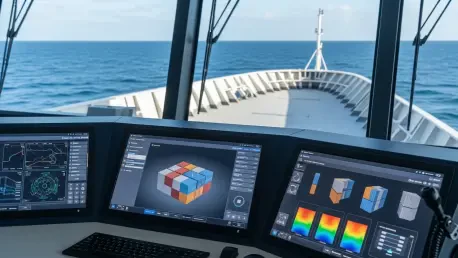

The vast expanse of the open ocean has historically been a digital dead zone where massive container ships, carrying billions of dollars in cargo, essentially vanish from real-time monitoring systems for weeks at a time. As global trade routes stretch further and geopolitical shifts necessitate longer voyages, the demand for persistent visibility has moved from a luxury to a fundamental requirement for the modern supply chain. Currently, over eighty percent of the world’s merchandise travels by sea, yet the industry has long struggled with dark periods where data is sparse and intervention is impossible. A groundbreaking initiative developed in Singapore is now bridging this gap by deploying dedicated 5G and AI-driven infrastructure across international shipping fleets. This transformation, led by a strategic partnership between Ericsson and Net Feasa, utilizes sophisticated onboard networks to ensure that every container remains a connected node in a global digital ecosystem, regardless of its distance from the nearest coastline or port facility.
Engineering the Floating Smart Hub
The Architecture of Persistent Maritime Connectivity
The implementation of a robust onboard cellular infrastructure represents a significant departure from traditional satellite-only communications that often lacked the bandwidth for granular asset tracking. By utilizing the Ericsson Radio System, vessels are being equipped with high-performance radio units and a cloud-based 5G core network delivered as a service, providing a localized yet powerful communication grid. This setup is integrated with Low Earth Orbit satellite backhaul, which serves as the critical link between the ship’s internal network and terrestrial data centers. This hybrid approach ensures that the cellular network remains operational even in the most remote maritime corridors, effectively turning the vessel into a floating smart hub. The reliability of this carrier-grade performance allows shipping companies to maintain constant contact with their assets, facilitating a level of data flow that was previously restricted to land-based logistics operations or sophisticated port environments.
The physical hardware used in these deployments is specifically engineered to withstand the brutal conditions of the maritime environment, where salt spray, extreme temperature fluctuations, and constant vibration are the norm. These compact and power-efficient radio systems are designed to support multiple frequency bands, a necessity for vessels that traverse various global jurisdictions with differing regulatory requirements for spectrum usage. This flexibility ensures that the 5G and 4G IoT connectivity remains compliant and functional as ships move from the South China Sea through the Suez Canal and into European or American waters. Furthermore, the use of a cloud-based core network allows for rapid updates and scalability, ensuring that the system can handle the increasing volume of data generated by the growing number of connected sensors on a single ship. This infrastructure provides the necessary foundation for advanced analytics that can drive operational efficiency and cargo safety across the fleet.
Intelligence at the Edge through Agentic AI
Beyond the physical connectivity layer, the integration of Net Feasa’s Agentic Control Tower platform introduces a level of automated oversight that is redefining cargo management. This platform utilizes artificial intelligence to collect and analyze massive datasets from thousands of individual containers and onboard sensors simultaneously, providing a comprehensive view of the ship’s internal logistics. The term agentic refers to the AI’s ability to not only monitor data but to also categorize, secure, and prioritize information based on its urgency and relevance to the crew or shore-based operators. This prevents the common problem of data overload, where critical alerts might be buried under a mountain of routine status updates. By processing data at the edge—directly on the ship—the system can provide instantaneous insights that allow for immediate corrective actions without waiting for high-latency instructions from a distant corporate headquarters or a cloud server.
This technical synergy between the cellular network and AI creates a secure environment for sensitive logistics data, which is paramount in an era of increasing cyber threats to global trade. The Agentic Control Tower acts as a digital sentry, ensuring that the communication between individual IoT devices and the central shipboard server is encrypted and protected from unauthorized access. This security extends to the ship-to-shore link, where the AI ensures that only authenticated and necessary data packets are transmitted over the satellite backhaul, optimizing bandwidth usage and costs. The ability to monitor thousands of assets per vessel means that every refrigerated unit or hazardous material container is accounted for with high precision. This level of granular detail allows shipping lines to provide their customers with verified, real-time proof of cargo integrity, which is becoming a standard expectation for high-value logistics contracts in the current pharmaceutical and technology markets.
Economic Implications for the Global Supply Chain
Specialized Monitoring for High-Value Commodities
The economic driver for this technological leap is most evident in the management of refrigerated containers, commonly known as reefers, which carry perishables and temperature-sensitive medical supplies. Industry forecasts indicate a nearly nine percent annual growth rate in reefer volumes through 2030, a trend fueled by the expansion of the global pharmaceutical industry and the rise of cross-border e-commerce for fresh goods. The Ericsson and Net Feasa system provides a dedicated solution for these high-value assets by offering continuous temperature regulation and early heat detection. In the past, a malfunctioning cooling unit might go unnoticed until a ship reached its next port of call, leading to the total loss of the shipment and significant financial claims. Now, the AI-driven system can detect subtle deviations in temperature or power consumption patterns and alert the crew to intervene long before the cargo reaches a critical threshold of spoilage or degradation.
This proactive intervention capability is particularly vital for the transport of dangerous goods and volatile materials, where a minor incident can quickly escalate into a major safety hazard for the entire vessel and its crew. By monitoring for unusual heat signatures or pressure changes within specific containers, the system acts as an early warning network that enhances the overall safety profile of the maritime industry. For the pharmaceutical sector, which requires a strictly maintained cold chain for vaccines and specialty drugs, this technology provides the end-to-end traceability required by global health regulators. The ability to provide a continuous, verifiable data log from the point of manufacture to the final destination reduces the risk of regulatory rejection and ensures that life-saving products are delivered in optimal condition. This transparency not only protects the physical cargo but also stabilizes the insurance premiums for shippers who can demonstrate a lower risk profile through data.
Strategic Evolution of the Digitalized Maritime Sector
The collaboration between these technology leaders signifies a definitive tipping point in the digitalization of the intermodal supply chain, moving away from fragmented systems toward a unified operational model. By establishing a standard for shipboard connectivity and intelligent data management, this partnership has created a framework that can be expanded to other maritime segments, including bulk carriers, tankers, and even offshore energy platforms. The integration of 5G and AI is not merely about tracking boxes; it is about building a more resilient and transparent infrastructure for global trade. As port environments become increasingly automated, the ability for a ship to communicate its cargo status and maintenance needs while still miles offshore allows for much more efficient berthing and unloading schedules. This reduction in port congestion and idle time for massive vessels has a direct impact on the carbon footprint of the shipping industry, supporting broader sustainability goals.
The journey toward a fully connected maritime ecosystem required a shift in how stakeholders viewed the relationship between technology and logistics. Industry leaders prioritized the deployment of scalable 5G cores and AI platforms that could adapt to the changing needs of global commerce through 2026 and beyond. Moving forward, shipping companies should consider the integration of these systems not as an isolated hardware upgrade, but as a core component of their digital strategy. The next logical step involves the expansion of these private networks to include port-side operations, creating a seamless data flow from the vessel to the terminal and finally to the inland transport network. Organizations that adopted these technologies early gained a competitive advantage by offering superior cargo security and operational predictability. The transition to data-driven maritime operations proved to be a necessary evolution, ensuring that the backbone of global trade remained robust in the face of increasingly complex international logistical challenges.