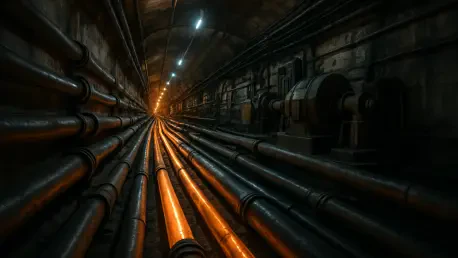

Engineering teams in Kaohsiung must navigate existing infrastructure by installing high-voltage cables as deep as seventy meters below the city’s surface. This subterranean complexity reflects an island-wide struggle to keep pace with the voracious energy demands of the semiconductor and artificial intelligence sectors. As the global race for silicon supremacy intensifies, the traditional methods of urban planning and utility management are proving insufficient for the sheer scale of the required transformation. In previous years, industrial giants prioritized geographical location and land cost above all else when scouting for new facility sites. However, the paradigm has shifted drastically toward energy security as the primary metric for investment feasibility. Taiwan now finds itself at a critical juncture where the stability of its power grid is no longer just a domestic utility concern but a vital component of the international technology supply chain, requiring a radical overhaul of how high-voltage transmission is engineered and deployed across dense urban environments.
The Shift Toward Power-Centric Industrial Investment
Securing a reliable electricity supply has emerged as the decisive factor for new industrial projects, superseding the availability of physical space or tax incentives. This transition highlights a fundamental change in the relationship between state-run utilities like Taipower and the corporate sector. Currently, the national power grid is under immense pressure to maintain a shrinking electricity reserve margin, which is projected to fall below the mandatory fifteen percent threshold during the period from 2026 to 2028. Such a tight margin leaves little room for error or technical maintenance, making the procurement of new generation capacity an urgent priority. However, the expansion of the energy infrastructure is hampered by a global supply chain crisis that has seen the lead times for large gas turbines double from two years to four. With only three major global manufacturers dominating the market, the competition for essential equipment is fierce, forcing local planners to reconsider their timelines for massive infrastructure projects.
Human Capital and Resource Constraints: The Labor Bottleneck
The situation is further complicated by a localized shortage of the specialized technical workforce necessary for advanced power engineering and high-level quality control. Building a resilient grid requires more than just hardware; it demands a deep pool of skilled labor that can manage the intricate integration of new gas-fired units and renewable sources. As the utility attempts to roll out twenty-five new gas-fired power units to stabilize the base load, the lack of experienced engineers creates a significant bottleneck in the project pipeline. This labor scarcity, combined with the rising demand from high-energy-density AI data centers, creates a scenario where infrastructure cannot simply be built faster by injecting more capital. Instead, a strategic approach to talent development and resource allocation has become essential. The government is now forced to balance the immediate needs of the tech industry with the long-term sustainability of the national energy ecosystem to ensure that the growth in power consumption does not lead to systemic failure.
Decentralization: A Strategy for Grid Resilience
Experts have reached a consensus that the traditional centralized grid model, which relies on large, distant power plants to supply energy across the island, is no longer adequate for modern needs. The massive island-wide power outage experienced in 2022 served as a stark warning of the vulnerabilities inherent in a highly interconnected but centralized transmission system. To mitigate the risk of cascading failures, Taipower advocated for a decentralized approach that encouraged the placement of data centers and factories closer to their generation sources. By minimizing the distance electricity must travel, the utility significantly reduced transmission losses and technical loads on the main grid arteries. This shift toward localized energy clusters represents a fundamental redesign of the national power architecture. It aims to isolate potential disruptions and ensure that localized failures do not escalate into national crises, thereby providing the stability required for the continuous operation of sensitive semiconductor manufacturing equipment and high-performance AI servers.
Future Infrastructure: Urban Integration and Self-Sufficiency
Addressing these systemic challenges required a unified strategy that successfully combined state-led expansion with strict private-sector participation and localized management. The government prioritized the deployment of twenty-five new gas-fired units to provide a stable foundation while the industry shifted toward decentralized storage solutions. Legislative mandates for energy self-sufficiency forced major corporations to integrate sophisticated battery systems into their operational blueprints, which significantly eased the strain on the national reserve margin. Technical hurdles of urban infrastructure were overcome through high-precision engineering projects that utilized deep-earth cabling to bypass existing bottlenecks. These efforts collectively ensured that the national grid remained resilient against technical failures and external shocks. Moving forward, authorities implemented regular grid stress tests and expanded renewable energy integration to maintain long-term sustainability. This transition provided the necessary infrastructure to support the technological boom without compromising civil stability.