
What if millions of hours lost to traffic jams could be reclaimed with tools already at hand, transforming the daily grind into seamless journeys through bustling city streets? Urban congestion plagues cities worldwide, trapping commuters in endless delays and contributing to environmental decay. This pressing issue, affecting quality of life and economic productivity, demands urgent attention. Fortunately, technology offers a promising lifeline, with solutions that are not futuristic fantasies but proven realities reshaping urban landscapes right now.
The Stakes of Urban Mobility in a Crowded World
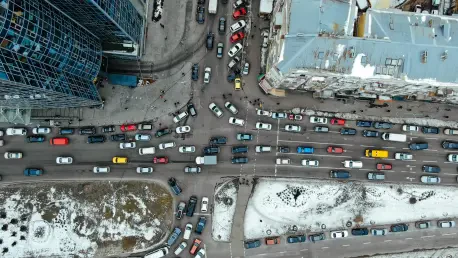
Urban mobility is no longer just about getting from point A to point B; it’s a cornerstone of modern life that dictates how cities function and thrive. With over half the global population residing in urban areas, the strain on transportation systems has reached critical levels. Congestion not only steals time—think of the average New Yorker losing over 100 hours annually to gridlock—but also impacts mental health and stifles economic growth. The urgency to address this cannot be overstated, as cities grapple with the dual challenge of population growth and environmental sustainability.
Moreover, the ripple effects extend far beyond individual frustration. Poor mobility infrastructure hampers emergency response times, disrupts supply chains, and exacerbates social inequalities by limiting access to opportunities for those without personal vehicles. As cities continue to densify, the need for efficient, equitable transportation systems becomes paramount, setting the stage for innovative interventions that can redefine how urban spaces operate.
Unpacking the Congestion Crisis Strangling Cities
Delving deeper into the problem, urban congestion stands as a formidable barrier to progress, driven by outdated infrastructure and a reliance on personal vehicles. In major hubs, drivers face staggering delays, while public transit often struggles with underfunding and inefficiencies. Beyond time loss, this gridlock fuels pollution, with cars and vans accounting for a significant chunk of global energy-related CO2 emissions—around 10% as of recent estimates—posing a dire threat to climate goals.
This crisis isn’t just about numbers; it’s about lived experiences and systemic failures. Commuters endure daily stress, while city planners wrestle with limited budgets and aging systems that can’t keep pace with demand. The environmental toll compounds the urgency, as idling engines in traffic jams pump out emissions that harm both the planet and public health. Clearly, a fundamental shift is needed to break this cycle of stagnation.
Tech Innovations Redefining Urban Travel
Turning to solutions, technology emerges as a powerful ally in combating urban mobility woes, offering tools that are already making a difference. Artificial intelligence (AI), for instance, is optimizing traffic flow by predicting congestion patterns and adjusting signals in real time, slashing delays in cities like Los Angeles, where pilot programs have reported notable reductions in travel times. Such advancements highlight how data can outsmart gridlock with precision.
Another game-changer lies in anonymized GPS data, which provides dynamic insights into traffic behavior. Cities like Denver have harnessed this technology through centralized platforms to identify bottlenecks instantly and reroute commuters, enhancing both efficiency and urban planning. This real-time adaptability marks a significant leap from traditional, static approaches to managing road networks.
Then there’s geospatial intelligence, utilizing satellite imagery and location data to redesign infrastructure for long-term impact. Amsterdam stands as a shining example, having revamped its urban layout to prioritize pedestrians and cyclists alongside motorists, thanks to sophisticated mapping tools. These technologies collectively paint a picture of a smarter, more responsive urban environment waiting to be fully embraced.
Expert Perspectives on Tech’s Real-World Impact
To ground these innovations in reality, insights from industry leaders shed light on their transformative potential. Ralf-Peter Schäfer, a prominent figure in traffic technology, emphasizes the urgency of data-driven solutions, noting that “cities have the tools today to cut congestion and emissions—they just need to act.” His perspective underscores a growing consensus among experts that hesitation, not capability, is the primary roadblock.
Beyond expert opinion, real-world outcomes speak volumes. In Singapore, integrated transit platforms blending buses, trains, and ride-sharing apps have redefined commuting, offering a seamless experience that saves time and reduces carbon footprints. Research backs this up, showing measurable drops in emissions and improved commuter satisfaction in cities adopting such systems, reinforcing the argument that technology’s benefits are tangible and scalable.
Actionable Strategies for Smarter Urban Mobility
For cities ready to take the plunge, practical steps can pave the way toward embracing these innovations. Partnering with technology providers is a crucial starting point, creating collaborative ecosystems where expertise in AI and geospatial analytics can be tapped. Launching pilot programs or offering funding incentives can jumpstart these relationships, ensuring that cities gain access to cutting-edge tools tailored to their unique challenges.
Investing in data-driven infrastructure is equally vital, with centralized platforms capable of integrating traffic monitoring and transit planning. Budget-conscious approaches, such as California’s deployment of automated speed safety cameras, demonstrate how even limited resources can yield significant safety and efficiency gains. Such measures allow cities to modernize without breaking the bank, focusing on high-impact, low-cost solutions.
Finally, educating stakeholders and engaging communities form the backbone of successful adoption. Awareness campaigns can inform local leaders about proven technologies, while public feedback platforms ensure resident needs shape mobility initiatives. This dual focus on top-down and bottom-up involvement guarantees that solutions are not only implemented but also embraced by those they serve.
Reflecting on a Path Forward
Looking back, the journey through the challenges and solutions of urban mobility revealed a landscape ripe for change, where technology had already begun to carve out victories against congestion and pollution. The stories of cities like Amsterdam and Singapore showed that transformation was not a distant hope but a lived reality for many. Each innovation, from AI traffic systems to geospatial planning, had proven its worth in real-world settings.
Yet, the path forward demanded more than just marveling at what had been achieved. Cities needed to commit to partnerships with tech providers, channeling resources into data-driven infrastructure that could withstand growing urban pressures. Engaging communities and decision-makers alike ensured that these advancements addressed genuine needs. By taking these steps, urban centers could turn the tide against gridlock, crafting a legacy of smarter, more sustainable mobility for generations to come.