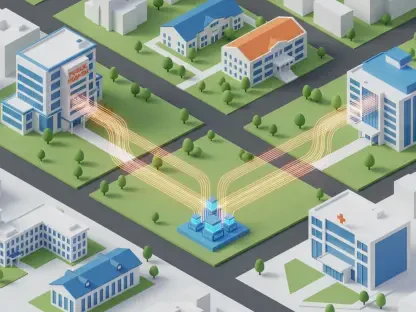

Billions in federal funding are earmarked each year to revitalize main streets, strengthen infrastructure, and support public services, yet for countless small towns and tribal nations, this financial lifeline remains frustratingly out of reach. While vast sums are allocated for community development, a significant portion never reaches its intended destination, particularly in under-resourced and rural areas. This raises a critical question about the nature of public finance: is this a failure of funding availability, or is it a failure of the complex, often labyrinthine system designed to distribute it? The answer may lie not in bigger budgets, but in smarter technology. As artificial intelligence continues to mature, it presents a powerful opportunity to dismantle the bureaucratic barriers that have long prevented an equitable distribution of federal aid, potentially leveling the playing field for communities of all sizes.
The Billion-Dollar Question: Why Do So Many Federal Grants Go Unclaimed?
The federal government allocates a staggering amount of capital for programs aimed at everything from enhancing public safety and building climate resilience to fostering economic growth and improving healthcare access. This creates a paradox where immense financial resources exist alongside profound and unmet community needs. For local leaders, the knowledge that funding is theoretically available but practically inaccessible is a source of constant frustration. The disconnect between allocated funds and on-the-ground impact suggests a fundamental flaw not in the intention of these programs, but in their execution.
This gap forces a crucial inquiry into the mechanics of public funding distribution. It challenges the conventional wisdom that simply allocating more money is the solution to systemic problems. Instead, it directs attention toward the intricate processes and structural impediments that govern how funds are accessed. The core issue appears to be less about the total amount of available aid and more about the architecture of the system itself—an architecture that has become so convoluted and demanding that it systematically filters out the very applicants who often need the support most. Understanding this system is the first step toward rectifying its inherent inequities.
The Systemic Friction: Understanding the Great Grant Disconnect
The primary obstacle preventing funds from reaching their destination is not a single, insurmountable wall but a series of deeply entrenched procedural barriers that create immense “bureaucratic friction.” This friction manifests at every step of the grant-seeking lifecycle, from the initial discovery of an opportunity to the final submission of an application. It is a cumulative burden composed of excessive administrative requirements, reliance on antiquated digital platforms, and a chronic lack of institutional capacity within smaller governments. This systemic inefficiency creates an environment where success is often determined not by the merit of a proposed project, but by an applicant’s ability to endure a grueling and resource-intensive administrative marathon.
At the heart of this disconnect is a public administration infrastructure struggling to keep pace with the digital age. Many government portals remain difficult to navigate, forcing officials into frustrating loops of broken links and siloed information repositories. The process often requires downloading cumbersome files and manually sifting through hundreds of pages of dense text just to find a single, critical piece of information. This outdated approach stands in stark contrast to the streamlined, user-centric experiences common in the private sector, placing an undue burden on public servants.
Compounding these technological shortcomings is the critical issue of understaffing in local and tribal governments. Unlike large metropolitan areas that can afford to maintain dedicated grant-writing departments, smaller municipalities rely on existing staff—city managers, public works directors, and planners—to take on the monumental task of grant seeking in addition to their primary responsibilities. These dedicated public servants are forced to become part-time researchers, writers, and project managers, diverting precious time and energy from their core duties. This capacity gap creates a fundamentally uneven playing field, where the ability to secure funding is directly tied to the size and resources of the government itself.
The Gauntlet: A Two-Part Breakdown of a Broken Process
The grant-seeking journey can be accurately described as a gauntlet, with the first and most arduous phase being a digital scavenger hunt for relevant opportunities. This is not a simple matter of performing a keyword search; it is a laborious manual process that can consume weeks or even months of staff time. Officials must painstakingly monitor dozens of federal agency websites, navigate the sprawling and often unintuitive Grants.gov portal, and attempt to make sense of a decentralized information landscape. The sheer volume of available programs, each with its own unique guidelines and deadlines, makes a comprehensive search an overwhelming task for any understaffed office.
Further complicating this discovery phase is the significant duplicity that exists among federal funding programs. It is not uncommon for multiple agencies—for instance, the Department of Agriculture, the Environmental Protection Agency, and the Department of Commerce—to offer distinct grants for the exact same purpose, such as improving rural water infrastructure. While this may seem like an abundance of opportunity, it creates a confusing and redundant research burden. Applicants must invest even more time deconstructing and comparing numerous complex programs to determine which one offers the most favorable terms or presents the highest likelihood of success, adding another layer of friction to an already cumbersome process.
Once a potential grant is identified, the applicant enters the second phase of the gauntlet: the application itself. Here, a critical inefficiency emerges, as virtually no two federal applications are the same. This lack of standardization prevents the development of streamlined, repeatable workflows, forcing teams to start from scratch with every submission. The central document governing this process is the Notice of Funding Opportunity (NOFO), a dense and technical publication that can easily exceed one hundred pages. Applicants are left with the monumental task of manually dissecting this document to extract all necessary requirements, eligibility criteria, and submission instructions, a process ripe for human error and exhaustion.
This is where the capacity chasm between governments becomes most apparent. A large, well-funded city can deploy a team of professional grant writers who are experts at navigating these complex documents and crafting winning proposals. In contrast, a small town or tribal government must rely on an already over-extended employee who is learning the process as they go. The system, by its very design, heavily favors those with the resources to specialize, effectively penalizing smaller communities for their limited administrative capacity and creating a cycle of disadvantage.
Data and Disparity: Quantifying the Inequity
The systemic bias favoring well-resourced governments is not merely anecdotal; it is clearly reflected in federal funding data. A powerful example comes from FEMA’s Building Resilient Infrastructure and Communities (BRIC) program, which is designed to help communities fund projects that reduce risks from natural disasters. An analysis of one funding cycle revealed a stark disparity: seventy high-capacity counties, those with larger staffs and more resources, were awarded a staggering $1.5 billion. In stark contrast, seven low-capacity counties, representing smaller and more vulnerable populations, received a total of just $50 million. These figures vividly illustrate how the current system channels critical resilience funding toward governments that already possess significant administrative advantages, leaving the most at-risk communities further behind.
For a small town, the decision to pursue a federal grant represents a high-risk, low-reward gamble. The cost of preparing a single complex application, measured in staff salaries and diverted work hours, can be substantial. When that application fails, as many inevitably do, the investment is entirely lost. This represents not just a blow to morale but also a significant financial strain on an already tight municipal budget. This recurring risk creates a chilling effect, discouraging many under-resourced governments from even attempting to apply for funds they desperately need. The result is a self-perpetuating cycle where a lack of resources prevents communities from obtaining the very resources required to grow and thrive.
The AI Solution: A Practical Blueprint for Leveling the Playing Field
In response to these deeply ingrained challenges, artificial intelligence is emerging as a transformative tool that enables governments to “do more with less.” Rather than offering a vague promise of future innovation, modern AI platforms provide a practical blueprint for leveling the grant-seeking playing field by directly targeting the points of friction that bog down the process. By automating the most tedious and time-consuming administrative tasks, these technologies augment the capacity of existing public servants, allowing them to focus their expertise on strategic planning and program design instead of bureaucratic drudgery.
The first and most immediate impact of AI is the automation of grant discovery and qualification. Instead of forcing officials to manually scour countless websites, AI-powered systems aggregate funding opportunities from thousands of federal, state, and foundational sources into a single, cohesive, and intelligently searchable platform. These tools go a step further by using natural language processing to understand a community’s specific needs and strategic goals, proactively recommending the most relevant grants. This turns the digital scavenger hunt into an efficient, targeted search.
Furthermore, AI excels at analyzing the dense, unstructured text of a NOFO document. An advanced algorithm can ingest a ninety-page document and, in a matter of minutes, distill its contents into simple, digestible paragraphs and a step-by-step instructional checklist. This capability for rapid summarization and analysis reduces the time required to qualify an opportunity from weeks to mere moments. Government staff can quickly determine if their community is eligible and whether the grant aligns with their priorities, allowing them to make faster, more informed decisions and allocate their resources with greater precision.
AI also transforms the application phase from a static, document-based ordeal into a dynamic and collaborative workflow. The technology can automatically parse application requirements from a PDF and convert them into an actionable project plan. This creates an auto-generated to-do list where team members can assign tasks, set deadlines, and track progress in real time within a shared digital workspace. This brings the efficiency of modern project management to a traditionally archaic process, fostering better collaboration and accountability while dramatically reducing the risk of missing a critical deadline or requirement.
The Real-World Impact: Amplifying Capacity and Empowering Communities
The adoption of AI-driven tools yields tangible outcomes for local governments, centered on two primary capacity drivers that produce both fiscal savings and superior funding results. These technologies are not just about making an old process faster; they are about fundamentally changing what is possible for small and under-resourced teams, allowing them to compete on a more equal footing for the federal dollars their communities deserve.
The first driver of this transformation is the ability to dramatically increase the volume of opportunities a team can review. By compressing the time it takes to identify and qualify a grant from months to days, AI empowers local governments to assess the entire universe of funding available to them, rather than just the handful they have time to research manually. This comprehensive review greatly increases the likelihood of discovering perfectly aligned grants—those for which their community is an ideal candidate. Consequently, governments can focus their efforts on the highest-probability opportunities, leading to a higher success rate and a more substantial return on their application efforts.
Perhaps the most significant impact, however, is the amplification of human talent. AI platforms empower small teams to perform with the efficiency and output of teams double or even triple their size, directly addressing the chronic understaffing that plagues so many municipalities. This frees skilled public servants from the monotonous work of searching, copying, pasting, and cross-referencing information. Instead, they can dedicate their time and expertise to higher-value tasks, such as engaging with community members to design impactful programs and crafting the compelling narratives that make a grant application truly stand out. AI handles the bureaucratic mechanics, liberating human talent to focus on vision and execution.
The integration of these intelligent systems marked a pivotal shift in public administration, transforming the federal grant landscape from a grueling test of administrative endurance into a more equitable contest of ideas. It was demonstrated that technology could effectively dismantle long-standing bureaucratic barriers, ensuring that a government’s ability to serve its citizens was no longer dictated by the size of its payroll but by the strength of its proposals. This new paradigm fostered a more efficient and just distribution of public funds, empowering communities that had once been systematically disadvantaged to finally access the resources needed to build a more secure and prosperous future.