
As a political savant and leader in policy and legislation, Donald Gainsborough is at the helm of Government Curated, where he navigates the complex intersection of public service and technological innovation. For decades, citizens have associated government payments with friction and delay, but a new era is dawning. Agencies are now embracing strategic fintech partnerships to move beyond outdated legacy systems. In our conversation, we explore how these collaborations are not just about modernizing technology but are fundamentally reshaping the relationship between citizens and the institutions that serve them. We’ll touch on the practicalities of embedding modern payment solutions, the measurable impact on efficiency and security, and how every seamless transaction works to build a foundation of public trust.
You mention agencies are partnering with ISVs using models like PayFac-as-a-Service. Could you walk us through how these collaborations help avoid rebuilding legacy systems from scratch, and what the integration process typically looks like for a local government agency wanting to embed modern payment capabilities?
It’s a fantastic question because it gets to the heart of the agility we’re seeing now. For years, the idea of modernization was paralyzing because it implied a “rip and replace” approach to core systems that were decades old. What these partnerships do is create a modern engagement layer that sits on top of, or plugs into, that legacy infrastructure. Instead of a multi-year, budget-breaking overhaul, an agency can work with a partner to embed payment functionality directly into their existing applications using APIs. This means a citizen paying a utility bill online never leaves the agency’s website; the experience is seamless. The integration itself is far more manageable, focusing on connecting the new payment module to the existing database to ensure that once a payment is made, it’s correctly recorded and reconciled, all without disrupting the foundational system of record.
The example of the Midwest county digitizing tax payments is powerful. Beyond reducing complaints and errors, what specific metrics, like reduced processing times or employee hours saved, best demonstrate the ROI of such a project?
That Midwest county is a perfect microcosm of the national trend. When you’re serving nearly 450,000 residents, even small efficiencies scale into massive returns. The most compelling ROI metrics we see go far beyond just a drop in angry phone calls. First, you have reclaimed employee hours; think of the thousands of hours previously spent manually keying in check information or tracking down posting errors that are now freed up for higher-value constituent support. Second is the acceleration of revenue collection. Digital payments are credited almost instantly, unlike checks that can take days to clear, which improves cash flow. Lastly, you see a significant reduction in material costs—no more printing and mailing paper reminders or receipts on the same scale, which directly impacts the budget. It’s a powerful trifecta of financial, operational, and customer service improvement.
With rising fraud risks, you highlight AI-driven tools and tokenization for security. Can you describe how these technologies work in practice to identify and stop suspicious activity before it happens, and what key challenges agencies face when first implementing them?
In practice, these tools create a powerful, proactive defense. Tokenization is the first line; it essentially swaps a citizen’s sensitive credit card number for a unique, non-sensitive string of characters, or a “token.” So even if a government system were breached, the hackers would only find useless tokens, not actual financial data. Layered on top of that is the AI, which acts as a vigilant security guard that never sleeps. It learns the normal rhythm of transactions for a given agency—payment sizes, times of day, geographic locations—and can instantly flag an anomaly, like a series of small, rapid-fire payments from an unusual location. The biggest implementation challenge is often data integration. Getting these sophisticated new tools to talk to older, siloed departmental systems without creating new gaps or slowing down performance requires careful planning and a partner who understands both modern security and legacy government architecture.
The article notes the importance of handling usage spikes during tax deadlines. How do cloud-native architectures specifically ensure reliability during these peak times, and what are the top considerations for an agency when migrating from a legacy system to a scalable, cloud-based platform?
Think of a legacy system as a building with a fixed capacity. When tax deadline day hits, everyone rushes in at once, the doors get jammed, and the whole system grinds to a halt. A cloud-native architecture is like a building made of elastic; it can instantly expand to accommodate a massive crowd and then shrink back down when the rush is over. This elasticity ensures that the payment portal never becomes a bottleneck, providing a smooth experience even under extreme load. For an agency migrating, the top considerations are, first, ensuring data security throughout the transfer process. Second is maintaining business continuity, often by running the new and old systems in parallel for a short time to prevent service interruptions. Finally, and this is critical, is managing the human element: providing thorough staff training and clear communication to ensure everyone is comfortable and proficient with the new, more powerful platform.
You state that every payment shapes citizen trust. Besides just offering digital options, what specific features within a modern payment system, such as real-time confirmations or automated reconciliation, have the biggest impact on demonstrating government accountability and transparency to the public?
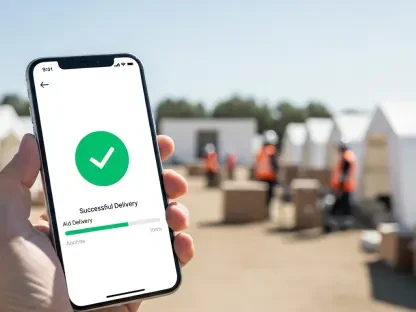
This is where technology translates directly into public sentiment. Offering a digital option is the first step, but it’s the features that eliminate uncertainty that truly build trust. A real-time confirmation email or text message is more than a receipt; it’s an immediate, tangible assurance that says, “We received your payment, your account is settled, and you can move on with your day.” It replaces the lingering anxiety of a check lost in the mail. Internally, automated reconciliation has a huge impact on transparency. When a citizen calls with a question, the government employee can see the exact, up-to-the-minute status of their payment. There’s no more, “Let me check and call you back in a few days.” That immediate access to a single source of truth demonstrates competence and accountability, proving that the government is a reliable and organized steward of public funds.
What is your forecast for the future of government payments?
I foresee government payments becoming increasingly proactive and invisible. The current modernization wave is about making it easy for citizens to make a payment. The next wave will be about making it so seamless they barely have to think about it. We’ll see more subscription-based models for recurring fees and automated renewals for things like licenses and permits, all with citizen consent, of course. The strategic partnership model with ISVs will become the absolute standard, as it’s the only way for agencies to keep pace with the speed of technological change. Ultimately, the goal is for a payment to the government to feel as effortless as a tap-to-pay transaction at a coffee shop—a frictionless, trusted interaction that reinforces the idea of a government that is responsive, efficient, and built entirely around the people it serves.