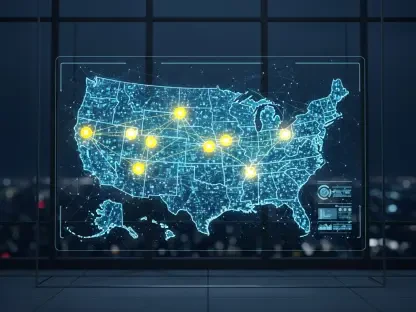

The sprawling desert landscapes of the Tohono O’odham Nation and the bustling streets of Nogales serve as the primary testing grounds for a new era of “invisible” policing. As technology evolves from towering steel structures to AI-driven software that scrapes social media and tracks license plates 100 miles from the boundary, the distinction between border security and domestic surveillance continues to blur. This interview explores the rapid expansion of the digital “smart wall,” the legal frameworks allowing federal reach into the interior, and the profound impact this persistent monitoring has on the social fabric of local communities.
Surveillance cameras are increasingly disguised as orange traffic cones, yellow barrels, and highway signs. How does this camouflage strategy impact driver behavior and public trust, and what technical challenges do agencies face when maintaining such a vast, hidden network of equipment?
The shift toward “clandestine” surveillance, like hiding automated license plate readers (ALPR) in traffic cones or highway signs, creates a profound sense of unease because it turns everyday infrastructure into a tool of suspicion. When the Arizona Department of Transportation (ADOT) has to ask federal agents to stop using orange cones because it confuses drivers who associate them with safety and construction, you see a direct hit to public trust. This strategy forces residents to treat every roadside object as a potential eye, leading to a climate where people feel they are being “monitored” even when doing mundane activities. Technically, maintaining this hidden network is a massive undertaking, as evidenced by the 2019 hack of Perceptics, where license plate data and traveler images were leaked because a private contractor violated federal policy by moving data to its own servers. Agencies are constantly balancing the need for covert placement with the physical vulnerability of these devices to tampering or cyber-attacks, as seen with the seven major vulnerabilities recently found in Vigilant Solutions’ systems.
Federal surveillance equipment is now appearing in communities more than 100 miles from the international boundary. What legal frameworks allow for this inland expansion, and how do local law enforcement agencies typically manage the data-sharing agreements that connect these distant cameras to federal databases?
The primary legal engine for this expansion is the Immigration and Nationality Act, along with Titles 8 and 19 of the U.S. Code, which traditionally established a 100-mile jurisdiction from any external boundary. However, federal agencies now argue that “other laws” allow them to operate essentially anywhere in the United States, effectively moving the perimeter 132 miles inland to places like Apache Junction or Buckeye. Local law enforcement agencies bridge the gap through sophisticated data-sharing networks like the National Law Enforcement Telecommunications System (NLETS) or private platforms like Flock Safety. For example, in Tucson, the police department used the state’s Border Security Fund—receiving a $277,500 reimbursement—to purchase software that they then used for local events like the Gem and Mineral Show rather than actual border enforcement. This creates a feedback loop where local data on everyday citizens is funneled into federal databases with very little oversight, making “every state a border state.”
AI-powered platforms can now scrape social media to map a person’s contacts and movements. How does this shift toward open-source intelligence change the day-to-day operations of investigators, and what specific steps are required to ensure these tools are not used to target journalists or activists?
Investigators are moving away from physical stakeouts and toward tools like Cobwebs Technologies’ Tangles software, which allows them to scan 200+ websites and social media platforms to visualize a person’s entire social web. This shift makes intelligence gathering “quiet” and nearly impossible for the subject to detect, as seen when Tucson police used it to monitor protesters and visitors like the Vice President. To prevent the targeting of journalists or activists, there is a desperate need for a statutory framework, as Arizona currently has no laws regulating how this surveillance equipment is used. We need mandatory, transparent audits and strict “use-case” limitations to ensure that software designed for “sex trafficking” isn’t repurposed to map the contacts of a reporter or a political organizer. Without these protections, as some advocates warn, the technology breaks the fundamental trust that the government will not surveil First Amendment activities.
Residents in rural tribal lands often encounter frequent stops and persistent monitoring from integrated fixed towers. In what ways does this constant presence alter the social fabric of these communities, and what practical measures could improve the relationship between residents and the personnel operating these systems?
In places like the Tohono O’odham Nation, the social fabric is being rewoven into something that resembles a “digitized version” of historical sundown towns, where movement is restricted by fear rather than just physical barriers. Residents like Clarice Garcia report being surrounded by five patrol vehicles and having agents bang batons on their cars while they are simply traveling to family cemeteries. This creates a permanent state of high alert where people like Gustavo Lozano no longer leave their houses without identity documents, even for a jog. To improve this, there must be a move toward community-led oversight and a “de-escalation” of the physical presence of agents who often cite vague reasons like “because we can” for stops. If Border Patrol is to be viewed as “first responders” in these thin-spread rural areas, they must prioritize transparency, such as releasing tower footage when requested via FOIA, which is currently almost always denied for “operational security.”
The market for border security technology is projected to exceed $14 billion by 2025. Which specific advancements in artificial intelligence are driving this surge in spending, and how do private contractors address the cybersecurity vulnerabilities that have historically led to data leaks?
The surge to $14.2 billion is being driven by “AI-infused” platforms that offer automated threat detection, facial recognition, and predictive analytics that can scan thousands of license plates per minute. Private contractors are aggressively marketing these tools as “force multipliers” that can replace physical agents with automated alerts, yet their track record on cybersecurity is checkered at best. When companies like Vigilant Solutions or Flock Safety are found to have major vulnerabilities, the burden often falls on the government to catch the breach after data has already been exposed. The 2019 Perceptics leak, where a hacker published stolen images of travelers’ faces, proves that contractors often prioritize data collection over data hygiene. Moving forward, contracts must include rigorous, third-party cybersecurity audits and heavy financial penalties for data mismanagement to protect the millions of records being generated.
Modern “smart wall” technology uses specialized cabling and sensors to detect activity along physical barriers. How does this system differentiate between wildlife and human movement, and what is the step-by-step process for how an automated alert triggers a physical response from agents?
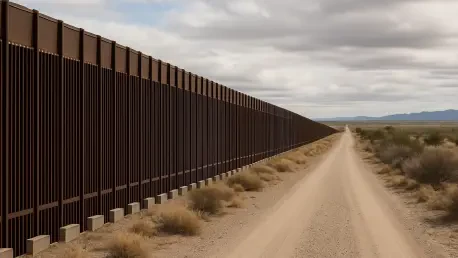
The “smart wall” operates using a thin metal casing containing specialized cables along the top of the 20-foot rust-colored barriers, which work in tandem with Integrated Fixed Towers (IFTs). While the specific algorithms are sensitive, the system uses AI to analyze vibrations and visual data, attempting to filter out the erratic movements of wildlife versus the directional, sustained movement of a human climber. Once a sensor is tripped, the system triggers a “swivel” of the nearest high-powered camera—as we experienced firsthand when a tower pivoted to observe us on public land—to provide a high-definition feed to a command center. An agent then verifies the visual “hit” and dispatches a ground unit, often an ATV or a helicopter, to the precise GPS coordinates provided by the sensor. This process is designed to be seamless, but it often results in “false alerts” that lead to the aggressive, mistaken stops reported by residents like Richard, who was handcuffed for 30 minutes because a dog or sensor “alerted” on his uncle’s car.
Some cities use state border security funds to purchase software for local events, such as street fairs or protests. How does this repurposing of funds affect the oversight of surveillance activities, and what metrics should be used to determine if these technologies actually reduce crime?
Repurposing these funds creates a massive oversight gap because it allows local police to acquire military-grade surveillance tools under the guise of “border security” for use in completely unrelated domestic settings. When Tucson uses these funds to monitor a Gem and Mineral Show, it bypasses the traditional public debate that should accompany the purchase of such invasive technology. To fix this, we need metrics that move beyond “number of scans” and instead focus on “clearance rates” for specific, high-level crimes like kidnapping or murder, ensuring the tech isn’t just being used for low-level harassment or data hoarding. We must also demand “disparate impact” studies to see if these cameras are disproportionately placed in minority neighborhoods, as current trends suggest a return to “extreme surveillance of every single person” rather than targeted law enforcement.
What is your forecast for border surveillance?
My forecast is that the “border” will continue to detach from the physical line on the map and become a ubiquitous digital layer that follows individuals based on their data profile. We are moving toward a reality where your “digital license plate”—linked to your social media, your travel history, and even your family’s immigration status—will determine how often you are pulled over or harassed, regardless of whether you are in Nogales or Chicago. As AI becomes more integrated, the surveillance will become even more “quiet” and “unseen,” making it harder for citizens to challenge abuses in court because they won’t even know they are being monitored. The only way to counter this is through immediate legislative action at the state and federal levels to create a framework for transparency, or we risk a future where the “cost of just doing your life” is the loss of your right to move freely without being cataloged by an algorithm.