
The recent unanimous vote by the Lowell City Council to impose a one-year moratorium on data center construction marks a seismic shift in how Massachusetts municipalities view the digital infrastructure boom. This decision was not merely a administrative pause but a vivid illustration of the deepening friction between two groups that traditionally find common ground: labor organizations seeking high-paying construction jobs and environmental advocates concerned about industrial encroachment. During the public hearings, representatives from local trade unions spoke of the long-term stability and infrastructure investment these projects represent, while residents and neighborhood activists countered with visceral concerns regarding noise pollution, resource depletion, and the fundamental alteration of their community’s character. This local conflict serves as a stark microcosm of a national debate that is rapidly evolving as the physical requirements of the digital age collide with the lived reality of urban and suburban neighborhoods.
As these facilities transition from being viewed as simple warehouses for servers to the essential engines of the artificial intelligence revolution, their demands on the power grid and water supplies have reached unprecedented levels. The “unfettered excitement” that once welcomed any high-tech investment is now being tempered by a sober, and often adversarial, regulatory scrutiny. Communities that were once eager to fill vacant industrial zones with tech-adjacent businesses are now conducting rigorous cost-benefit analyses, questioning whether the temporary boost in construction employment and a bump in property tax revenue are worth the permanent increase in energy demand and the potential strain on local utility infrastructure. This shift in sentiment indicates that the era of easy approvals for massive data campuses is coming to an end, replaced by a complex landscape of legislative caution and public skepticism that state leaders must now navigate.
The Collision of Economic Development and Resource Scarcity
Balancing Industrial Growth and Local Quality of Life
The economic argument for data centers often centers on their ability to transform underutilized or blighted urban landscapes into productive, tax-generating assets for the municipality. In Lowell, the ongoing discussion regarding the Markley facility—a massive 350,000-square-foot proposal—highlights the significant financial stakes involved for local governments. Proponents point to the projected $12 million in net tax revenue over a twenty-year period as a vital lifeline for public services and schools. For municipal leaders facing stagnant budgets, the promise of such a concentrated, reliable tax base is an incredibly persuasive incentive. Labor unions, particularly groups like the IBEW, view these projects as essential sources of specialized work that can sustain a local workforce for years, providing the kind of high-stakes electrical and mechanical contracts that are rare in traditional commercial development.
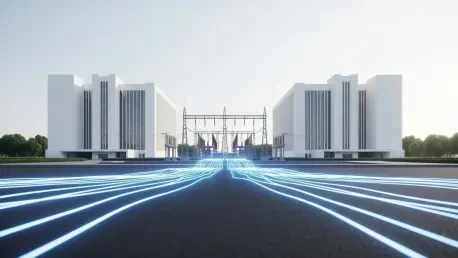
However, the tangible benefits of tax revenue and union wages often stand in direct opposition to the daily experiences of residents living in proximity to these sprawling industrial sites. Those residing in state-designated environmental justice zones have expressed growing alarm over the “industrialization” of their residential outskirts. The infrastructure requirements alone are staggering, often necessitating the installation of hundreds of new, heavy-duty utility poles and the onsite storage of hundreds of thousands of gallons of diesel fuel to power emergency generators. Beyond the visual impact, the persistent low-frequency hum of massive cooling fans creates a type of acoustic pollution that residents argue degrades their health and property values. This tension forces a difficult question: how can a city prioritize its financial solvency without sacrificing the fundamental quality of life for its most vulnerable populations?
Policy Delays and the Energy Demand Dilemma
Governor Maura Healey has placed artificial intelligence at the very heart of the state’s economic roadmap, envisioning a $100 million AI Hub that could solidify Massachusetts as a global leader in the field. This ambition is particularly critical as the state’s historically dominant biotechnology and life sciences sectors face a period of cooling and consolidation. However, the physical reality of the AI boom is at odds with the current capacity of the regional energy grid. Although a significant economic development law was signed in 2024 to provide sales and use tax exemptions for data center equipment, the final regulations required to implement these perks have remained in a state of administrative limbo. This delay suggests a growing realization within the administration that the state may not be able to handle the projected 25% surge in peak electrical demand that a fully realized data center industry would require.
In response to this looming energy crisis, a new concept known as “Bring Your Own Power” (BYOP) is beginning to redefine the relationship between tech giants and the public grid. This model suggests that the multibillion-dollar corporations behind these data centers should be responsible for generating their own clean energy or funding the massive grid upgrades necessary to support their operations. This approach has gained surprising bipartisan support, bridging the gap between progressive environmentalists and fiscal conservatives who agree that residential ratepayers should not bear the cost of upgrading the grid for private industrial expansion. By shifting the financial and logistical burden of power generation back onto the developers, state leaders hope to decouple the growth of the AI sector from the risk of skyrocketing utility bills for the average Massachusetts household.
Regional Trends and the Future of Digital Infrastructure
Legislative Caution and Climate Objectives
The skepticism emerging in Lowell is not an isolated incident but rather part of a broader regional and national trend where lawmakers are pulling back the reins on data center expansion. Across New England and beyond, states like Maine, Vermont, and even Georgia are currently debating or implementing similar pauses and repeals of long-standing tax incentives. Even in Northern Virginia, which houses the largest concentration of data centers on the planet, officials are experiencing a form of “buyer’s remorse” after realizing that the industry’s growth has necessitated billions of dollars in new transmission lines, costs that are being passed directly to consumers. This wave of public opposition is largely driven by a clear and simple fear: that the corporate energy needs of Silicon Valley will lead to higher monthly expenses for families who are already struggling with the cost of living.
Furthermore, there is a fundamental and increasing conflict between the resource-intensive nature of data centers and the state’s legally mandated climate goals. Massachusetts is committed to a drastic reduction in greenhouse gas emissions by 2030, a target that requires a rapid transition away from fossil fuels. Data centers, however, operate around the clock and require a constant, stable flow of electricity that the current renewable energy portfolio cannot yet provide at scale. If the state allows a massive influx of these facilities, it risks being forced to rely on natural gas-fired power plants to ensure grid stability, effectively sabotaging its own environmental milestones. Without a breakthrough in large-scale energy storage or small modular nuclear reactors, the environmental cost of being an AI leader may prove to be a price that the Commonwealth is unwilling to pay.
Strategic Planning and Social Equity
The difficulty of advancing these projects is perhaps most evident in the city of Westfield, where a proposed billion-dollar data center has remained in a protracted holding pattern for several years. Despite securing early tax agreements and the promise of becoming the city’s largest taxpayer, the project has struggled to move from the drawing board to the construction phase. This stagnation suggests that the “easy money” phase of data center development is over, as financial incentives are no longer enough to overcome the logistical hurdles of a strained energy grid and local zoning opposition. The Westfield situation serves as a warning that without a comprehensive state-level strategy that addresses energy transmission and community impact, even the most well-funded projects may never see the light of day.
Conversely, some regional planners argue that Massachusetts could actually turn its late-entry status into a strategic advantage. By observing the infrastructure failures and social friction that occurred in “Data Center Alley” in Virginia, Massachusetts regulators have the opportunity to implement some of the most stringent energy efficiency and community benefit standards in the country. ISO-NE, the regional grid operator, has noted that this “wait and see” approach allows the state to prioritize long-term reliability and social equity over a short-term rush for tax revenue. Ensuring that these facilities are not disproportionately placed in low-income neighborhoods and that they contribute meaningfully to the local power infrastructure could create a more sustainable path forward for the digital economy in New England.
The struggle to integrate data centers into the fabric of Massachusetts communities was a defining challenge that reshaped the state’s economic and environmental policy. By the time the Lowell moratorium was enacted, it became clear that the previous model of offering broad tax exemptions in exchange for jobs was no longer a viable or popular strategy. State leaders eventually realized that the success of the burgeoning AI sector depended entirely on the industry’s willingness to innovate its own power solutions rather than relying on an aging public grid. This shift in perspective prompted developers to explore on-site renewable energy and advanced cooling technologies, which slowly began to alleviate some of the noise and pollution concerns that had fueled local opposition.
Ultimately, the resolution of these conflicts required a new framework of cooperation that prioritized the quality of life for residents and the preservation of state climate mandates. The transition toward a more regulated and self-sufficient data center model allowed the Commonwealth to maintain its competitive edge in the technology sector without placing an undue burden on residential ratepayers. Future developments were tasked with proving their sustainability and social utility before breaking ground, turning the “digital warehouse” into a more responsible neighbor. This evolution proved that while the demand for data was infinite, the resources of the community were not, and managing that balance remained the most critical task for the next decade of industrial growth.