
A New Frontier in State Security and Procurement
The sky over the Great Lakes is becoming a focal point for a sophisticated legislative maneuver designed to safeguard Michigan’s critical data from international prying eyes. Michigan is currently at the center of a growing national debate regarding the intersection of public safety and international technology manufacturing. Recent legislative initiatives presented to a Michigan House committee signal a decisive shift toward restricting the state’s procurement of unmanned aircraft systems, commonly known as drones. This move is not merely a change in purchasing policy but a proactive stance against potential data vulnerabilities. By exploring the motivations behind this proposal, this analysis aims to highlight how Michigan is prioritizing long-term infrastructure security over short-term budgetary savings, setting a precedent for how state agencies handle sensitive aerial data in an era of increasing geopolitical tension.
The Evolution of Drone Integration and Security Risks
The use of drones by state agencies has evolved rapidly over the last decade, transforming from niche tools into essential equipment for law enforcement, environmental monitoring, and infrastructure inspection. Historically, the primary factor driving procurement was cost-efficiency, which led many departments to favor foreign-manufactured drones that offered high performance at a lower price point. However, as these devices became more integrated into critical operations, the industry began to recognize significant backdoor vulnerabilities. Past developments at the federal level, including warnings from the Department of Justice and the Department of Homeland Security, have shaped the current landscape, shifting the focus from hardware capability to the integrity of the data being collected and transmitted. This transition marks a departure from the “performance first” mindset of previous years, moving instead toward a framework where security is the non-negotiable baseline for any state-funded technology.
The Intersection of Geopolitics and Digital Privacy
Mitigating the Risk: Foreign Surveillance and Data Leakage
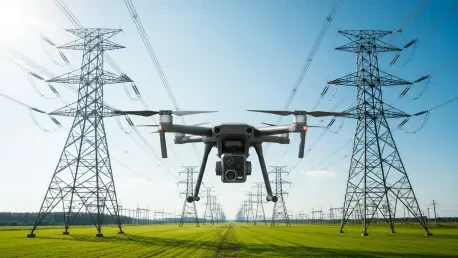
A critical aspect of the Michigan proposal is the focus on preventing sensitive information from being transmitted to foreign adversaries. Lawmakers are increasingly concerned that drones manufactured in certain jurisdictions may contain embedded software designed to exfiltrate data. For example, law enforcement surveillance or detailed maps of the state’s power grid could be compromised if the hardware facilitates unauthorized data leakage. By restricting the use of taxpayer funds for these devices, Michigan aims to ensure that clean technology is used for government operations, thereby protecting the sovereignty of state data and the privacy of its citizens. This strategy acknowledges that a single compromised device could provide a gateway for larger-scale cyber espionage, potentially endangering the physical security of public utility networks and regional transportation hubs.
Economic Balance: Cost Efficiency Versus Supply Chain Integrity
While foreign-made drones often provide a lower barrier to entry for cash-strapped local agencies, the proposed legislation highlights a trend toward technological protectionism. This angle suggests that the true cost of a drone includes the potential for security breaches and the long-term risks associated with a compromised supply chain. By favoring domestic or trusted manufacturers, Michigan is participating in a broader effort to bolster the domestic drone industry. This approach creates opportunities for American tech firms to innovate while ensuring that the state’s critical operations are not dependent on entities that may have conflicting national interests. Furthermore, localizing production reduces the volatility associated with international trade disputes, ensuring that maintenance and replacement parts remain accessible even during global shipping disruptions.
Operational Clarity: Addressing Regulatory Complexities and Transparency Standards
The debate in Michigan also reflects modern complexities in data management that go beyond physical hardware. Just as the state seeks to regulate drone procurement, there is an underlying push for transparency in how all digital information is tracked and stored. This includes aligning state operations with contemporary privacy standards like the CCPA, ensuring that data collected via aerial surveillance is categorized and protected according to its sensitivity. Addressing these complexities helps clear up misconceptions that the ban is purely political; rather, it is part of a comprehensive strategy to harmonize physical security with evolving digital privacy protocols. These measures ensure that data remains anonymized when necessary and that strict access controls prevent unauthorized personnel from viewing sensitive telemetry or high-definition imagery.
Future Implications for State Technology Policy
The move to ban foreign drones is likely a harbinger of broader regulatory changes in how state governments manage technology. In the coming years, we can expect to see emerging trends where security-by-design becomes a mandatory requirement for all state-contracted electronics, from body cameras to smart-city sensors. Technological innovations in encrypted, domestic-made systems will likely accelerate as state-level bans create a more robust market for secure alternatives. Speculative insights suggest that if Michigan successfully implements these restrictions, it provided a blueprint for other states to follow, eventually leading to a standardized national framework for secure government procurement. This shift will likely drive investment into sovereign cloud computing, where data from diverse IoT devices is consolidated and shielded behind state-governed firewalls.
Strategies for a Secure Technological Transition
The analysis of Michigan’s legislative direction provides several key takeaways for policymakers and agency heads. First, agencies should conduct immediate audits of their current fleets to identify and phase out equipment from high-risk manufacturers. Second, procurement officers should prioritize long-term security and software transparency over initial purchase price. Finally, organizations should implement strict data-handling protocols to ensure that any information captured by drones is stored in secure, domestic cloud environments. By applying these best practices, state agencies can transition to more secure platforms without disrupting their essential services. It is also beneficial for agencies to seek partnerships with domestic software developers who can provide modular, open-source pilot interfaces that reduce reliance on proprietary foreign code.
Securing Michigan’s Skies and Sensitive Data
Michigan’s move to restrict foreign-made drones represented a significant milestone in the evolution of state sovereignty and digital security. By addressing the vulnerabilities inherent in foreign technology supply chains, the state took a proactive step to protect its critical infrastructure and the privacy of its residents. As the boundary between physical security and digital integrity continued to blur, the significance of this policy only grew. Ultimately, this initiative underscored a vital strategic takeaway: in the modern age, the origin of government technology became an inseparable component of national and state security. The legislative framework successfully encouraged a more resilient tech ecosystem where the benefits of rapid innovation were balanced against the absolute necessity of data protection and public trust.