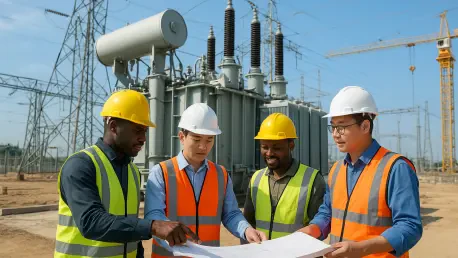

Nigeria stands at a critical juncture where the ambition of its industrial sector often outpaces the reliability of its power supply, necessitating a radical shift in how energy infrastructure is developed and funded. The Federal Government is shifting its focus toward blended financing structures to bridge the massive infrastructure gap in the national electricity transmission network. This strategic pivot, recently emphasized during a high-level diplomatic mission to Beijing led by Minister of Power Joseph Tegbe, moves beyond the traditional model of simple service contracts. Instead, the administration is championing a framework of long-term investment and technical innovation that encourages Chinese engineering firms to become equity partners rather than mere vendors. By aligning the incentives of international partners with the operational success of the grid, Nigeria is laying the groundwork for a more resilient and self-sustaining energy ecosystem that can support its burgeoning economy and technological needs as it transitions into a modern industrial hub.
Enhancing Accountability and Technical Standards
Driving Project Completion through Performance Timelines
Central to the recent discussions in Beijing is the demand for rigid, non-negotiable timelines that ensure the timely delivery of vital power projects under the Presidential Power Initiative. The Nigerian delegation has been clear that vague diplomatic gestures are no longer sufficient; the focus has shifted toward creating bankable projects with secured financing and transparent accountability mechanisms. This results-oriented approach aims to systematically dismantle the bureaucratic bottlenecks and funding delays that have historically hindered the expansion of the national grid. By establishing a clear roadmap for project execution, the government is providing the certainty that international investors require to commit significant capital. This shift ensures that every dollar spent is directly tied to measurable progress on the ground, creating a culture of performance that prioritizes the needs of Nigerian consumers and businesses over political convenience or short-term gains.
Implementing Rigorous Quality Control and Factory Testing
To ensure the durability of this new infrastructure, the government has instituted rigorous quality assurance protocols that include exhaustive factory acceptance tests at Chinese industrial parks. Nigerian engineers and inspectors now verify the integrity of high-voltage cables and transmission components before they ever reach the shores of West Africa. By vetting technical equipment at the source, the Ministry of Power is effectively preventing the integration of substandard materials that could lead to frequent outages or system failures. This proactive oversight is a departure from previous practices where quality control was often an afterthought. Now, the emphasis is on adhering to international standards throughout the supply chain, ensuring that the partnership with China delivers durable assets that serve as the backbone for the nation’s long-term energy security. This level of scrutiny builds trust and ensures that the infrastructure serves its intended purpose for decades.
Integrating Energy and Industrial Growth
Creating a Self-Sustaining Cycle of Industrial Cooperation
The Federal Government recognizes that expanding electricity capacity is only one half of the equation; the other half involves ensuring that this power is utilized efficiently to drive industrial growth. To bridge this gap, Minister Tegbe proposed the creation of a Nigeria-China industrial cooperation platform specifically designed to attract investment into energy-intensive sectors like steel production and automobile manufacturing. These anchor industries are intended to serve as off-takers for the newly generated power, creating a guaranteed demand that justifies the massive investment in the grid. This strategy transforms the power sector from a struggling public utility into a primary engine for economic development. By co-locating industrial zones with reinforced power hubs, the government is creating a symbiotic relationship where infrastructure enables industry, and industry provides the revenue necessary to maintain and expand that very infrastructure through a virtuous cycle of national growth.
Leveraging Blended Finance for Long-Term Infrastructure Stability
Stakeholders recognized that the success of the Presidential Power Initiative depended on the integration of localized manufacturing and technology transfer, which prompted the establishment of regional maintenance hubs. These facilities were designed to ensure that technical expertise remained within the country, reducing the reliance on foreign technicians for routine repairs. Moving forward, the government should prioritize the formalization of these industrial cooperation agreements to ensure that the steel and automotive sectors are fully operational by the end of the 2026-2028 development cycle. By maintaining this rigorous focus on blended finance and quality control, Nigeria successfully positioned its power sector as a stable foundation for an industrial revolution. Future efforts focused on scaling these clusters to other regions, ensuring that the benefits of reliable electricity and industrialization were distributed equitably to maximize national impact across the federation.