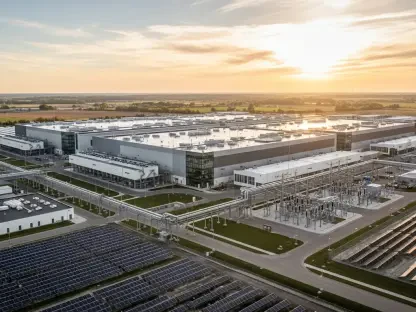

The rapid transformation of Ohio’s landscape into a digital powerhouse has hit a significant legal and social roadblock as the state moves toward a pivotal referendum on industrial expansion. On April 3, 2026, the Ohio Ballot Board officially certified a proposed constitutional amendment that could fundamentally reshape the state’s relationship with the global technology sector. This initiative, spearheaded by a grassroots organization known as Ohio Residents for Responsible Development, seeks to impose a strict ban on the construction of massive data centers, specifically those that place an extraordinary burden on the local utility infrastructure. By securing this certification, the group has cleared the first major procedural hurdle, granting them the legal authority to begin a massive statewide signature-gathering campaign. This movement highlights a growing tension between the drive for technological leadership and the desire of local communities to protect their resources from the perceived encroachment of “hyperscale” industrial facilities.
As artificial intelligence and cloud computing continue their meteoric rise, Ohio has become one of the most concentrated hubs for data processing in the United States. However, this growth has come at a cost that many residents are no longer willing to accept without a public mandate. The proposed amendment is a direct response to the proliferation of windowless industrial giants that consume millions of gallons of water and require massive amounts of electricity, often straining the very grids that power residential neighborhoods. For proponents of the ban, the current trajectory is unsustainable, threatening both the affordability of basic utilities and the rural character of the state. With the board’s approval, the conversation now moves from the halls of government to the doorsteps of Ohioans, as volunteers prepare to mobilize across 88 counties to bring this issue to a vote on the November ballot.
Technical Limits and Regulatory Certification
Defining the Boundaries of the Ban
The technical foundation of the proposed amendment rests on a specific and restrictive ceiling: a prohibition on any new data center construction requiring a peak load exceeding 25 megawatts per month. To appreciate the weight of this restriction, one must consider the operational scale of modern “hyperscale” facilities, which are the standard for industry titans like Amazon Web Services, Meta, and Google. These massive complexes often require hundreds of megawatts to sustain their sprawling server racks and intensive cooling systems, especially as generative AI applications demand more power than traditional cloud storage. By setting the threshold at 25 megawatts, the amendment would effectively render it impossible to build the kind of large-scale infrastructure that has defined the tech industry’s expansion in recent years. This targeted approach is designed to allow for smaller, more localized data operations while preventing the arrival of massive energy consumers that advocates argue destabilize the state’s long-term energy security and environmental health.
Beyond the immediate energy cap, the proposal reflects a deep-seated skepticism toward the current design of the digital economy. The organizers argue that the 25-megawatt limit is not an arbitrary number but a strategic boundary intended to separate community-integrated technology from invasive industrial hubs. While a 25-megawatt facility is still significant, it is far more manageable for local utility companies to accommodate without requiring massive new power plants or extensive high-voltage transmission lines that often bisect private property. This distinction is crucial because it addresses the “all-or-nothing” narrative often presented by developers. Instead of banning technology entirely, the amendment seeks to downsize it to a level that proponents believe is compatible with Ohio’s existing infrastructure. This creates a regulatory environment where growth must be incremental and sustainable, rather than explosive and resource-intensive, forcing tech giants to rethink their centralized “mega-campus” strategy if they wish to continue operating within the state’s borders.
The Ballot Board’s Procedural Role
The Ohio Ballot Board’s decision to certify the petition was a unanimous act, but it is important to distinguish this procedural approval from a legal or political endorsement of the ban itself. Led by acting chairwoman Kimberly Burns, the board’s primary responsibility was to verify that the proposed amendment constitutes a single, cohesive issue rather than a fragmented collection of unrelated policy changes. This “single-subject” rule is a cornerstone of Ohio’s initiative process, ensuring that voters are not forced to accept a bundle of disparate laws in a single “yes” or “no” vote. By confirming that the petition met this standard, the board has authorized the group to move into the signature-gathering phase. However, this step is merely the beginning of a long legal journey; the certification does not shield the proposal from future challenges in the court system regarding its constitutionality or its potential conflict with federal commerce laws and interstate trade regulations.
While the board focused on the procedural aspects, the state’s legal leadership has already signaled that the road ahead will be scrutinized. Attorney General Dave Yost previously noted that while the summary of the amendment was a fair and truthful representation of the group’s intent, the underlying legality of such a ban remains an open question. This creates a complex landscape for the organizers, who must now convince the public of the proposal’s merits while operating under the shadow of potential litigation from industry groups and utility providers. The certification acts as a green light for democratic participation, but it also sets the stage for a high-stakes confrontation between the state’s executive branch and the grassroots movement. For the residents involved, the board’s decision is a victory that legitimizes their concerns, transforming a local grievance into a statewide constitutional debate that could set a precedent for how other states manage the physical footprint of the digital world.
The Case for Resource and Grid Protection
Preserving Water and Agricultural Land
The movement to restrict data centers is deeply rooted in the concept of environmental stewardship, particularly in regions where water and land are the primary economic drivers. Proponents of the amendment argue that Ohio’s natural resources are being exported in the form of digital services, leaving the local population to deal with the ecological consequences. Large-scale data centers are notorious for their water consumption; a single facility can require millions of gallons daily to maintain the precise temperatures needed for server performance. In rural southwest Ohio and the Appalachian foothills, where agricultural heritage is a point of pride, the sight of massive, windowless industrial complexes replacing fertile farmland has sparked a sense of urgency. Advocates like Nikki Gerber have framed the mission as a fight to “conserve Ohio,” suggesting that the short-term economic gains of land sales do not outweigh the long-term loss of the state’s agricultural capacity and environmental stability.
This preservationist argument extends beyond the immediate footprint of the buildings to the broader impact on local ecosystems and community character. As these facilities move into rural areas, they often necessitate the expansion of industrial infrastructure, such as substations and heavy-duty access roads, which can fragment wildlife habitats and disrupt the quiet nature of small-town life. The grassroots coalition emphasizes that once prime agricultural land is paved over for a data center, it is effectively lost to the state’s food system forever. By pushing for a constitutional ban, they aim to create a permanent shield for these lands, arguing that the state should prioritize its ability to feed its citizens and protect its aquifers over the expansion of global digital infrastructure. This perspective resonates strongly with voters who feel that the pace of industrialization has outstripped the state’s ability to manage its environmental consequences, leading to a “not-for-sale” sentiment that is driving the signature-gathering efforts.
Addressing the Strain on Electricity
Perhaps the most persuasive argument for the proposed ban is the potential impact on Ohio’s electrical grid and the resulting financial burden on residential ratepayers. Statistics from the Office of Ohio Consumers’ Counsel suggest that a single massive data center can consume as much electricity as 100,000 homes, a level of demand that forces utility companies to rethink their entire generation and distribution strategy. As the national appetite for data processing grows, some projections suggest that data center power use could represent nearly 10% of total U.S. electricity consumption by the end of the decade. Organizers of the “Ohio Residents for Responsible Development” group argue that this surge in demand inevitably leads to higher utility rates, as the cost of building new power plants and upgrading transmission lines is often passed down to everyday consumers. They view the amendment as a necessary “stop-gap” to prevent global tech corporations from effectively subsidizing their operations through the monthly bills of Ohio families.
The tension over energy use is compounded by the perception that these facilities offer very few permanent jobs compared to the massive amount of resources they consume. While a traditional manufacturing plant might employ thousands of workers, a data center of similar size may only require a small team of technicians and security personnel once construction is complete. This “low-employment, high-resource” model is a central point of contention for activists like Andrew Gula, who describes the current expansion as a “train leaving the station” that must be halted before it causes permanent economic damage. The coalition argues that by capping the energy usage of new facilities, the state can protect its residents from the volatility of the energy market and ensure that the grid remains focused on serving the needs of the public rather than the computational requirements of offshore AI firms. This focus on utility affordability provides a powerful economic incentive for urban and rural voters alike to support the initiative.
Ohio’s Status as a Digital Infrastructure Hub
Current Density and Urban Concentrations
Ohio has successfully marketed itself as a premier destination for the tech industry, currently holding the title of the fifth-highest state in the nation for data center density. With approximately 200 active facilities spread across the state, the industry has a massive presence, particularly in the metropolitan regions of Columbus, Cincinnati, and Cleveland. These hubs have attracted billions of dollars in private investment, with local governments often providing tax incentives to lure the world’s largest tech companies. However, this high concentration is precisely what the “Responsible Development” group seeks to curb, arguing that the state has reached a saturation point. They contend that while the initial wave of development may have brought economic benefits to specific municipal budgets, the cumulative effect of 200 facilities—and the potential for hundreds more—poses a systemic risk to the state’s long-term resource management and infrastructure stability.
The concentration of these facilities in suburban and urban fringes has also led to a localized backlash regarding noise pollution and the aesthetic impact of industrial zoning. In central Ohio, where the density is highest, residents have become increasingly vocal about the transformation of their communities into “server corridors.” The group arguing for the amendment suggests that the current density already strains local water tables and pushes the limits of existing electrical substations, making any further expansion a gamble with the state’s reliability. By highlighting the existing 200 facilities, the organizers are attempting to show that Ohio has already “done its part” for the digital economy and that it is time to prioritize other forms of development. This narrative shifts the focus from being “anti-tech” to being “pro-balance,” suggesting that a state can be a leader in technology without sacrificing every acre of available land to the hyperscale model.
National Skepticism and Legislative Trends
The push for a ban in Ohio is not an isolated event but rather a significant chapter in a broader national trend of skepticism regarding the physical footprint of the internet. Lawmakers in at least 11 other states, including Virginia, Georgia, and Michigan, have recently debated or introduced legislation aimed at pausing data center growth or revoking the generous tax breaks that originally attracted these firms. This movement suggests a growing consensus among local leaders that the “growth at any cost” era of digital infrastructure may be coming to an end. In Virginia, home to the world’s largest concentration of data centers, residents and legislators are grappling with similar issues regarding grid reliability and environmental impact. The Ohio initiative is unique, however, because it bypasses the legislative process in favor of a constitutional amendment, reflecting a deep distrust of the traditional political system’s ability to regulate powerful tech interests.
In response to these rising tensions, the Ohio House of Representatives recently passed a bill to create a data center study commission, intended to provide a data-driven approach to future regulation. While this move indicates that the state government recognizes the problem, the organizers of the constitutional amendment view it as an inadequate “delay tactic.” They argue that by the time a study is completed and recommendations are made, dozens of new projects could already be approved and under construction. This sense of urgency is what drives the grassroots movement to seek a permanent, constitutional solution. They believe that the legislative branch is too susceptible to the lobbying efforts of tech giants and that only a direct vote of the people can provide the necessary oversight. This clash between slow-moving government studies and fast-acting public initiatives defines the current political climate in Ohio, making the upcoming signature drive a high-stakes test of grassroots power versus corporate influence.
Logistical Hurdles and Future Uncertainty
The Challenge of Signature Collection
The path to placing a constitutional amendment on the ballot is one of the most rigorous democratic exercises in the state, requiring a level of organization that few volunteer groups can sustain. To qualify for the November vote, the organizers must collect at least 413,000 valid signatures from registered voters by the July 1, 2026, deadline. However, the requirements go beyond simple numbers; the “geographic diversity” rule dictates that the group must collect signatures equal to at least 10% of the last gubernatorial vote in at least 44 of Ohio’s 88 counties. This ensures that a proposal cannot be driven solely by a single major city but must have broad support across the state’s various regions. Despite the tight three-month window, the leadership of Ohio Residents for Responsible Development remains optimistic, planning to leverage a massive network of local leaders who are already active in the Appalachian and rural southwest regions.
The group’s decision to rely entirely on volunteers rather than hiring professional signature-gathering firms is a risky but intentional strategy designed to maintain the “organic” integrity of the movement. Austin Baurichter, one of the lead organizers, has emphasized that the goal is to build a community-led coalition that can withstand the inevitable pushback from industrial lobbyists. By targeting high-traffic public events like summer festivals, county fairs, and local town halls, the group hopes to capitalize on the widespread frustration regarding rising utility costs and land use. This grassroots approach serves a dual purpose: it bypasses the need for the millions of dollars usually required for a statewide campaign and ensures that the individuals carrying the petitions are passionate members of the communities they are canvassing. If successful, this effort would represent one of the most significant volunteer-led petition drives in the state’s history, proving that local concerns can still compete with the financial might of global corporations.
Legal Questions Regarding Existing Projects
One of the most complex issues surrounding the proposed amendment is its potential impact on data centers that are already in various stages of development. If the ban is enacted, it remains unclear whether it would apply to facilities that have already broken ground or those that have received preliminary zoning approvals but have not yet completed construction. Austin Baurichter has acknowledged that there is no “hard and fast” legal answer to this question, though general legal principles usually prevent laws from acting retroactively to strip away vested rights. This “rear-view mirror” effect means that projects currently under construction might be allowed to finish, but any future expansion or the commencement of new phases at those sites could be permanently blocked. This creates a period of intense uncertainty for developers and investors who have already committed hundreds of millions of dollars to Ohio-based projects.
The ambiguity regarding existing projects is likely to be a major point of contention in the coming months, as industry groups will almost certainly use this uncertainty to argue against the amendment’s passage. They will likely claim that the ban would lead to a wave of breach-of-contract lawsuits and drive away future investment in all sectors of the economy, not just technology. However, the organizers view the amendment as a vital “stop-gap” regardless of its impact on current projects. Their primary focus is on preventing the next wave of hyperscale development—the projects that haven’t been dreamed of yet but would further strain the state’s resources if left unchecked. By drawing a line in the sand now, they hope to force a broader conversation about the state’s industrial priorities. The legal battles that follow will likely center on the definition of “commencement of construction” and whether a constitutional amendment can supersede existing municipal development agreements, ensuring that the debate continues long after the votes are counted.
The Litmus Test for Industrial Growth
The struggle over data centers in Ohio serves as a critical bellwether for the future of industrial policy in an age of rapid technological advancement. This movement is not merely a local zoning dispute; it is a fundamental inquiry into how much a society is willing to sacrifice for the sake of the digital economy. The outcome of the signature drive and the potential November vote will provide a clear indication of whether the public views massive data infrastructure as a vital engine of progress or as an extractive industry that threatens their quality of life. For technology firms, the situation in Ohio suggests that the era of uncontested expansion is over and that future projects will require much higher levels of community engagement and resource transparency. Companies may need to prioritize decentralized architectures, advanced “waterless” cooling technologies, and direct investments in local renewable energy generation to win back public trust.
Moving forward, the conversation must shift toward a model of “responsible development” that balances innovation with the finite limits of the physical world. If the amendment passes, it will force a radical shift in how cloud providers and AI developers plan their infrastructure, potentially leading to a more distributed network of smaller data centers that are less burdensome on any single community. If it fails, the issues raised—utility costs, water conservation, and land use—will not disappear; instead, they will likely manifest in more localized legal challenges and legislative battles. The actionable takeaway for both citizens and policymakers is the need for a more comprehensive regulatory framework that addresses the unique demands of hyperscale computing before projects reach the construction phase. This proactive approach, rather than the “nuclear option” of a constitutional ban, may ultimately be the only way to ensure that Ohio remains a leader in the digital age without compromising its foundational resources.