
The invisible burden of antiquated government software often manifests as a crushing weight on the shoulders of citizens who can least afford the cost of bureaucratic delay. For decades, the public sector has struggled with “technical debt,” a term that describes the long-term consequences of choosing easy, short-term software fixes over robust, sustainable solutions. In the specific context of social services, this debt is not merely a financial liability; it is a systemic barrier that prevents the delivery of food assistance, healthcare, and child protection. The recent pivot toward ServiceNow for social services modernization represents a calculated attempt to dismantle these barriers. By replacing fragmented, paper-heavy legacy systems with unified, cloud-based environments, agencies are attempting to move beyond the “emergency patch” era of IT and into a phase of proactive, data-driven governance.
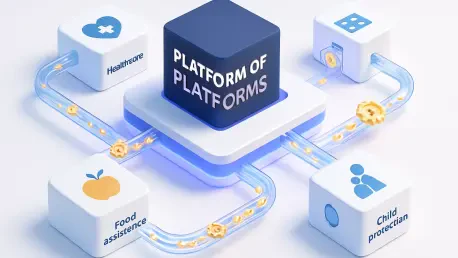
This review examines how this technological shift is fundamentally altering the DNA of public assistance programs. The transition is less about adopting a new software tool and more about embracing a comprehensive operational philosophy that prioritizes the user experience. In many state agencies, the infrastructure supporting critical programs like Medicaid or the Supplemental Nutrition Assistance Program (SNAP) often dates back to the late 20th century. These systems were built for a different era of data processing, where interoperability was an afterthought and citizen engagement was largely manual. The ServiceNow approach seeks to bridge this gap by providing a “platform of platforms” that can sit atop legacy systems, orchestrating complex workflows while shielding both caseworkers and citizens from the underlying technical complexity.
Transitioning from Legacy Technical Debt: A Shift Toward Agile Frameworks
The accumulation of technical debt within state agencies often results in a “spaghetti” architecture, where decades of modifications have created a system so fragile that minor updates can cause catastrophic failures. In Missouri, the Department of Social Services (DSS) found itself at a crossroads, dealing with systems that were no longer capable of meeting the demands of modern governance. The shift toward an agile, cloud-based platform is an attempt to break this cycle of reactive maintenance. Unlike legacy systems that are “hard-coded” for specific tasks, modern agile platforms allow for modular updates. This means that when a federal policy changes or a new state mandate is issued, the IT team can adjust the workflow without rebuilding the entire system from scratch.
This move toward agility is particularly relevant in the current technological landscape, where “user-centric design” has become the gold standard. Historically, government software was designed to meet the requirements of auditors and policy analysts, often at the expense of the frontline workers. Modernization efforts now focus on dismantling these inefficient bureaucracies by automating the “low-value” tasks—such as manual data entry or document routing—that consume the majority of a caseworker’s day. By doing so, the platform aims to redirect human energy toward high-value interactions, such as counseling families or investigating welfare concerns. This transition represents a broader move toward a digital environment where data flows seamlessly between agencies, ensuring that a citizen’s information is consistent across all touchpoints.
The dismantle of technical debt also addresses the critical issue of “data silos.” In many states, the agency handling Medicaid has no visibility into the data held by the agency handling SNAP, even though the beneficiaries are often the same. This fragmentation forces citizens to provide the same information multiple times and leads to massive administrative redundancies. A unified, cloud-based environment acts as a central nervous system for these disparate programs. It provides a single source of truth, reducing errors and ensuring that the state has a holistic view of the services being provided to any given household. This systemic integration is the foundational requirement for moving from a reactive “crisis management” model to a proactive “preventative care” model.
Key Architectural Components: Examining the ServiceNow Framework
Unified Workflow Orchestration: Breaking Programmatic Silos
One of the most significant technical differentiators of the ServiceNow platform is its ability to centralize disparate social service programs into a single, cohesive workflow engine. While competitors often offer “point solutions”—specialized software for a single task like case management—ServiceNow functions as a horizontal orchestration layer. This allows programs like Medicaid, SNAP, and Temporary Assistance for Needy Families (TANF) to share the same underlying logic and data structures. From an architectural standpoint, this is achieved through a “common service data model” that standardizes how information is defined across the entire organization. When a citizen’s address changes in the SNAP system, the orchestration layer can automatically trigger an update in the Medicaid system, eliminating the need for manual reconciliation.
The performance benefits of this unified approach are measurable and profound. By eliminating data silos, agencies reduce the “data friction” that typically slows down application processing. In a siloed environment, verifying an applicant’s income might involve multiple phone calls and manual searches across three different databases. In an orchestrated environment, the system can perform these checks automatically in the background, surfacing only the discrepancies for human review. This ensures information consistency and drastically reduces the time it takes to move an application from submission to approval. Furthermore, the platform’s ability to handle high-volume workloads without a loss in performance makes it a viable candidate for large-scale state deployments that must manage millions of records daily.
Empathy-Driven Interface: Designing for the Human Element
Beyond the backend orchestration, the modernization effort places a heavy emphasis on the “bias toward the end-user.” This is a technical application of empathy, where workflows are designed to mirror the actual needs and cognitive patterns of caseworkers. In many legacy environments, a caseworker might need to open ten different browser tabs and navigate twenty screens to complete a single eligibility determination. The ServiceNow interface seeks to collapse this complexity into a streamlined, intuitive dashboard. This “North Star” philosophy ensures that technological investments are solving real-world friction points rather than just satisfying abstract technical requirements. By shadowing caseworkers in the field, developers can identify where the software is failing to support the mission and make rapid adjustments.
This user-centric approach extends to the citizens themselves. Modernized portals are designed with “mobile-first” principles, acknowledging that many low-income residents may only have access to the internet via a smartphone. The interface simplifies the application process, using logic-based questions that change based on previous answers, much like a modern tax filing software. This reduces the cognitive load on the applicant and minimizes the likelihood of errors that would otherwise lead to a denial of benefits. When technology is built with an understanding of the user’s stress and constraints, it ceases to be a hurdle and becomes a facilitator of dignity. The significance of this mission-aligned design cannot be overstated, as it directly impacts the speed and accuracy with which vulnerable populations receive life-sustaining support.
Emerging Trends: The Platform Approach in Modern Governance
A notable shift is currently occurring in public sector IT management, characterized by a transition toward the “platform approach” as a sustainable alternative to standalone software. In the past, government agencies would buy a specific software package for every new problem, leading to a sprawling and unmanageable portfolio of disconnected tools. Today, the trend is toward selecting a single, robust platform that can be extended to handle a variety of use cases. This approach provides a more cohesive user experience and significantly lowers the long-term total cost of ownership. It allows agencies to leverage a shared pool of IT talent and infrastructure, rather than maintaining a separate set of experts for every niche application in their inventory.
Moreover, the move toward “omni-channel” engagement has become a standard requirement for digital transformation. Citizens now expect to interact with their government the same way they interact with a bank or a retailer. This means they should be able to start an application on their phone, check its status through a web portal, and speak with a caseworker who has immediate access to all their previous interactions. This seamless transition between digital and physical touchpoints is only possible if the underlying platform can track the “customer journey” across different channels. This trend is driving a complete overhaul of how call centers and field offices operate, moving them away from being data-entry hubs and toward being centers of complex problem-solving.
Data-driven accountability is also influencing how state agencies measure success and manage their human capital. With a modernized platform, leadership can access real-time dashboards that show precisely where applications are getting stuck in the pipeline. Instead of waiting for monthly reports, managers can see in real-time if a specific county is falling behind or if a new policy is causing confusion. This level of transparency allows for “management by exception,” where leaders can intervene exactly where support is needed most. It also allows agencies to better manage their workforce by identifying high-performing caseworkers and understanding the specific workflows that contribute to their efficiency. The era of anecdotal decision-making is being replaced by an era of empirical management.
Real-World Applications: Analyzing the Missouri Case Study
The implementation within the Missouri Department of Social Services provides a compelling look at the measurable impact of this technology. One of the most striking outcomes is the saving of 40,000 caseworker hours per month. This figure represents a massive recovery of human capacity that was previously lost to administrative friction. In the realm of child welfare, these saved hours translate directly into more time for field work, home visits, and direct engagement with families in crisis. When a system automates the generation of legal forms or the scheduling of appointments, it doesn’t just save money; it potentially saves lives by allowing workers to focus on the nuanced, human elements of their cases that no machine can replicate.
The Missouri case also highlights unique use cases in public benefit processing. By streamlining application portals, the agency has worked toward reducing the processing times for essential family services, such as Medicaid and child care subsidies. Automation of the “not-sexy” tasks—like verifying a social security number or checking an applicant’s address against a state database—has been the key driver of these gains. In many instances, the system can now determine eligibility in a fraction of the time it previously took, providing families with certainty and relief much faster. These streamlined workflows have also led to a reduction in the “churn” of eligible beneficiaries who previously lost coverage simply because they couldn’t navigate a complex renewal process.
Furthermore, the implementation demonstrates how a modernized platform can handle the massive document-heavy nature of social services. Missouri has integrated document storage and verification directly into the workflow, allowing citizens to upload photos of required proofs directly from their phones. These documents are then automatically attached to the correct case file and flagged for review. This eliminates the “lost paperwork” syndrome that has plagued state agencies for decades. By digitizing the intake process from end to end, the agency has created a more transparent and auditable system, where both the caseworker and the citizen can see exactly what is missing and what has been completed.
Technical Hurdles: Navigating Legacy Integration and Policy Complexity
Despite the clear benefits, the path to modernization is fraught with technical hurdles, most notably the integration with deeply entrenched legacy infrastructure. Moving data from a forty-year-old mainframe to a modern cloud platform is rarely a “plug-and-play” experience. It often requires navigating layers of “spaghetti” code where the original documentation has been lost and the original programmers have long since retired. These legacy systems often lack modern APIs (Application Programming Interfaces), forcing developers to create custom middleware or use “robotic process automation” to bridge the gap. This integration work is the most time-consuming and risky part of any modernization project, as a single error can disrupt the flow of benefits to thousands of people.
Regulatory and fiscal constraints also pose significant obstacles for state agencies. Social services are heavily regulated at both the federal and state levels, and any new technological system must comply with a dizzying array of privacy laws, such as HIPAA and IRS-1075. Navigating these requirements while attempting to build an agile, user-friendly system creates a constant tension. Agencies must also secure funding for these massive overhauls, which often requires convincing state legislatures of the long-term value of a project that may take several years to fully realize. This fiscal environment favors incremental changes over radical transformation, often leading to a “half-modernized” state where new tools are forced to interact with broken processes.
Finally, agencies must manage the risk associated with frequent policy changes. Social service rules are not static; they change with every new legislative session and federal budget. A modernized platform must be flexible enough to accommodate these changes without requiring a major code rewrite. Ongoing development efforts are focused on creating “low-code” or “no-code” environments where policy experts can adjust eligibility rules through a graphical interface rather than through programming. This democratization of the technology aims to reduce the dependency on specialized IT teams and allow the agency to respond more quickly to the needs of the population. However, maintaining the integrity of the data while allowing for this flexibility remains a significant technical challenge.
Future Outlook: The Evolution of Integrated Case Management
The development of “orchestration layers” is poised to define the next phase of social services IT. These layers are evolving into a “single pane of glass” that provides caseworkers with a comprehensive view of all citizen data, regardless of which program it originated from. In the future, a caseworker will not just see a SNAP application; they will see a holistic family profile that includes health history, employment status, and previous interactions with child welfare services. This consolidated view will allow for more informed, data-driven decisions that address the root causes of poverty rather than just the symptoms. It moves the agency away from being a “benefit processor” and toward being a “coordinated care provider.”
Breakthroughs in document digitization and automated verification processes are also expected to further reduce administrative friction. We are moving toward a state where the “application” for benefits may become largely automated. Through deeper integrations with state and federal data sources, the system could potentially identify eligible individuals and pre-populate their applications, requiring only a simple confirmation from the citizen. This would represent a fundamental shift from a “pull” model, where citizens must fight to find and access services, to a “push” model, where the government proactively offers support to those who qualify. Automated document verification will also reduce the need for manual review, allowing applications to be approved in minutes rather than weeks.
The long-term societal impact of this shift cannot be overstated. By moving from a reactive, paper-heavy bureaucracy to a proactive, tech-enabled support system, states can significantly improve the outcomes for their most vulnerable populations. When social services are delivered efficiently and with dignity, the overall health and stability of the community improve. The technology acts as a force multiplier, allowing limited human and financial resources to go much further. As these platforms continue to evolve, the focus will increasingly shift toward using artificial intelligence and machine learning to predict which families are at the highest risk of crisis, allowing for interventions that happen before a tragedy occurs rather than after.
Final Assessment: Determining the Value of Digital Transformation
The modernization efforts led by agencies like the Missouri Department of Social Services demonstrated that the strategic alignment of leadership, platform choice, and mission was the essential formula for digital transformation. By focusing on the “North Star” of service delivery, the agency successfully navigated the complexities of dismantling technical debt and replacing it with a resilient, agile framework. The results achieved, including the massive reduction in administrative hours and the streamlining of application processes, provided a clear validation of the platform approach. The technology was not a silver bullet, but it served as a powerful catalyst for organizational change, allowing the agency to move closer to its goal of serving the public with greater efficiency and empathy.
The evaluation of the current state of social services technology revealed a landscape in transition. While the shift toward unified platforms and user-centric design was well underway, significant challenges remained in integrating these modern tools with the remnants of the past. The success of these initiatives depended not only on the technical capabilities of the software but also on the willingness of leadership to reimagine the workflows and cultural norms of their organizations. The move toward data-driven accountability and omni-channel engagement represented a permanent shift in how the public sector interacted with citizens, setting a new standard for what it meant to provide effective social support in the 21st century.
Continuous improvement emerged as a critical requirement for ensuring that current innovations did not become the technical debt of the future. The digital transformation was not a destination but a process that required ongoing investment and adaptation. By building on flexible, cloud-based platforms, agencies ensured that they were better positioned to handle the policy changes and technological advancements of the coming years. The lessons learned from the Missouri implementation served as a valuable blueprint for other states, proving that even the most complex and legacy-bound environments could be transformed into modern engines of public good. The final verdict on these modernization efforts was that they were an absolute necessity for the survival and relevance of the social safety net.