
Donald Gainsborough is a preeminent figure in the realm of legislative policy, recognized for his deep understanding of how state governments balance economic growth with regulatory oversight. As the leader of Government Curated, he has spent decades dissecting the complex interplay between corporate interests and legislative mandates, particularly in the burgeoning field of high-tech infrastructure. In the wake of South Dakota’s recent decision to move away from financial incentives toward a more restrictive regulatory framework for data centers, Gainsborough provides a critical perspective on what this means for the industry’s future in the Midwest. His insights help clarify the shifting landscape where tax breaks are no longer guaranteed and where environmental and grid-related accountability have become the new standard for entry.
The following discussion explores the legislative pivot in South Dakota, examining the failure of recent tax incentive proposals and the subsequent rise of strict operational mandates. Gainsborough delves into the fiscal trade-offs of these policy choices, the technical hurdles regarding power and water management, and the strategic steps developers must now take to ensure their projects remain viable in a more demanding legal environment.
The legislative environment for data centers has shifted from offering financial incentives to implementing strict regulations. How does this transition affect the state’s competitive edge, and what specific operational hurdles do developers now face when attempting to establish new facilities in this region?
The transition represents a fundamental shift in how South Dakota views its role as a host for the digital economy, moving from a period of recruitment to one of active management. While the state once sought to lure developers with the promise of a low-cost environment, the failure of the latest incentive push signals that lawmakers are no longer willing to trade away the tax base for the mere presence of large-scale server farms. This change creates a significant hurdle for developers who must now justify their presence without the cushion of state-sponsored financial support, forcing them to absorb higher upfront costs. Competitively, this may temporarily slow the influx of new projects as companies recalibrate their budgets to account for a landscape where compliance and resource management are prioritized over tax relief. Operationally, firms are finding themselves in a position where they must demonstrate a higher level of community value and resource efficiency just to get a foot in the door.
Since the push for tax incentives failed to gain traction, what alternative strategies are being used to attract high-tech infrastructure? Could you describe the fiscal trade-offs of prioritizing regulatory oversight over subsidies and how these choices impact local employment and the broader tax base?
With the legislative door closing on traditional tax breaks, the state is pivoting toward a “readiness” model that emphasizes the availability of robust infrastructure rather than direct cash-equivalent incentives. This strategy focuses on providing developers with a streamlined permitting process for land that is already equipped with high-capacity utility connections, which can be just as valuable as a tax credit for a project on a tight timeline. The fiscal trade-off here is clear: by choosing oversight over subsidies, the state protects its immediate tax revenue and ensures that these massive facilities contribute their fair share to local schools and public services from day one. While some worry this might dampen local employment growth, the reality is that the broader tax base becomes more resilient when it isn’t propping up private industry through exemptions. This approach signals to the market that South Dakota is a mature destination for data centers that are prepared to be long-term, self-sustaining partners in the state’s economy.
New restrictions often target land use and resource consumption for large-scale server farms. What specific technical requirements must projects now meet to secure permits, and how should developers adjust their infrastructure planning regarding power grid stability and water management to remain compliant?
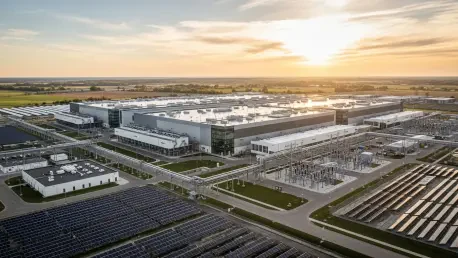
To secure a permit under the new legislative climate, projects are being scrutinized for their “footprint efficiency,” which encompasses everything from the physical acreage occupied to the exact gallons of water required for cooling systems. Developers must now provide detailed impact assessments that prove their facility will not compromise the power grid stability for existing residential and industrial customers during peak load periods. This requires a significant adjustment in infrastructure planning, where developers are often asked to invest in on-site energy storage or renewable energy offsets to mitigate their strain on the local utility provider. Regarding water management, we are seeing a push for “closed-loop” cooling technologies that drastically reduce consumption, moving away from the traditional high-evaporation models that were common a decade ago. Compliance is no longer about checking a few boxes; it is about integrating the facility into the state’s existing resource ecosystem in a way that is demonstrably sustainable.
When legislative priorities pivot from growth-focused incentives to restrictive mandates, it often signals concerns about local impact. What were the primary drivers behind this policy shift, and what step-by-step measures should companies take to navigate this more complex legal landscape while maintaining project viability?
The primary drivers behind this shift were a combination of public concern over resource depletion and a legislative realization that the “jobs-to-incentive” ratio for data centers is often less favorable than for manufacturing or retail. Lawmakers recognized that while these facilities represent massive capital investments, they do not always provide the high-density employment that justifies permanent tax holidays. To navigate this complex landscape, companies must first engage in proactive community outreach to address concerns before they reach the floor of the state capitol. Secondly, they should conduct an exhaustive legal audit of the new restrictions to identify “compliance-first” design opportunities that can be used as leverage during negotiations. Finally, maintaining project viability requires a transparent partnership with utility providers, ensuring that every megawatt of power and gallon of water is accounted for in a way that benefits the local infrastructure rather than just draining it.
What is your forecast for the data center industry in South Dakota?
I believe the industry in South Dakota is entering a “quality over quantity” phase where only the most sophisticated and well-capitalized developers will thrive. While the era of easy incentives has ended with the signing of these new restrictions into law, the state’s natural advantages—such as its cooler climate and stable geography—remain highly attractive for long-term data storage. We will likely see a slowdown in speculative “land grabbing,” replaced by a steady stream of high-value projects that are more deeply integrated into the state’s utility and social fabric. Ultimately, this regulatory shift will result in a more stable and predictable environment for the industry, as the rules of engagement are now clearly defined, even if they are more rigorous than they were in the past. Moving forward, the projects that succeed will be those that view environmental and grid restrictions not as barriers, but as the essential framework for sustainable growth in the Midwest.