
A New Era of Observation Dawns
The enduring image of state surveillance has long been one of shadowy government agencies operating in secret, their power contained within classified circles. However, a profound and accelerating shift is underway, moving the capability of intelligence gathering from the exclusive domain of the state to the open marketplace. What was once the work of spies and secret satellites is now being performed by smart doorbells, consumer data brokers, and private technology firms. This article explores the rise of “intelligence as a service,” a new paradigm where commercial entities collect, analyze, and sell surveillance capabilities, fundamentally altering the dynamics of privacy, governance, and civil liberties. Examining how this transition occurred, analyzing its core components through the lens of consumer technology like Amazon’s Ring, and considering the unresolved questions it poses for a democratic future is now more critical than ever.
From State Secrets to Open Markets: The Erosion of the Intelligence Monopoly
For most of modern history, the tools of intelligence—signals interception, satellite imagery, and human espionage—were the exclusive property of nation-states. The immense cost, specialized technology, and strict classification protocols required to run an intelligence apparatus created a closed ecosystem controlled entirely by governments. This state monopoly ensured that the power of mass surveillance was, at least in theory, subject to institutional oversight and national security mandates. This paradigm, however, has been systematically dismantled by the converging forces of technological innovation and commercialization, paving the way for a new, privatized intelligence landscape.
The first cracks in the state’s monopoly appeared with the rise of the internet and open-source intelligence (OSINT). Suddenly, vast quantities of valuable information were publicly accessible, creating an opening for private companies to enter a market that once had insurmountable barriers to entry. Firms like Clearview AI demonstrated the potential of this new frontier by scraping billions of images from social media to build a facial recognition database, which they then sold as a commercial product to law enforcement. This established a critical precedent: the core functions of intelligence could be commodified and sold, transforming a government capability into a market-driven service. This shift is essential for understanding the current environment, where the most powerful surveillance networks are no longer being built exclusively by the government, but by the private sector.
The New Intelligence Economy: How Commerce Drives Surveillance
The Rise of the Commercial Surveillance-Industrial Complex
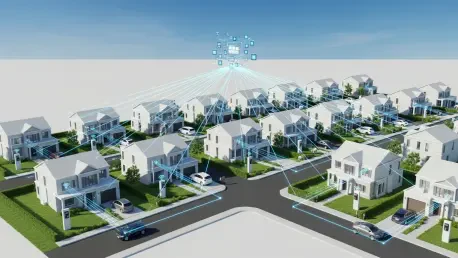
The privatization of intelligence is fueled by a broader “surveillance economy” where technologies once reserved for the battlefield are now commercialized for civilian use. Acoustic gunshot detection systems, originally designed for military applications, are now deployed across major cities by private companies, creating auditory surveillance grids. Drones equipped with high-resolution sensors have migrated from reconnaissance missions to widespread commercial and consumer availability, offering aerial observation capabilities to anyone who can afford them. But the most significant driver of this new economy is the proliferation of everyday consumer electronics. The Internet of Things (IoT) has placed a vast, privately owned sensor network inside homes and communities. Smart doorbells, home security systems, and internet-connected appliances passively and continuously collect data, creating an ambient layer of surveillance that operates almost entirely outside of traditional government control.
The Consumer as an Unwitting Intelligence Asset
The role of consumer technology in this new ecosystem was starkly illustrated by Amazon Ring’s proposed “Search Party” feature. Marketed as a benign tool to help find missing pets by using AI to scan footage from a neighborhood’s Ring cameras, the program revealed a much deeper ambition. The plan reportedly included a partnership with Flock Safety, a company that operates extensive networks of automated license plate readers for law enforcement. This potential fusion of a private, home-based camera network with a broader, mobile tracking system signaled the creation of a powerful, integrated commercial intelligence grid. The intense public backlash, which led to the project’s cancellation, highlighted a growing apprehension about this convergence. The incident serves as a prime example of “intelligence collection by proxy”—a system where valuable intelligence is gathered not through deliberate state action, but as a byproduct of modern digital life, captured by privately owned systems that consumers voluntarily install.
Intelligence as a Service: A New Business Model for Power
This trend has formalized into a business model known as “intelligence as a service.” Governments have transitioned from being the sole producers of intelligence to being major consumers of it. State, local, and federal agencies now routinely purchase a wide array of services from the private sector, including cyber threat reporting, commercial satellite imagery, facial recognition capabilities, and behavioral analytics derived from data brokers. This creates a critical loophole in governance. Commercial intelligence providers operate under far looser legal constraints than government agencies, allowing law enforcement to circumvent established privacy laws, such as the need for a warrant. By simply purchasing data from a private company, an investigator can obtain information that they would otherwise need judicial authorization to collect, effectively eroding fundamental Fourth Amendment protections designed for a world where the state was the primary gatherer of intelligence.
The Algorithmic Watchtower: AI and the Future of Privatized Intelligence
The privatization of surveillance is not a temporary trend but a structural shift poised to accelerate dramatically. The next frontier is the deep integration of artificial intelligence with the ever-expanding network of commercial sensors. The future will likely see a constant stream of video and data from cameras on homes, vehicles, and public infrastructure fed directly into AI systems for continuous, automated analysis. This will enable a level of algorithmic observation and reporting at a scale previously unimaginable, where anomalies are flagged and individuals are tracked without direct human oversight. While traditional state intelligence services will not become obsolete—retaining unique authorities for espionage and covert action—they will increasingly operate as managers within a complex intelligence supply chain, heavily reliant on private sector partners for both raw data and advanced analytical capabilities.
Navigating the New Reality: Key Takeaways and Strategic Imperatives
The analysis reveals several critical takeaways that demand immediate attention. First, the state’s monopoly on the tools of intelligence is over, replaced by a competitive commercial market where power is diffuse and accountability is blurred. Second, the backbone of this new surveillance infrastructure is consumer technology, which enlists private citizens as unwitting data collectors for both corporate and state interests. Third, the “intelligence as a service” model creates dangerous legal loopholes that threaten to erode long-standing civil liberties and privacy protections. To navigate this new reality, policymakers must urgently update privacy laws to address the commercial data broker industry and close the warrant loophole. Citizens, in turn, must become more critical consumers of technology, demanding transparency and accountability from the companies building this privatized surveillance network.
A Fundamental Shift in Power
The core themes explored throughout this analysis pointed to an undeniable conclusion: the power to collect, analyze, and act on intelligence no longer belonged solely to the state. This transfer of power to private actors, who could sell these powerful capabilities on the open market, represented a fundamental reordering of society. This shift was not cyclical but structural, driven by the relentless pace of technological innovation and powerful commercial incentives. As society moved forward, it was left with critical and unresolved questions. What became of national sovereignty, democratic oversight, and personal privacy in an era where the fundamental tools of the state were commercialized and deployed at a massive scale by private interests? The answers to these questions were destined to define the balance between security and liberty for generations to come.