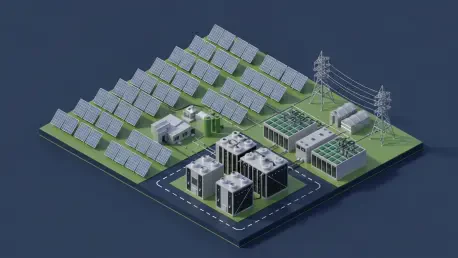

The landscape of southern Illinois is undergoing a profound structural shift as the energy industry successfully breathes new life into land once defined by heavy industrial extraction. In Randolph County, the recent completion of a massive utility-scale solar facility represents a major milestone in the national effort to transition toward a decarbonized grid without abandoning historically significant energy-producing regions. By repurposing more than 1,000 acres of a former subsurface coal mine, developers have demonstrated that brownfield sites can serve as the backbone for the next generation of American power infrastructure. This initiative aligns with a broader domestic trend where total solar capacity has now surpassed 300 GW, signaling a robust era of renewable expansion that prioritizes land efficiency and economic revitalization. Rather than leaving former mining sites as dormant environmental liabilities, this project utilizes them as active contributors to the state’s electricity needs, proving that the heritage of energy production can be preserved through a modern lens.
Engineering Challenges and Technical Specifications
Constructing a massive energy facility over a hollowed-out subsurface coal mine presented a unique set of geological and structural hurdles that required sophisticated engineering solutions. The primary concern for the development team was ground subsidence, a phenomenon where the earth above an old mine can shift or sink over time due to the collapse of underground voids. To mitigate this risk, specialized geotechnical assessments were conducted to map the subterranean cavities and identify the most stable locations for the heavy infrastructure. Engineers utilized advanced foundation designs, including flexible racking systems from Nextracker, which allow the solar arrays to accommodate minor ground movements without compromising the integrity of the electrical connections. This meticulous approach to site preparation ensured that the 186 MW facility remains resilient against the specific topographical challenges inherent to the Illinois mining corridor, setting a technical precedent for future brownfield developments across the Midwest.
The operational output of the facility is equally impressive, with projections suggesting it will generate approximately 319 gigawatt-hours of electricity during its inaugural year of service. This volume of clean energy is equivalent to the consumption of roughly 35,000 homes, providing a significant boost to the local power pool and assisting Illinois in meeting its ambitious renewable portfolio standards. Beyond the immediate generation of electrons, the technical layout of the site was designed to optimize the capture of solar radiation through high-efficiency bifacial modules provided by Qcells. These panels are capable of absorbing light on both sides, maximizing the energy yield even in diffuse light conditions or when light reflects off the ground. By integrating these cutting-edge components, the project maximizes the productivity of the 1,000-acre footprint, transforming what was once a site of resource depletion into a high-tech engine of perpetual energy generation that will serve the community for decades.
Economic Revitalization and Regional Investment
The financial framework supporting this transition represents a significant injection of capital into a region that has historically faced economic uncertainty following the decline of the coal industry. With a total investment of approximately $345 million, the project was made possible through a collaboration between Sol Systems and a diverse group of financial partners, including ING and Churchill Stateside Group. This influx of funding did more than just purchase hardware; it catalyzed a local labor market by creating approximately 300 construction jobs during the peak of the development phase. McCarthy Building Companies managed the complex logistics of the build, prioritizing local hiring and providing specialized training in renewable energy infrastructure. This strategy ensured that the immediate economic benefits stayed within Randolph County, providing workers with transferable skills that remain highly relevant as more renewable projects break ground across the United States between 2026 and 2030.
Beyond the initial construction boom, the long-term fiscal impact on the local government is expected to be substantial and sustained throughout the project’s operational lifespan. It is estimated that the facility will contribute over $20 million in tax revenues and community investments, providing essential funding for local schools, emergency services, and infrastructure maintenance. Unlike traditional fossil fuel plants that may require expensive remediation at the end of their lives, these solar installations offer a cleaner revenue stream with a lower environmental footprint. The project also serves as a proof of concept for local leaders, demonstrating that the transition to green energy does not necessitate a loss of industrial identity. Instead, it offers a path toward economic diversification where the tax base is bolstered by stable, long-term assets that are not subject to the same price volatility or regulatory pressures as the aging coal fleet they are beginning to replace.
Strategic Future for Brownfield Energy Hubs
The success of the Tilden initiative offers a definitive blueprint for how state and federal agencies can optimize land use by prioritizing the development of underutilized industrial sites. Across the United States, there are thousands of former mines, landfills, and industrial zones that are ideally suited for solar and storage integration because they often sit near existing transmission lines and substations. Utilizing these “brownfields” reduces the need to disturb pristine agricultural land or ecologically sensitive forests, addressing a common point of friction in rural energy development. By proving that a former subsurface mine can support a massive 186 MW array, this project encourages developers to look toward these complicated sites as high-value opportunities. This shift in strategy is essential as the nation looks to scale its renewable footprint rapidly, requiring creative solutions to land acquisition and grid interconnection that bypass the traditional barriers associated with greenfield projects.
Moving forward, the industry should look to integrate large-scale battery energy storage systems directly into these repurposed mining sites to further enhance grid reliability. As solar penetration increases, the ability to store excess power generated during the day and discharge it during peak evening hours becomes the next logical step for ensuring a stable energy supply. Stakeholders in the energy sector must advocate for streamlined permitting processes and targeted incentives that specifically reward the reclamation of industrial lands for renewable use. Future developments should also focus on establishing educational partnerships with local community colleges to create a permanent pipeline of skilled technicians capable of maintaining these complex systems. By treating every former industrial site as a potential clean energy hub, the United States can transform its historical legacy of resource extraction into a sustainable foundation for energy independence and long-term environmental stewardship.