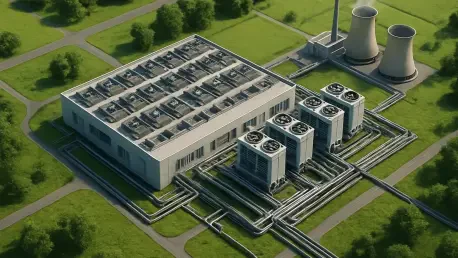

The relentless vibration of industrial cooling fans now competes with the rustle of pine needles across rural Alabama, signaling a tectonic shift in how the state powers its economic future as tech giants move in. This surge is not a quiet evolution but a loud, high-stakes transformation as “hyperscale” data centers—the massive, energy-hungry engines of the global artificial intelligence boom—race to secure a foothold in the Yellowhammer State. These facilities, which often span hundreds of acres of former agricultural land, represent more than just a technological milestone; they are a direct challenge to the traditional utility models that have governed the state for over a century. While the promise of high-tech investment is alluring, a central question remains at the forefront of public discourse: who will ultimately bear the financial and environmental burden of the massive infrastructure required to power these digital titans?
The current landscape reveals a significant tension between the industrial ambitions of Alabama Power and the growing concerns of residential consumers. The state’s largest utility provider is currently navigating an unprecedented level of demand, driven by projects that require energy on a scale previously reserved for entire cities. As these developments proliferate, the state faces a critical test of its regulatory safeguards. The objective of this analysis is to dissect the economic and social implications of this industrial boom, examining the effectiveness of recent legislation, the impact of pervasive secrecy in public-private partnerships, and the potential for a massive shift in utility costs toward everyday households.
From Agriculture to Algorithms: The Historical Context
For generations, the economic identity of Alabama was rooted in the tangible outputs of the land and the heavy heat of manufacturing plants. The state’s industrial strategy was built around attracting automotive manufacturers, steel mills, and aerospace firms—entities that provided thousands of middle-class jobs in exchange for significant land use and energy consumption. Alabama Power, operating as a near-monopoly, facilitated this growth by positioning itself as the primary architect of the state’s energy infrastructure. This historical partnership established a predictable cycle where industrial growth and utility expansion went hand-in-hand, supported by a regulatory environment that prioritized large-scale industrial development as the engine of prosperity.
However, the rapid expansion of cloud computing and the recent global acceleration of artificial intelligence have fundamentally altered the requirements for industrial success. The modern “factory” is a hyperscale data center, an facility that houses thousands of servers but employs relatively few people compared to the massive footprint it occupies. This shift from physical manufacturing to algorithmic processing has created a unique set of challenges for the state’s energy grid. Unlike a car plant that operates on a predictable shift schedule, a data center is a constant, unyielding drain on the power grid, requiring 24/7 cooling and high-density energy access. This transition is significant because it challenges the traditional regulatory frameworks that were designed to balance the needs of human-centric industries with those of residential ratepayers.
The emergence of Alabama as a prime destination for these facilities is no accident. The state offers a combination of vast, available land, a robust water supply for cooling, and a utility provider with a long history of aggressive infrastructure expansion. Yet, this new era of “digital mining” does not follow the same economic rules as the industries that preceded it. While a steel mill contributes significantly to local employment and the tax base, a data center’s primary contribution is capital investment in specialized equipment and buildings. As the state moves away from its agricultural and manufacturing roots toward a future defined by data, the lack of a diverse job market within these campuses has led to increased scrutiny over the true value of the “gold mine” that proponents claim these projects represent.
The Cost of Progress: Energy, Water, and Secrecy
The Environmental and Financial Strain of Hyperscale Projects
The sheer physical and technical scale of the projects currently under development in Alabama is difficult for the average citizen to visualize. In Bessemer, the project known as “Project Marvel” is designed to occupy a massive campus with an energy appetite roughly 90 times greater than the combined residential demand of the city it inhabits. Further south, in the historic Black Belt region, “Project Red Clay” in Lowndes County has requested 1,500 megawatts of energy capacity. To put this in perspective, that amount of power is sufficient to support approximately one million average homes. These are not merely upgrades to existing facilities; they are seismic additions to the state’s power load that require the immediate construction of new natural gas plants and extensive transmission networks.
The environmental footprint of these facilities extends beyond energy consumption to include massive water requirements for cooling the server racks that generate intense heat. Small, rural water systems like those in the Pintlala area are being asked to provide hundreds of thousands of gallons of water daily, a demand that could strain local resources during periods of drought. Financially, the risk is centered on the concept of “full cost to serve.” If the utility’s projections for the revenue generated by these data centers are overly optimistic, or if the tech companies downsize their operations in the future, the multibillion-dollar cost of the new generation assets will inevitably be redirected to residential customers. This creates a scenario where Alabamians, who already navigate some of the highest electricity bills in the country, could find themselves subsidizing the operating costs of the world’s most profitable tech corporations.
The Legislative Shield of Senate Bill 270
In response to the growing public outcry regarding potential cost-shifting, the Alabama Legislature implemented Senate Bill 270 (SB 270), which grants the Public Service Commission (PSC) specific authority to review and approve contracts between utilities and large-load data centers. The primary intent of this legislation is to ensure that any “incremental costs”—the specific expenses incurred to build and fuel new power plants for these centers—are paid entirely by the tech companies rather than being blended into the general rate base. The law requires the PSC to determine if a contract is in the “public interest” and whether it provides a tangible benefit to existing customers, such as lower rates or improved grid stability.
Despite the protective intent of the law, its effectiveness remains a point of contention among consumer advocates and energy experts. The language of SB 270 provides the PSC with broad discretion to define what constitutes a “positive benefit.” Critics argue that without a mandate for rigorous, independent audits of the data provided by Alabama Power, the PSC may rely on the utility’s internal projections to justify the approval of massive contracts. Furthermore, the historical relationship between the PSC and the entities it regulates has led to a trust deficit. For SB 270 to function as a true shield for the public, the regulatory process must transition from a rubber-stamp approval system to one that involves transparent, data-driven scrutiny of every kilowatt-hour promised to these hyperscale campuses.
The Transparency Gap and the Role of NDAs
Perhaps the most troubling aspect of the current data center surge is the pervasive culture of secrecy that surrounds every stage of project development. Local officials in municipalities across the state have increasingly signed restrictive Non-Disclosure Agreements (NDAs) that prevent them from sharing basic project details with their own constituents. In many cases, residents only learn about the massive developments next door after zoning changes have been finalized and land clearing has begun. This information asymmetry undermines the democratic process and leaves communities unable to voice concerns about noise, heat, and local resource depletion until it is too late to influence the outcome.
This lack of transparency is mirrored at the state level within the regulatory filings of the Public Service Commission. When Alabama Power submits its power purchase agreements or construction plans for data center infrastructure, the documents are frequently so heavily redacted that the public is unable to see critical financial terms. Details such as the length of the contract, minimum bill requirements, and the specific rate charged to the tech company are often hidden behind claims of protecting trade secrets. Without access to this information, the Attorney General and consumer advocacy groups cannot verify the utility’s claim that residential rates will remain unaffected. This environment of confidentiality creates a “black box” where multibillion-dollar decisions are made with minimal public oversight, fueling the fear that the long-term financial risks are being quietly shifted to the public.
Navigating the Future of Alabama’s Power Grid
The landscape of the Alabama energy sector is entering a period of significant volatility and structural change. As the state moves further into the current decade, the “Power to the People Act” is set to reshape the governance of the Public Service Commission by expanding its membership and introducing a state energy secretary appointed by the governor. This shift toward a more centralized energy authority suggests that data center regulation will no longer be a purely technical matter but a defining political issue. Candidates for statewide office are already being forced to choose between the immediate allure of private investment and the long-term necessity of protecting consumer wallets.
A critical turning point is approaching as the 2027 rate freeze, which has provided a temporary sense of stability for residents, nears its expiration. The financial reality of the recent infrastructure binge is expected to surface in 2028, when the $622 million cost of a newly acquired natural gas plant is slated to be integrated into consumer bills. This moment will serve as the ultimate litmus test for the state’s regulatory safeguards. If the data centers are truly paying their “full cost to serve,” the impact on residential bills should be negligible. However, if the projections were flawed, the average Alabamian could see a permanent increase in their monthly energy costs, effectively paying a “tech tax” to support the infrastructure of the AI revolution.
Furthermore, the technological requirements of the data center industry are likely to continue evolving, potentially requiring even more frequent upgrades to the state’s transmission and distribution networks. This “constant upgrade” cycle places Alabama Power in a position of perpetual construction, which historically favors utility profitability over consumer cost containment. As the grid becomes more complex and the demand more concentrated, the state must decide if it will continue to incentivize hyperscale growth at any cost or if it will impose stricter requirements for renewable energy integration and job-to-energy ratios. The decisions made in the next two years will dictate the economic trajectory of the state for the next two decades, determining whether Alabama becomes a hub of high-tech prosperity or a cautionary tale of industrial overreach.
Strategic Takeaways for Citizens and Stakeholders
For the residents and businesses of Alabama, the data center boom necessitates a transition from passive consumption to active advocacy. The most significant takeaway from the current market analysis is that “incremental costs” are inherently difficult for the public to track without structural changes to the regulatory system. Stakeholders should prioritize advocating for a total overhaul of how NDAs are used at the municipal level, pushing for legislation that requires public disclosure of project impacts before zoning approvals. By removing the shroud of secrecy, communities can ensure that they are not trading long-term environmental and financial stability for short-term construction jobs.
Professionals within the energy, legal, and real estate sectors must also prepare for a more litigious and volatile regulatory environment. As the definitions of “public interest” are tested in the courts and before the PSC, there will be an increased demand for independent energy auditing and transparency. Businesses that rely on stable electricity costs should closely monitor the implementation of SB 270 and participate in PSC hearings to ensure that their own operating costs are not artificially inflated by the grid upgrades required for tech giants. Staying informed about the 2028 cost integrations and the upcoming gubernatorial platforms will be essential for any entity looking to manage financial risk in this changing landscape.
Furthermore, there is a clear need for a new economic metric in Alabama—one that measures the “utility-to-jobs” ratio. If a project consumes as much energy as a million homes but only provides a few dozen permanent positions, the state must evaluate whether the tax revenue generated is sufficient to offset the risk to the power grid. By demanding a higher standard for industrial recruitment, Alabama can move toward a model that prioritizes sustainable growth over rapid, high-risk expansion. For the average ratepayer, the most effective tool remains collective action and the demand for a Public Service Commission that operates with the same level of transparency as the digital world it seeks to power.
Protecting the Public Interest in the AI Era
The rapid expansion of data centers across Alabama represented a fundamental conflict between the pursuit of modern industrial growth and the essential need for consumer protection. The findings of this analysis showed that while the state possessed the physical resources to attract global tech giants, the existing regulatory framework was ill-equipped to handle the sheer scale of the energy and water demands involved. The pervasive use of non-disclosure agreements and redacted filings created a significant barrier to public oversight, leaving residential ratepayers to wonder if they were being prepared to subsidize the operations of multi-billion-dollar corporations. The transition from a manufacturing economy to one centered on algorithms introduced risks that were previously unimaginable, particularly regarding the long-term stability of utility rates.
The safeguards established through Senate Bill 270 proved to be a necessary first step, yet their ultimate success was entirely dependent on the rigor with which they were enforced. The analysis revealed that the “full cost to serve” remained a corporate ideal rather than a verified reality for many communities. As the state moved forward, the true test of its political and regulatory resilience occurred when the deferred costs of new generation assets finally reached the consumer. This era of expansion taught the region that infrastructure for the 21st century could not be built on a foundation of 20th-century secrecy. The future of the state’s energy sector required a renewed commitment to transparency, ensuring that the digital revolution served the interests of every Alabamian, not just the owners of the servers in the ground. Moving ahead, stakeholders were encouraged to demand independent audits of all utility contracts and to push for a more diversified economic strategy that balanced high-tech investment with the preservation of the state’s natural and financial resources.