
The fiscal narrative surrounding Malta’s economy has transitioned from one of expansionary confidence to a guarded approach centered on mitigating public debt. Just months ago, the political climate was defined by a sense of financial invulnerability, with Finance Minister Clyde Caruana highlighting a robust buffer of approximately €250 million intended to manage energy costs without sacrificing deficit targets. During that period, the official outlook suggested a steady decline in the deficit to 2.2% of the Gross Domestic Product, with the potential for national surpluses within the decade. These projections were presented as fully costed, incorporating the entirety of the governing party’s electoral manifesto into a seamless financial plan. However, as the focus shifts to the current 2026 fiscal year, the previous optimism has been replaced by a more sober rhetoric of spending discipline. This transition raises questions about the long-term sustainability of pre-election commitments when faced with persistent global economic pressures and fluctuating energy markets.
The Disparity Between Electoral Pledges and Fiscal Realities
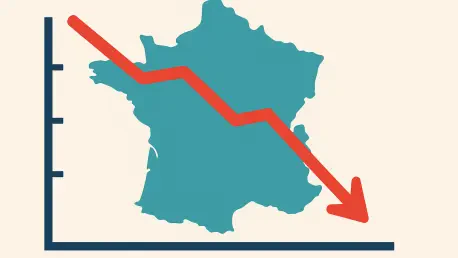
The recent revision of the 2026 deficit forecast from 1.6% to 2.8% marks a significant departure from the financial path originally outlined by the Finance Ministry. This adjustment, which represents a fiscal deterioration of roughly €312 million, indicates that the administration is struggling to remain comfortably beneath the European Union’s 3% deficit threshold. While rising energy costs—now estimated at a substantial €392 million—are cited as the primary driver of this strain, the shift also suggests a need for deeper spending discipline across various sectors. The current administration has acknowledged that the fiscal headroom previously celebrated has narrowed significantly, requiring a more tactical approach to resource allocation. This pivot has fundamentally changed the conversation from one of opportunistic expansion to one of cautious containment, as the ministry navigates a much tighter fiscal window than previously advertised. Maintaining international credit ratings now requires a more convincing demonstration of long-term budgetary control.
Rising energy costs have emerged as the primary justification for the current fiscal strain, with subsidies now estimated to consume a massive portion of the national budget. While these measures were designed to protect households and businesses from international price volatility, their sustained cost has clearly impacted the government’s ability to fund other major initiatives. Consequently, significant electoral promises, such as the widely discussed €1,000 super bonus, are being delayed or downplayed as the administration focuses on more immediate economic pressures. This prioritization reflects a calculated decision to maintain social stability through utility price control at the expense of direct wealth distribution programs. However, the lack of transparency regarding how specific election-related expenditures influenced the current budget revisions continues to be a point of contention. Observers are increasingly looking for a detailed breakdown of revenue and expenditure to understand the factors that necessitated such a rapid departure.
To address these fiscal challenges, it became necessary for the administration to adopt more transparent reporting mechanisms that clearly delineated election-related spending from essential operational costs. The transition away from expansionary optimism highlighted the urgent need for a more realistic assessment of revenue streams in an era of global volatility. Looking ahead from 2026 to 2028, stakeholders recognized that establishing an independent fiscal oversight body was a critical next step in decoupling economic forecasting from the political cycle. This approach was intended to provide more accurate, non-partisan data that could withstand the pressures of electoral demands. Furthermore, the implementation of comprehensive spending reviews helped identify areas where efficiency could be improved without compromising social safety nets. Ultimately, the focus was shifted toward long-term structural reforms that prioritized fiscal resilience over immediate political popularity. By balancing essential energy subsidies with disciplined debt reduction, the government aimed to secure a more stable economic future.