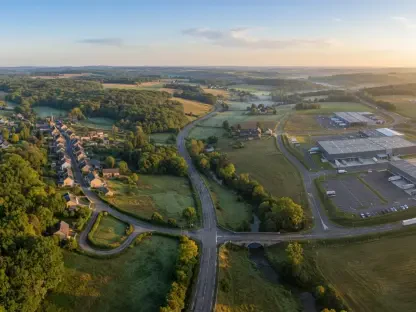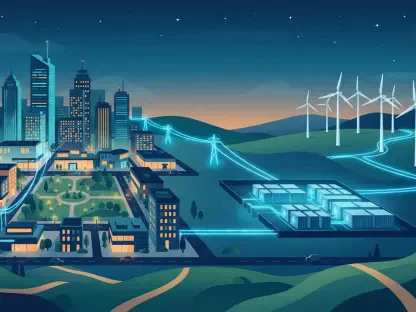

The silent hum of massive data servers and the precision of aerospace robotics have replaced the rhythmic clatter of textile looms that once defined the soul of the Dan River Valley for more than a century, signaling a complete overhaul of the regional identity. This metamorphosis is not an accidental byproduct of urban sprawl but the result of a deliberate, decades-long pivot from a tobacco-dependent agrarian society toward a diversified high-tech industrial powerhouse. Across Pittsylvania County and the City of Danville, the landscape is shifting as multi-billion-dollar investments redefine what is possible for a rural workforce. The current momentum suggests that the region has moved beyond the era of recovery and entered a phase of sustained technological dominance.
The Great Pivot: From Legacy Textiles to Advanced Technology
The historical narrative of Southern Virginia was, for the better part of the twentieth century, inextricably linked to the fortunes of the tobacco and textile industries. When these sectors faced global consolidation and outsourcing, the resulting economic vacuum left massive factory buildings empty and thousands of workers displaced. However, rather than succumbing to industrial decay, the region engaged in a strategic reorientation that targeted high-growth sectors capable of providing long-term stability. This pivot involved a fundamental reassessment of regional assets, shifting the focus from low-cost manual labor to specialized technical expertise.
The scope of this industrial convergence is broad, spanning the critical sectors of aerospace, green energy, and digital infrastructure. By integrating these diverse fields, Southern Virginia has created an economic ecosystem where the cooling needs of a data center might be addressed by the same engineering talent that develops advanced battery separators or missile components. This diversification acts as a safeguard against market volatility in any single industry, ensuring that the regional economy remains resilient even during global fluctuations. The synergy between these sectors has made the region a laboratory for modern industrial integration.
Key market players have recognized this potential and are committing capital at a scale previously reserved for major metropolitan hubs. Companies such as Microporous are establishing a foothold in the lithium-ion battery supply chain, while Stack Infrastructure is building what promises to be one of the largest data center campuses in the country. Additionally, the presence of Avio USA in the aerospace sector confirms that the region can support the rigorous demands of national defense manufacturing. These anchors provide more than just tax revenue; they serve as magnets for secondary suppliers and service providers.
The regional significance of Pittsylvania County and the City of Danville cannot be overstated, as they have emerged as the epicenter of Virginia’s new industrial growth. This partnership has overcome the traditional boundaries of municipal competition to present a united front to global investors. By pooling resources and aligning their economic development goals, these jurisdictions have successfully competed against larger states and international regions. This collaborative model has transformed the area from a collection of struggling towns into a formidable economic block that is now a primary driver of the state’s fiscal health.
Strategic Drivers of the Regional Economic Renaissance
Examining the Catalysts for Industrial Modernization
The site readiness philosophy adopted by local leadership was perhaps the most critical factor in attracting global interest. For over fifteen years, the region invested heavily in the Southern Virginia Megasite at Berry Hill, focusing on the painstaking work of leveling land, securing environmental permits, and installing heavy-duty utility infrastructure long before a tenant was even identified. This proactive approach significantly reduced the risk for investors, offering them a location that was ready for construction the moment a contract was signed. In the world of high-stakes manufacturing, the ability to bypass years of permitting and site preparation is a powerful competitive advantage.
Workforce development has been treated as a primary asset rather than a secondary concern, largely through the efforts of the Institute for Advanced Learning and Research. This institution serves as a central hub for technical education, offering specialized training programs that are directly aligned with the needs of incoming industries. By producing a steady stream of graduates skilled in precision machining, robotics, and chemical engineering, the region ensures that companies like Microporous do not have to look outside the local area for talent. This investment in human capital has created a self-sustaining cycle of economic growth and educational advancement.
Incentive structures have also played a vital role, but they have been deployed with a focus on long-term value rather than short-term gains. The strategic use of state grants and local tax frameworks was designed to lower the barrier for multi-billion-dollar projects while ensuring that the public receives a substantial return on investment. These financial tools were combined with a business-friendly regulatory environment that prioritizes speed and clarity. The result is a region that provides both the financial predictability and the operational flexibility that modern corporations require for large-scale production facilities.
Infrastructure repurposing has allowed the region to honor its industrial heritage while looking toward a high-tech future. Many of the state-of-the-art production facilities now operating in the area are located on “brownfields” or in former mills that were once the lifeblood of the community. For example, the transformation of an old Burlington Industries site into a modern aerospace factory serves as a powerful symbol of rebirth. By breathing new life into these mothballed sites, the region has avoided the pitfalls of suburban sprawl while utilizing existing transportation networks and utility corridors.
Market Data and Growth Projections for the Hat Trick Era
The current employment forecasts are robust, with a projected 6,000 high-paying jobs expected to be created across the primary megaprojects in the coming years. This influx of opportunities is particularly significant for a region that historically relied on lower-wage manufacturing and agricultural roles. These new positions are categorized by their stability and their requirements for advanced skills, which in turn necessitates higher compensation packages. The arrival of these jobs is expected to have a multiplier effect, supporting thousands of additional roles in the retail, housing, and professional service sectors.
Capital investment trends show a massive infusion of wealth into the local economy, headlined by the $73.5 billion commitment from Stack Infrastructure. This project alone dwarfs the typical industrial investment in rural America and signals a shift in where digital infrastructure can be successfully deployed. Furthermore, the $1.35 billion Microporous project adds a significant manufacturing component to the regional portfolio, ensuring that the economic base remains balanced between the digital and physical realms. These investments represent a total transformation of the regional tax base, providing the funding necessary for future public infrastructure and education.
Wage growth indicators provide a clear picture of the rising standard of living in Southern Virginia. The average salaries in the emerging tech sector, which range from $74,000 to $80,500, are significantly higher than the historical regional medians. This shift toward high-wage employment is fundamentally changing the demographic profile of the area, as it allows local graduates to remain in the region rather than seeking opportunities in distant cities. The concentration of high-earning individuals is also attracting new amenities and residential developments, further enhancing the quality of life for all residents.
Navigating Complexities in a Changing Industrial Landscape
The shift toward highly automated manufacturing creates an automation paradox that local leaders must carefully manage. While modern facilities can produce far more output with fewer workers than the factories of the past, the remaining jobs are vastly more complex and lucrative. This shift reduces the total headcount compared to the textile era but increases the overall economic value of each position. Educational institutions must therefore remain agile, constantly updating their curricula to keep pace with the rapid advancements in robotics and artificial intelligence that define modern production lines.
Public perception and land use represent another challenge, particularly when integrating massive data centers and industrial parks into a rural landscape. The sheer scale of these projects can be intimidating to residents who value the region’s traditional character and natural beauty. Success in this area has been achieved through transparent communication and a commitment to maintaining a visual and environmental balance. By placing these large-scale facilities in dedicated industrial zones like Berry Hill, the region has managed to protect its rural vistas while still reaping the economic benefits of modernization.
Resource constraints, specifically regarding power and water, require meticulous long-term planning. High-density digital operations and chemical manufacturing have massive utility requirements that can strain existing grids if not properly managed. Addressing these needs involves a coordinated effort between local governments, utility providers, and state agencies to ensure that infrastructure growth precedes industrial demand. The region has prioritized the development of high-capacity power transformers and sustainable water management systems to ensure that the industrial boom does not come at the expense of local resource availability.
The Regulatory Environment and Policy Frameworks
The ongoing debate over data center taxation at the state level has profound implications for Southern Virginia’s growth. Decisions made by the Virginia General Assembly regarding tax exemptions and power usage taxes can either accelerate or stifle investment in digital infrastructure. While recent legislative compromises have provided a measure of stability, the long-term tax environment remains a critical concern for developers who plan their investments over decades. The region’s ability to advocate for its interests in Richmond will be essential to maintaining its competitive edge in the data center market.
Regional collaboration models have proven to be a decisive advantage, particularly the use of Regional Industrial Facility Authorities. These authorities allow multiple jurisdictions to pool their financial resources and share in the tax revenue generated by large projects, regardless of whose territory the facility physically occupies. This revenue-sharing model eliminates the “beggar-thy-neighbor” competition that often hampers economic development in rural areas. It allows small towns and large counties to work together toward a common goal, creating a more attractive and stable environment for global investors.
Federal alignment is another cornerstone of the region’s success, with local industry often tapping into U.S. Department of Energy grants and Department of Defense priorities. Projects like the Microporous battery facility benefit from a national push for energy independence, while aerospace ventures align with federal goals for domestic missile defense production. By positioning itself as a strategic partner in national security and energy transitions, Southern Virginia has secured a level of federal support that provides an extra layer of financial and political stability. This alignment ensures that local projects are seen as vital to the country’s broader strategic interests.
The Future Trajectory of Southern Virginia’s Economy
The emerging technical segments of the economy point toward a future where the region is a central node in the domestic lithium-ion battery supply chain. As the demand for electric vehicles and renewable energy storage continues to climb, the production of essential components like battery separators will become increasingly valuable. This industry not only provides high-tech manufacturing jobs but also attracts research and development firms looking to innovate in the field of energy storage. The region is well-positioned to become a hub for the entire lifecycle of battery technology, from production to recycling.
Southern Virginia is also emerging as the primary alternative to the saturated data center markets of Northern Virginia. As land and power become scarce in the north, the acre-rich and utility-ready tracts of the south offer an attractive path forward for hyper-scale developers. This shift is not just about overflow; it is about building a new digital corridor that connects the mid-Atlantic to the growing tech hubs of the southeast. The region’s ability to provide lower costs and faster permitting times makes it a top choice for the next generation of cloud and artificial intelligence infrastructure.
Sustainable development offers future opportunities in green energy storage and high-capacity power transformer production. The global transition toward a more electrified and decentralized power grid requires the specialized manufacturing capabilities that Southern Virginia has spent years cultivating. Companies like Hitachi Energy are already expanding their footprint to meet the national need for grid modernization, ensuring that the region remains at the forefront of the green energy revolution. This focus on sustainability not only aligns with global trends but also provides a durable foundation for the region’s industrial future.
Summary of Findings and Strategic Outlook
The leadership in Southern Virginia successfully navigated the precarious shift from a labor-intensive past toward a capital-intensive future through persistent site development and regional cooperation. Decision-makers aligned local resources with national priorities, effectively moving from a speculative economic posture to one of industrial readiness. The foundations established from 2026 to 2030 provided the framework for a resilient, tech-driven economy that prioritized high-value production over low-cost labor. By investing in the Berry Hill Megasite and the Institute for Advanced Learning and Research, the region proved that rural areas could compete at the highest levels of global industry.
Investment recommendations for the coming years centered on the maintenance of a world-class workforce and the preservation of a stable regulatory environment. Stakeholders recognized that the competition for high-tech projects would only intensify, requiring a continuous commitment to educational innovation and infrastructure expansion. The success of the “hat trick” of megaprojects served as a proof of concept, demonstrating that strategic planning and local collaboration could overcome decades of economic stagnation. Maintaining the momentum required a delicate balance between attracting new investors and ensuring that the needs of existing residents and industries were met with equal priority.
Southern Virginia’s emergence as a national model for rural industrial revitalization highlighted the importance of economic resilience and long-term vision. The region moved beyond the limitations of its textile and tobacco roots, carving out a new role as a vital player in the aerospace, energy, and digital sectors. This transformation demonstrated that with the right combination of leadership, infrastructure, and human capital, any community could reinvent itself for the twenty-first century. The lessons learned in Pittsylvania County and Danville offered a blueprint for other regions seeking to bridge the gap between their industrial heritage and the demands of the modern global economy.