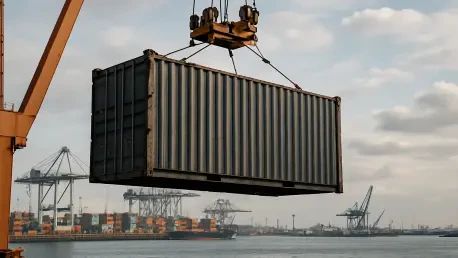

The contemporary global trade environment is witnessing an unprecedented shift where traditional economic metrics like trade balances are being sidelined in favor of aggressive geopolitical posturing. This transformation is particularly evident in the current friction between the United States and Brazil, where trade policy has evolved into a tool for diplomatic signaling and political leverage. Rather than serving as a mechanism to correct fiscal imbalances, recent protectionist measures appear designed to influence internal political developments and demonstrate administrative strength. This pivot reflects a broader global trend where economic connectivity is increasingly viewed through the lens of national security and ideological alignment.
The strategic importance of the Brazilian market to the United States remains undisputed, as it serves as a primary destination for high-value American exports. Key sectors including aerospace components, refined fuels, and sophisticated industrial machinery rely heavily on the Brazilian appetite for American innovation. This interdependence creates a complex web where American industrial manufacturers and Brazilian state-backed entities like Embraer must navigate a landscape of shifting loyalties. The synergy between American technological prowess and the vast raw materials provided by Brazil has historically formed the backbone of a resilient trans-Atlantic supply chain.
Modern Trade Dynamics and the US-Brazil Economic Partnership
The evolution of the US-Brazil economic partnership now faces a critical juncture characterized by a departure from standard market principles. For years, the two nations built a relationship centered on the exchange of technology for resources, fostering an environment where industrial synergy flourished. However, the current landscape is increasingly defined by protectionism that targets specific sectors, often ignoring the long-term benefits of cooperative trade. This shift has forced market players to reconsider their investments as the predictability of the trans-Atlantic corridor begins to waver under the weight of political considerations.
American manufacturers have traditionally found a stable and growing market in Brazil for machinery and chemical products, which are vital for Brazil’s expanding agricultural and industrial sectors. Conversely, Brazil provides the essential inputs that keep American factories running, from steel precursors to specialized agricultural goods. This symbiotic relationship is now being tested by a strategy that prioritizes political signaling over the health of these integrated industries. The resulting uncertainty has prompted major corporations to reassess their logistical frameworks and search for ways to hedge against sudden shifts in tariff structures.
The Statistical Paradox and Evolving Market Trends
Inverting Economic Logic: Trade Surpluses and Protectionist Measures
A primary point of contention in current trade discussions is the apparent myth that tariffs are only necessary to correct trade deficits. In a move that contradicts decades of economic orthodoxy, the administration has decided to penalize a nation where the United States maintains a significant $14 billion trade surplus. This decision inverts the logic typically used to justify protectionism, suggesting that the goal is not fiscal correction but rather the exercise of political influence. When a nation that is essentially a net buyer of American goods is targeted with levies, the standard arguments for trade defense become difficult to sustain.
This inversion has forced a shift in consumer and industrial behaviors within the American market. As tariffs target essential Brazilian manufactured goods such as footwear and furniture, American companies are finding themselves in the difficult position of absorbing these extra costs. Instead of protecting domestic jobs, these measures often result in higher prices for American consumers and increased overhead for retailers. Furthermore, this pressure is accelerating a pivot toward the East, as Brazil increasingly views the BRICS bloc and China as more reliable partners for long-term growth.
Performance Indicators and Growth Projections for Trans-Atlantic Trade
Quantifying the impact of these policies requires a close look at the trade data from 2026, which shows American exports reaching $54 billion against approximately $40 billion in Brazilian imports. Despite this healthy surplus, the imposition of a 37.5 percent tariff on various Brazilian goods has created a volatile environment for investors. Economic forecasts now suggest a potential long-term decline in US market share across South America if these protectionist barriers remain in place. The risk is that Brazil will respond by seeking alternative suppliers for the high-tech components and machinery it currently buys from the United States.
Investment risk assessments for domestic American firms are also becoming more cautious as the costs of Brazilian inputs rise. Companies reliant on materials like wood pulp or specific steel products are seeing their profit margins squeezed by the very administration that claims to support industrial growth. If these trends continue, the competitive advantage of American manufacturers in the global market could be undermined by the rising cost of their own supply chains. The divergence between political goals and economic reality is creating a tension that may take years to resolve.
Navigating Complex Obstacles in the Trade Landscape
The domestic cost of protectionism has become a central challenge for American firms that bear the brunt of import duties on non-exempted Brazilian industrial goods. While some products have been granted exemptions to prevent immediate economic shocks, many other sectors remain vulnerable to the high costs of trade warfare. This situation creates an uneven playing field where certain industries are protected while others are forced to navigate a maze of regulatory hurdles and increased pricing. The logistical complexities caused by selective exemptions further complicate the ability of businesses to plan for the future.
Moreover, the imposition of these restrictive measures is eroding the diplomatic leverage that the United States has traditionally held in the Western Hemisphere. By signaling a willingness to penalize a key regional partner despite a favorable trade balance, Washington risks alienating other South American nations that view these actions as a sign of unreliability. To maintain influence, the United States may need to find a way to balance its domestic political priorities with the necessity of maintaining strong, collaborative relationships with its neighbors. Overcoming these disruptions requires a sophisticated approach to trade that goes beyond simple tariff hikes.
The Regulatory Framework and Legal Maneuverability
The current trade dispute is heavily grounded in the application of Section 301 of the Trade Act of 1974, a legal tool that has been utilized to justify new levies by citing concerns over labor practices. This legalization of trade warfare allows for a broad interpretation of what constitutes an unfair trade practice, giving the administration significant leeway to impose restrictions. However, the use of such measures against a surplus partner has sparked intense legal debate and prompted Brazil to develop its own legislative defenses. This regulatory escalation marks a new era in how trade disputes are litigated on the international stage.
In response to American actions, Brazil passed the Economic Reciprocity Law in 2025, which was specifically designed to mirror US trade enforcement mechanisms. This legislative evolution allows the Brazilian government to retaliate in kind, creating a cycle of legal and economic maneuvers that could take years to untangle. Simultaneously, the role of multilateral oversight has become more prominent, as Brazil has sought intervention from the World Trade Organization. The involvement of global powers like India and South Africa in these dispute panels suggests that the conflict is being viewed as a precedent-setting case for the future of international trade law.
Future Outlook: Innovation, Influence, and Market Realignment
The geopolitical realignment currently underway is likely to alter trade routes and technological standards throughout South America for years to come. As Brazil pivots toward Beijing and strengthens its ties with the BRICS nations, the dominance of American standards in the region may begin to fade. This shift is not just about the exchange of goods but also about the adoption of digital and environmental standards that may not align with American interests. The long-term consequence of these trade barriers could be a permanent realignment of the South American economy away from the Northern Hemisphere.
Political cycles in both the United States and Brazil will continue to dictate the escalation or removal of trade barriers as the 2026 elections approach. Candidates in both nations are using the trade dispute as a focal point for their campaigns, often prioritizing short-term electoral gains over long-term economic stability. However, market disruptors such as emerging green technologies and new environmental standards may eventually redefine future negotiations. These factors could provide a new framework for cooperation that moves beyond traditional manufactured goods and focuses on the shared challenges of the modern era.
Concluding Synthesis of Trade Relations and Strategic Prospects
The analysis found that the decision to prioritize ideological signaling over fiscal logic redefined the nature of American protectionism. This transition encouraged Brazil to expand its reliance on the BRICS framework, which ultimately reduced regional influence for the United States. Analysts observed that the 37.5 percent tariff threshold acted as a catalyst for legislative innovation in the Southern Hemisphere, forcing Brazil to modernize its own trade defenses. The investigation revealed that American firms bore the primary burden of these duties, which complicated the path toward industrial growth.
Corporate entities that anticipated these shifts moved toward regional diversification to mitigate the risks associated with volatile trade policies. This period established a precedent for using Section 301 as a multifaceted diplomatic tool, which in turn encouraged other nations to adopt similar reciprocity measures. Strategic recommendations identified that a return to structured bilateral dialogue remained the only viable path to restoring supply chain stability. Decision-makers focused on the necessity of high-level engagement to prevent a permanent dissolution of regional alliances. Ultimately, the resilience of the Brazilian market suggested that the nation emerged with a more diversified portfolio despite the restrictive measures imposed during this era.