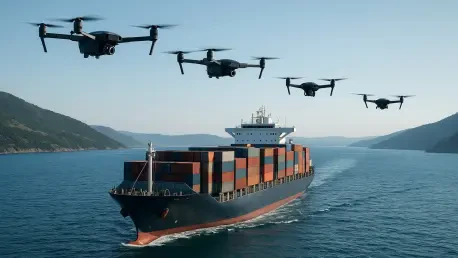

Current trends suggest that the international order is no longer viewed as a set of neutral rules but as a mechanism for Western dominance that these four nations are determined to dismantle. This perspective has catalyzed a shift from loose, transactional partnerships into a coordinated strategic alignment involving Russia, China, Iran, and North Korea. This collective, often referred to as the Axis of Upheaval, has transitioned from a theoretical concern into an operational reality that actively influences major conflict zones and global trade routes. By pooling military hardware, intelligence, and economic workarounds, these nations have created a formidable counter-weight to the influence of the United States and its traditional allies. The integration of their defense industries and the synchronization of their diplomatic maneuvers indicate that this is not merely a temporary alliance of convenience but a fundamental restructuring of the geopolitical landscape designed for long-term endurance. As they challenge the norms of maritime security, territorial integrity, and non-proliferation, the axis demonstrates a shared belief that the existing global governance structure must be replaced by a multipolar system where their respective regional hegemonies are left unchecked by Western intervention or liberal democratic standards.
Tactical Synergy: The Battlefield Adaptation Loop
The depth of this collaboration is most visible in the unprecedented level of intelligence and technological exchange occurring among the four powers, which has moved far beyond simple arms sales. Rather than acting in isolation, these nations now share high-resolution satellite imagery and space-based intelligence to facilitate precision strikes against high-value targets. This level of cooperation has been specifically utilized to target military installations and maritime traffic, signaling a shift from rhetorical opposition to active participation in regional conflicts. For instance, the provision of Russian and Chinese intelligence data to regional proxies has allowed for more effective targeting of logistical hubs and defensive perimeters, undermining the security guarantees that Washington provides to its partners. This seamless flow of data ensures that even if one member of the axis is not directly involved in a skirmish, its technological assets are still contributing to the degradation of Western military advantages. The result is a more lethal and informed adversary that can anticipate defensive postures and exploit gaps in radar or satellite coverage with greater frequency.
Beyond simple data sharing, the axis has developed a battlefield adaptation loop that accelerates military innovation far faster than traditional procurement cycles. A prime example is the evolution of drone technology, where initial designs from Iran were refined through intense combat experience in the conflict between Russia and Ukraine. By integrating Chinese microelectronics and high-end engineering components, these weapons systems have evolved into faster, more stealthy, and more autonomous platforms. These upgraded versions then flow back to North Korea and Iran, effectively creating a shared pool of combat-tested hardware that evolves in real-time. This iterative process allows the axis to bypass the bureaucratic hurdles often found in Western defense industries, resulting in a rapid development cycle that challenges the effectiveness of existing air defense systems. The continuous feedback loop ensures that technical improvements made on one front are immediately applied across the entire network, making the overall coalition significantly more dangerous than the sum of its individual parts. This creates a scenario where the tactical successes of one nation directly enhance the offensive capabilities of the others.
Economic Insulation: Countering Sanctions through Connectivity
China serves as the essential economic engine of this network, acting as a crucial lifeline for its sanctioned partners while simultaneously strengthening its own industrial base. By purchasing restricted energy exports and providing essential dual-use technologies, Beijing ensures that Russia, Iran, and North Korea can maintain their industrial production and domestic stability despite aggressive Western efforts to isolate them. This mutual support has created a functional proof of concept for surviving under heavy international pressure, making traditional diplomatic and economic tools, such as trade embargoes and financial freezes, significantly less effective. The integration of their financial messaging systems and the increased use of local currencies in cross-border trade have further insulated these economies from the dominance of the dollar-based global financial system. Consequently, the threat of sanctions no longer carries the same weight it did in previous decades, as the axis has built a parallel economic infrastructure that allows for the continued flow of capital and resources regardless of Western approval or legal restrictions.
The axis members view the current international order not as a neutral set of rules, but as an adversarial mechanism rooted in Western dominance and regime change agendas. Their shared motivation is deeply anchored in regime security and a collective fear of American intervention or the promotion of democratic movements within their borders. This bond is strengthened every time the West attempts to isolate one of them, as it reinforces their belief that their survival depends entirely on the cohesion of their own authoritarian web. This psychological and political alignment has turned the coalition into a resilient shield against external pressure, where an attack on the legitimacy of one regime is perceived as a threat to all. By aligning their ideological narratives, they have successfully positioned themselves as defenders of sovereignty against what they characterize as Western expansionism. This ideological cohesion provides a stable foundation for their practical cooperation, ensuring that even when specific national interests diverge, the overarching goal of preventing Western-led regime change remains a primary unifying force that dictates their collective policy decisions and strategic investments.
Geopolitical Leverage: Strategic Diversion and Resource Depletion
The Axis of Upheaval benefits from a multiplying effect, where instability in one geographic region provides significant strategic dividends in another. For instance, when regional tensions in the Middle East escalate due to the actions of Iranian-backed groups, the United States is frequently forced to redeploy naval assets, such as aircraft carrier strike groups, and missile defense systems away from the Indo-Pacific. This creates a temporary vacuum of power that China can exploit to increase its operational freedom and assert its claims in the South China Sea or the Taiwan Strait. This dynamic forces Washington into a reactive posture, where it must constantly balance its limited resources across multiple theaters, none of which can be safely ignored. The axis effectively uses these regional distractions to stretch Western attention and military readiness to its limits, ensuring that the United States cannot focus its full capabilities on any single adversary at a given time. This strategic synchronization allows each member to pursue its local objectives with a reduced risk of facing the full weight of a concentrated Western response.
This strategy of resource exhaustion is a deliberate attempt to stretch Western military and financial capabilities to a potential breaking point. By forcing the United States and its allies to address multiple simultaneous crises, the axis ensures that Western munition stocks and defensive interceptors are depleted at an unsustainable rate. The high volume of low-cost drone and missile attacks launched by axis partners requires the West to utilize expensive and sophisticated defense systems, such as Patriot batteries or SM-6 interceptors, creating a cost-imposing strategy that favors the attackers. As Western industrial bases struggle to replenish these stockpiles, the overall credibility of American security guarantees begins to wane in the eyes of allies who rely on those resources for their own protection. This depletion of hardware and capital serves a dual purpose: it weakens the immediate defensive posture of the West while also discouraging future interventions by making them prohibitively expensive and logistically difficult. The long-term consequence is an international environment where the threshold for Western military involvement is raised, granting the axis more room to reshape their respective regions.
Alliance Friction: The Shifting Balance of Networked Power
Historically, the greatest strength of the United States has been its vast network of formal alliances and highly interoperable forces, which provided a collective security framework that few could challenge. However, this advantage is currently facing significant friction as many traditional partners become reluctant to engage in high-risk military campaigns or expensive security initiatives that might jeopardize their own economic ties with China or Russia. Internal political divisions within democratic nations have also contributed to a perception of unpredictability, leading some allies to seek more hedged or independent foreign policies. In contrast, the Axis of Upheaval has learned to cooperate effectively while limiting their own direct risks, focusing on providing the ingredients of war—such as components, financing, and technical expertise—rather than fighting each other’s battles directly. This allows them to project power and influence global events without the domestic political backlash or legal constraints that often hinder Western decision-making. Their network is built on a model of minimal accountability and maximum operational flexibility, which contrasts sharply with the often-cumbersome consensus-building required by Western institutions.
The axis does not need to match the total wealth or conventional military spending of the West to be effective; it only needs to be more efficient at translating limited resources into collective power and disruption. By focusing on asymmetric technologies, such as supersonic cruise missiles, electronic warfare suites, and swarming drone fleets, they can impose disproportionately high costs on Western forces at a relatively low cost to themselves. This approach exploits the vulnerabilities of a modern military that is optimized for high-end, state-on-state conflict but is less prepared for a prolonged war of attrition involving cheaper, mass-produced weaponry. The efficiency of the axis is further enhanced by their willingness to disregard international legal norms regarding the proliferation of sensitive technology. This allows for the rapid spread of advanced capabilities to non-state actors and smaller regimes, further complicating the global security environment. The shift toward this more agile and disruptive form of power projection suggests that the traditional measures of national strength—such as Gross Domestic Product or total carrier counts—may no longer be the sole indicators of who holds the advantage in a contest of competing networks.
Strategic Imperatives: Strengthening the Trusted Network
Recent developments showed that historical attempts to separate the members of the axis through bilateral diplomacy or “peeling off” strategies largely failed to achieve their objectives. The shared existential threat posed by Western power acted as a more powerful glue than any individual economic incentive or diplomatic overture Washington was able to offer. Throughout the recent period of global volatility, it became clear that the axis members prioritized their collective security and the survival of their respective regimes over the potential benefits of reintegration into the Western-led financial and political order. Furthermore, the use of transactional diplomacy and unpredictable policy shifts by the United States occasionally alienated natural partners, creating a leadership vacuum that the axis was quick to exploit. This period demonstrated that the struggle against this coordinated coalition was not a series of isolated regional issues, but a single, interconnected global competition that required a more cohesive and long-term response than previously anticipated. The resilience of the axis during these years proved that the challenge was rooted in a deep-seated structural opposition to the status quo that could not be easily dismantled.
To counter the growing influence of the Axis of Upheaval, a shift toward a strategy of building and maintaining trusted networks was identified as the most viable path forward. This approach involved moving beyond simple military cooperation to include comprehensive supply chain security, joint technology development, and collective economic defense among like-minded nations. Success depended on the ability of the United States and its partners to move away from protectionist trade policies that previously caused friction within the alliance and instead foster a more integrated and resilient economic zone. By focusing on the security of critical minerals, semiconductors, and energy supplies, the Western network sought to reduce its own vulnerability to coercion while simultaneously out-innovating the axis in key defense technologies. Strengthening the internal cohesion of the democratic alliance system became the primary objective, ensuring that the collective response to aggression remained consistent and credible. The future of global stability was thus determined by the ability of the traditional alliance system to outperform the authoritarian axis in terms of both technological advancement and diplomatic reliability, ultimately proving that a network built on shared values and mutual trust was more durable than one built on shared grievances.