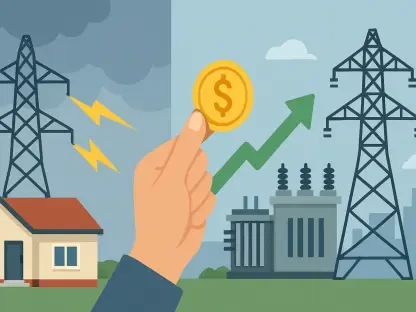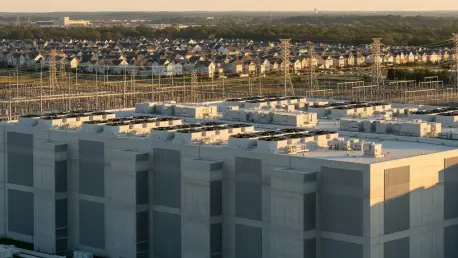

The hum of cooling fans inside Northern Virginia’s massive data processing hubs represents a global digital heartbeat, yet for the residents living in their shadow, that sound echoes the rising cost of keeping the lights on at home. Every time a new data center breaks ground in this region, a silent financial clock begins ticking for the average homeowner. While these massive concrete hubs serve as the backbone of the global internet, they possess an insatiable appetite for electricity that threatens to destabilize the traditional cost-sharing model of public utilities. As the “Data Center Capital of the World,” Virginia now faces a high-stakes legislative battle: should billion-dollar tech giants foot the bill for the massive grid upgrades they require, or should that burden remain strapped to the backs of local families and small businesses?
This tension defines the modern Virginian economy, where the physical demands of the cloud have outpaced the regulatory frameworks designed to manage them. For decades, utility rates were calculated on the assumption that demand would grow incrementally and predictably across all sectors. The sudden arrival of high-density industrial clusters has shattered this predictability, forcing the state to reconsider who truly benefits from new transmission lines and substations. Without a policy shift, the very infrastructure that enables global connectivity could become an unintentional tax on the local population.
The Invisible Tax on Virginia’s Electric Bills
The rapid expansion of the data center industry has introduced a complex financial dynamic that often escapes the notice of the average utility ratepayer until the monthly bill arrives. Unlike traditional residential growth, which requires standard electrical distribution, data centers demand specialized, high-voltage infrastructure that is incredibly expensive to build and maintain. Under current utility regulations, the capital expenditures for these projects are often folded into the general rate base, meaning every customer pays a portion of the bill for equipment that exclusively serves a handful of corporate campuses.
This socialization of costs acts as an invisible subsidy for some of the wealthiest technology firms in existence. While the data center industry brings significant tax revenue to certain counties, the statewide impact on energy prices tells a different story. If the cost of expanding the grid to accommodate 24/7 industrial operations is shared equally, the residential sector effectively pays a premium to support the operational overhead of private enterprises. This creates a disconnect between those who drive the need for new power generation and those who ultimately pay for its delivery.
A Power Struggle Born of Rapid Industrial Expansion
Virginia’s energy landscape is undergoing a seismic shift driven by the unprecedented growth of high-load industrial consumers. Historically, the costs for maintaining and expanding the electrical grid were distributed broadly across all ratepayers, a system that worked when demand was relatively stable. However, the surge in data center development has created a localized “gold rush” for power, requiring specialized distribution infrastructure and increased capacity that serves only a handful of corporate entities. The sheer scale of these facilities, some consuming as much power as a small city, has forced utility providers to fast-track construction projects that might have otherwise been unnecessary for decades.
This trend has moved beyond a technical challenge, evolving into a social equity issue where residential customers risk subsidizing the operational overhead of some of the wealthiest corporations on the planet. The pressure on the electrical grid is not just a matter of capacity; it is a matter of reliability and localized impact. When a single industrial user requires a dedicated substation, the surrounding community often faces the dual burden of aesthetic disruption and potential rate hikes. The debate now centers on whether the current utility model can survive this industrial transformation without placing an unfair weight on those who lack the lobbying power of big tech.
Dissecting the Legislative Battle for Ratepayer Equity
The conflict reached a boiling point with the introduction of Senate Bill 253 and House Bill 1393, aimed at shielding residents from skyrocketing utility costs. These bills proposed a fundamental redesign of how Virginia’s power grid is funded, focusing on several critical areas such as the GS-5 rate class realignment. This legislation sought to create a specific category for high-load users, requiring data centers and large manufacturers to pay the full cost of capacity auctions—the price paid to ensure the grid can handle peak usage—rather than sharing that cost with residential households.
Infrastructure cost shifting was another central pillar of the original proposal, granting the State Corporation Commission (SCC) the authority to direct the costs of new distribution infrastructure specifically to the companies triggering the need for those upgrades. Projections indicated this could save the average household over $5.00 per month while resulting in a 15% increase for industrial users. Furthermore, lawmakers aimed to extend and expand the Strategic Undergrounding Program (SUP) to modernize the grid against weather-related outages, funded by the very industries demanding 24/7 uptime. Protecting vulnerable populations remained a significant portion of the legislative intent, acknowledging that even minor fluctuations in energy costs can be devastating for families living on the margins.
Diverging Visions: Executive Amendments vs. Legislative Intent
The debate has been complicated by executive intervention, which has introduced a different philosophy on how to manage utility profits and industrial growth. Critics argue that the amendments replaced strict requirements for industrial cost-sharing with vague guidelines suggesting the SCC merely be “mindful” of cost shifts, effectively weakening the bill’s ability to protect residents. This shift from firm mandates to discretionary language has sparked concerns among consumer advocates who believe that without specific legal requirements, the burden will inevitably slide back toward the residential sector.
In a surprising pivot, the administration proposed capping utility profit margins at 9.3% as a return on equity (ROE) measure. While this provides a direct credit to consumers when utilities over-earn, proponents of the original bill argue it fails to address the structural issue of who pays for the physical infrastructure required by data centers. Furthermore, by raising the threshold for companies to opt out of certain rate classes to 10,000 employees, the amended policy narrows the benefits to only the largest global firms. This change potentially leaves mid-sized Virginia manufacturers at a disadvantage, as they are forced into higher rate classes while the tech giants utilize their massive workforces to secure exemptions.
A Framework for Balancing Innovation and Accountability
To move forward, Virginia required a multi-pronged strategy that moved beyond simple rate hikes toward long-term systemic health. Policy experts suggested implementing direct-impact fees where new high-load facilities pay an upfront cost to cover the specific substations and transmission lines required for their operation. This proactive approach would prevent capital expenses from entering the general rate base, ensuring that existing customers did not pay for the growth of new industrial neighbors. Additionally, decoupling economic incentives from energy subsidies became a primary focus for those looking to rebalance the scales.
By reevaluating the massive annual tax exemptions granted to data centers, the state sought to redirect a portion of those funds toward grid modernization. Empowering the SCC with more robust auditing authority allowed for a closer inspection of whether infrastructure projects were truly prudent and reasonable. Simultaneously, dynamic load management agreements encouraged data centers to invest in their own onsite renewable energy and storage solutions. These efforts were designed to reduce reliance on the public grid during peak hours, lowering the overall capacity requirements for the entire state. These steps provided a pathway toward a sustainable energy future where technological progress and resident welfare coexisted without one being sacrificed for the other.