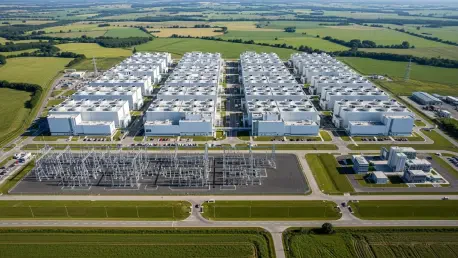

In the sun-drenched expanses of rural Texas, where the horizon usually belongs to cattle and wind turbines, a sudden legislative silence has replaced the hum of industrial machinery as local officials confront the sprawling appetite of the digital age. This decision to implement a twelve-month moratorium on new data center construction marks a pivotal moment in the state’s relationship with big tech. It is not merely a localized zoning dispute but a fundamental recalibration of how rural communities interact with the global digital economy. The rapid expansion of artificial intelligence and high-capacity cloud computing has finally met a physical limit, forcing a necessary pause in what many previously viewed as an unstoppable industrial surge.
The One-Year Pause That Shook the Tech Industry
When a rural Texas county officially hits the brakes on new data center construction, it isn’t just a local zoning hiccup; it is a signal that the digital gold rush has finally hit a physical wall. This twelve-month moratorium serves as a cooling-off period for a region where the rapid expansion of artificial intelligence and cloud computing began to clash with the quiet reality of rural life. The sudden halt sent ripples through the corporate offices of major tech firms, which had long viewed the vast Texas landscape as an infinite resource for server farms. This intervention suggests that the era of unfettered expansion is coming to a close, replaced by a need for deliberate planning.
Local leaders argued that the speed of development was outstripping the community’s ability to adapt. For years, the promise of tax revenue and technological prestige fueled a construction boom that transformed quiet pastures into massive concrete hubs. However, the residents began to feel the weight of these developments as the local skyline changed and the demands on shared resources became undeniable. This pause represents a collective deep breath, allowing the community to step back and evaluate whether the long-term benefits of hosting these digital giants actually outweigh the immediate disruptions to the local way of life.
Why a Local Moratorium Signifies a Global Shift in Infrastructure
The demand for high-speed data processing has historically outpaced the administrative ability to regulate it effectively. This temporary halt is a direct response to the massive strain that industrial-scale computing hubs place on communal resources, particularly power grids and municipal water supplies. By prioritizing a re-evaluation of long-term sustainability over immediate economic expansion, local authorities are acknowledging that technological progress cannot be decoupled from the physical health of the environment. This realization is part of a growing global awareness that the “cloud” is not an ethereal concept but a heavy, resource-intensive infrastructure that requires grounded limits.
Moreover, the Texas situation highlights a growing friction between decentralized local governance and centralized technological power. As data centers become more essential to the global economy, the pressure to build them quickly often ignores the specific needs of the host locations. The moratorium serves as a template for other regions facing similar pressures, demonstrating that municipalities have the power to demand a seat at the table. By asserting control over their own development path, local governments are forcing a shift toward a more balanced model of infrastructure growth that respects local autonomy as much as global connectivity.
Assessing the Hidden Environmental and Administrative Costs
Hosting a data center involves more than just erecting a massive building; it requires an astronomical amount of electricity for servers and millions of gallons of water for cooling systems. The county’s decision to pause development allows for a deep dive into environmental impact studies and the modernization of zoning laws that were never designed for the AI era. This shift reflects a broader trend in land-use planning where the goal is to ensure that industrial developments do not compromise the region’s infrastructure or the quality of life for its residents. Planners are now tasked with calculating the true cost of a megawatt, factoring in the long-term strain on the electrical grid and the potential for water shortages.
Administrative frameworks have also struggled to keep pace with the technical complexities of these facilities. Traditional industrial permits were designed for factories and warehouses, failing to account for the unique noise profiles and heat signatures of modern server farms. The current moratorium provides the necessary time for officials to draft specialized regulations that address these modern challenges. By establishing specific criteria for energy efficiency and water recycling, the county aims to transform data centers from resource-heavy burdens into more sustainable neighbors that contribute to, rather than deplete, the local environment.
Parallel Battles for Physical Space and Digital Privacy
The scrutiny of the data industry’s physical footprint mirrors the rising demand for transparency in how that data is managed. Just as the county seeks to protect its landscape from unregulated industrial growth, digital frameworks are evolving to protect users from unchecked data collection. The connection between physical land-use policy and digital privacy protocols, such as CCPA-compliant cookie management, highlights a unified push toward governance that favors the rights of the individual and the community over corporate convenience. This intersection reveals a consistent theme: the need for boundaries in an increasingly interconnected and data-dependent world.
In the digital realm, the classification of cookies—ranging from strictly necessary to targeting functions—mirrors the zoning debates occurring on the ground. Just as a county might designate certain areas as “essential” for agriculture while restricting “non-essential” industrial zones, digital privacy laws now require companies to justify their data harvesting practices. The requirement for clear opt-out mechanisms for the sale of personal information is the digital equivalent of a local moratorium. Both actions represent a fundamental shift toward accountability, ensuring that neither physical nor personal space is exploited without explicit consent and clear regulatory oversight.
Strategies for Integrating Technology with Community Standards
Establishing a sustainable path forward required a framework that balanced the “strictly necessary” components of technology with social and personal considerations. The path to resolution involved the implementation of more robust resource-management guidelines for physical infrastructure and transparent opt-out mechanisms for digital tracking. By moving toward a structured environment, both local governments and tech sectors ensured that growth was deliberate, sustainable, and respectful of both privacy and local stability. This integrated approach proved that progress did not have to come at the expense of community values.
The final strategy adopted by the county emphasized the importance of a circular economy within the tech sector. This included requirements for data centers to invest in renewable energy projects and water-treatment facilities that benefited the entire region. Administrators also standardized digital privacy protections that mirrored the physical protections of the land, creating a cohesive regulatory environment. These combined efforts shifted the focus from rapid expansion to high-quality, low-impact development. The results demonstrated that when community standards were prioritized, the resulting technological integration was more resilient and widely supported by the public.