
A sweeping transformation of federal emergency management policy has fundamentally reoriented how state and local governments secure critical infrastructure and protect their citizens from diverse terrorist threats. This shift is most evident in the latest administrative directives governing the $1 billion Homeland Security Grant Program, which now conditions the receipt of these vital funds on the adoption of specific, federally approved election protocols. By leveraging the financial weight of the Federal Emergency Management Agency, the current administration is attempting to bridge the gap between traditional disaster preparedness and the technicalities of voter verification and ballot processing. This policy marks a significant departure from previous years, as it effectively reclassifies the mechanics of state-level voting as a core component of national security. The move has quickly sparked a national dialogue regarding the limits of federal authority and whether public safety resources should be used as a mechanism for imposing uniform election standards across the country. As states evaluate the new requirements, the tension between maintaining essential emergency services and preserving local control over the ballot box has reached a critical boiling point.
Technical Mandates: The Evolution of Voting Hardware
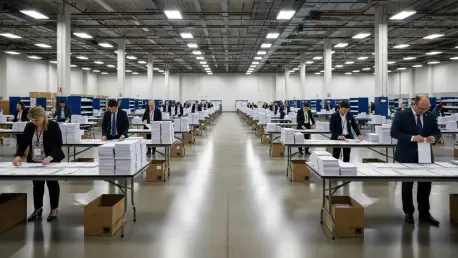
One of the most consequential aspects of the new compliance framework is the strict requirement for states to transition away from high-tech electronic voting systems that utilize bar codes or QR codes for ballot counting. Federal authorities have argued that these systems create an unnecessary layer of abstraction between the voter’s intent and the final tally, potentially leaving the process vulnerable to sophisticated cyberattacks or foreign manipulation. To address these perceived vulnerabilities, the grant guidance mandates a return to hand-marked paper ballots, which are viewed as providing a more transparent and human-readable audit trail. States seeking counterterrorism funding must now present a comprehensive roadmap for phasing out their existing digital infrastructure in favor of these traditional methods. This transition involves not only the procurement of new ballot-printing equipment but also a fundamental redesign of the chain-of-custody protocols used to transport and store physical documents. The administration maintains that this shift is essential for bolstering public confidence in the accuracy of election outcomes, yet local officials are struggling with the financial and logistical reality of abandoning multi-million dollar investments in electronic voting technology.
In addition to hardware changes, the policy introduces rigorous post-election auditing procedures that serve as a prerequisite for federal contest certification. Under the new rules, states must commit to performing manual audits of at least 5% of all ballots cast in every federal election to ensure that machine totals match physical records. This process is accompanied by a mandatory reconciliation step, where the number of physical ballots must be perfectly aligned with the recorded number of voters at each precinct. If discrepancies are found, the state risks a temporary freeze on its Homeland Security Grant Program funds until a full investigation and remediation plan are completed. The federal government asserts that these manual checks are the only way to guarantee the integrity of the democratic process against both internal errors and external threats. However, the requirement for such high-intensity manual labor creates a significant burden for counties with limited staff. The move toward a more labor-intensive auditing process represents a shift back toward human oversight in an era where automated systems were previously seen as the gold standard for efficiency and speed.
A third pillar of the technical mandate involves the mandatory integration of the Systematic Alien Verification for Entitlements system into state voter registration workflows. Within a 120-day window following the receipt of federal grant funds, states are required to cross-reference their entire voter registration list against this federal database to confirm the citizenship status of every individual on the rolls. This requirement is not limited to the voters themselves; it also extends to the background checks of poll workers and the technical staff responsible for maintaining election machinery. By making this verification a condition for security funding, the administration is effectively federalizing the voter eligibility process. Proponents of the measure argue that it provides a necessary safeguard against illegal participation in federal elections, which they categorize as a threat to national stability. Critics, meanwhile, point out that the database was never intended to serve as a primary tool for voter list maintenance and that its use in this context could lead to the disenfranchisement of eligible citizens due to administrative lag or data mismatches.
Institutional Decay: The Impact of Reduced Federal Support
This new focus on grant-based mandates coincides with a period of diminishing direct support for the traditional institutions that oversee election infrastructure. The Election Assistance Commission is currently facing a period of unprecedented paralysis due to multiple vacancies that have left it without the necessary quorum to certify new voting system standards or provide guidance to state officials. Without a fully functional commission, local jurisdictions are left to interpret complex federal requirements on their own, often without the technical expertise required to ensure full compliance. This vacuum in leadership has made the FEMA grant conditions even more influential, as they have become the de facto standards for state election operations. The lack of a central, non-partisan authority to mediate these changes has fueled concerns that the administration is using administrative tools to fill the policy void. This shift away from collaborative governance toward a grant-reliant model has changed the relationship between federal agencies and the local offices they are intended to support.
Simultaneously, the administration has implemented significant personnel reductions at the Cybersecurity and Infrastructure Security Agency and curtailed funding for regional information-sharing centers. These centers previously served as vital communication hubs, allowing local officials to receive real-time intelligence on emerging threats and coordinate their defensive strategies with federal partners. The reduction in these resources has left many jurisdictions feeling isolated and less capable of defending against the very cyber threats that the new election mandates are supposed to mitigate. Analysts suggest that the pivot toward using financial leverage through FEMA is a strategic response to these institutional challenges. By focusing on the grant-making process, the executive branch can achieve its policy goals even when other avenues of support are restricted. This transition from a supportive, resource-heavy model of security to a more prescriptive, penalty-based approach has fundamentally altered the landscape of national preparedness. Local governments now find themselves in a position where they must navigate a more complex regulatory environment with fewer federal allies to assist them.
Legal Challenges: State Autonomy and Federal Oversight
The introduction of these mandates has reignited a fierce debate over the constitutional boundaries of federal authority in the realm of election administration. Advocacy groups representing local governments, such as the National League of Cities, have argued that the new FEMA guidelines infringe upon the rights reserved to the states under Article I, Section 4 of the Constitution. They contend that the power to determine the times, places, and manner of holding elections is primarily a state function and that the federal government is overstepping its bounds by tying unrelated public safety funds to voting protocols. Critics within these organizations view the use of homeland security grants as a form of coercive federalism, where the threat of financial loss is used to bypass the need for state-level legislative consent. This approach creates a precedent where any form of federal assistance could potentially be used as a “carrot and stick” to force compliance with a wide range of administrative priorities. The fear is that this could eventually lead to a total centralization of election management, undermining the decentralized nature of the American voting system.
Furthermore, there is a growing concern that bypassing the traditional legislative process to implement these changes erodes the democratic checks and balances that are fundamental to the government. By utilizing administrative guidance rather than seeking congressional action, the executive branch can implement sweeping reforms without the need for public debate or a vote in the legislature. This has led to accusations of executive overreach, as the administration seeks to achieve through the grant-making process what it might not be able to pass through a divided Congress. Legal scholars have noted that this strategy is often a response to previous judicial setbacks, where courts have blocked more direct attempts to seize control of state voter data. By framing election integrity as a national security issue, the administration can tap into a different set of legal authorities and funding streams, making it harder for challengers to find standing in court. This tactical shift represents a sophisticated use of the administrative state to project power into areas that were previously considered the exclusive domain of local officials and state legislatures.
Security Trade-offs: The Burden on First Responders
Beyond the theoretical debate over election rules, emergency management experts are increasingly worried about the tangible impact these mandates will have on physical public safety. Homeland security grants are the primary source of funding for a wide array of local security initiatives, including regional fusion centers, bomb disposal units, and specialized active-shooter response teams. These resources are essential for maintaining a high state of readiness against a variety of conventional domestic and foreign threats. Under the new policy, states that fail to meet the federal election standards risk losing up to 20% of their total grant allocation, a cut that could result in the cancellation of training exercises and the postponement of critical equipment upgrades. For many local departments, this funding is not a luxury but a necessity for basic operational stability. The prospect of losing these resources creates a dangerous situation where the pursuit of procedural election changes could inadvertently create significant gaps in the national security apparatus, leaving communities more vulnerable to physical attacks.
Critics of the policy have labeled it a “hostage-taking” strategy, where public safety resources are leveraged to advance a specific political and administrative agenda. They argue that the primary purpose of counterterrorism funding should remain focused on preventing violence and protecting lives, rather than serving as a tool for enforcing voting regulations. By linking these two disparate areas, the administration is forcing local leaders to make impossible choices between the security of their citizens and the autonomy of their election systems. This trade-off is particularly acute in jurisdictions that are already facing budget shortfalls and rising crime rates. In these areas, the loss of federal security funding could have immediate and devastating consequences for law enforcement and emergency response capabilities. The debate highlights a fundamental disagreement over how national security should be defined and whether the integrity of the voting process is a more pressing concern than the physical safety of the populace from traditional kinetic threats.
Operational Reality: Managing the Implementation Gap
The practical challenges of implementing these mandates at the county level are immense, as local election offices are often underfunded and staffed by small teams of dedicated professionals. Moving to a system of hand-marked paper ballots and manual audits requires a complete overhaul of existing logistics, from the design and printing of ballots to the physical layout of polling places and the recruitment of thousands of additional temporary workers. For many smaller or rural jurisdictions, the sheer scale of the work required to comply with the 120-day SAVE system mandate is beyond their current capacity. The federal government has provided limited technical guidance on how to manage these transitions, leaving local officials to navigate a maze of new regulations while also managing the day-to-day operations of their departments. This implementation gap creates a high risk of administrative error, which could itself become a source of public distrust and legal liability for the counties involved.
There are also significant concerns regarding the technical limitations and privacy implications of the SAVE system when used for voter list maintenance. Because the database was originally designed for verifying eligibility for government benefits, it may not contain the most up-to-date information for every registered voter. This can lead to false positives, where eligible citizens are flagged as non-citizens, necessitating a complex and time-consuming appeals process. Local officials worry that the rush to comply with the federal grant conditions will result in a surge of administrative challenges and potential civil rights litigation. Furthermore, the requirement to vet poll workers and technical staff through this database introduces new layers of bureaucracy into the hiring process, making it even harder to recruit the volunteers needed to run a successful election. The pressure to meet these federal demands is creating a pincer movement for local governments, who are caught between increasing mandates and a steady decrease in the actual federal assistance needed to carry them out.
Final Assessment: Strategic Adjustments for Future Compliance
The implementation of these rigorous federal mandates forced a paradigm shift in how local jurisdictions managed the confluence of election integrity and public safety. Authorities found that the most successful regions were those that established independent funding streams to decouple their emergency response capabilities from shifting political requirements at the national level. Furthermore, the reliance on the SAVE system necessitated a complete overhaul of data-sharing agreements between state agencies and federal departments, which ultimately highlighted significant gaps in digital infrastructure. Legal teams across the country analyzed the constitutional implications of the grant conditions and prepared a series of challenges that redefined the boundaries of administrative power. By the time the primary season commenced, the landscape of American election administration had been irrevocably altered, moving toward a model where financial leverage served as the primary driver for procedural standardization. This period revealed the critical need for long-term legislative clarity to protect the stability of local governance and the physical safety of the public.