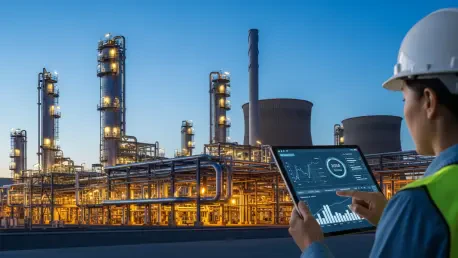

The persistent hum and visible plumes of the Commerce City refinery have long served as a daily reminder of the complex tension between industrial productivity and the fundamental right of a community to breathe clean air. As residents in the surrounding neighborhoods grapple with disproportionate health outcomes, the legal mechanism of the citizen suit has emerged as a critical tool for those seeking to hold large-scale polluters like Suncor Energy accountable. This specific provision within the Clean Air Act empowers private individuals and advocacy groups to initiate civil actions against alleged violators when governmental agencies fail to act decisively. While regulatory bodies like the Environmental Protection Agency and the Colorado Department of Public Health and Environment maintain oversight, the sluggish pace of bureaucracy often leaves vulnerable populations in a state of prolonged exposure. Consequently, the shift toward grassroots legal intervention represents a significant evolution in environmental justice.
Legal Mechanisms: The Framework for Community-Led Action
Federal Mandates: The Mechanics of Environmental Litigation
Citizen suits function as a fallback mechanism designed to ensure that federal environmental standards are not merely suggestions but enforceable mandates. Under the Clean Air Act, a plaintiff must provide a sixty-day notice of intent to sue to both the alleged violator and the relevant regulatory agencies, providing a window for the government to take the lead on enforcement. If the government fails to pursue diligent prosecution, the citizens may proceed with their litigation in federal court. This process has become increasingly relevant from 2026 to 2028 as community organizations refine their legal strategies and secure funding for high-stakes environmental battles. These lawsuits do not merely seek monetary damages for individuals but focus on securing court-ordered compliance, including the installation of advanced scrubbing technology and the implementation of more rigorous leak detection protocols. By bypassing political inertia, these suits force a direct confrontation.
Technical Proof: Evidentiary Hurdles in Industrial Oversight
Proving that a refinery has consistently exceeded its permitted emission levels requires an immense amount of technical data, often making these cases some of the most complex in the federal court system. Plaintiffs frequently rely on the facility’s own monitoring reports, which can sometimes be incomplete or difficult to interpret without specialized atmospheric expertise. In the case of the Commerce City operations, activists have begun deploying their own low-cost sensor networks to supplement official data, creating a more granular map of pollution spikes that correlate with equipment malfunctions. However, the legal standard for a citizen suit requires demonstrating ongoing or intermittent violations rather than isolated historical incidents. This necessity for real-time evidence has led to a surge in demand for forensic environmental engineering. Establishing a clear link between a specific mechanical failure at a cooling tower and a subsequent violation of sulfur dioxide limits remains a primary challenge.
Corporate Accountability: Broader Implications for Industrial Progress
Economic Impact: Financial Ramifications and Settlement Precedents
The financial stakes for a corporation facing a citizen suit are substantial, extending far beyond the immediate legal fees and potential civil penalties paid to the United States Treasury. In many instances, successful litigation or the threat thereof leads to comprehensive settlement agreements that include Supplemental Environmental Projects. These projects directly benefit the affected local communities by funding air filtration systems in schools, expanding green spaces, or providing medical screening for respiratory illnesses. For Suncor, the cumulative effect of these legal pressures has necessitated a reevaluation of operational risks and the allocation of capital toward infrastructure upgrades. Market analysts have noted that the social license to operate is becoming a quantifiable asset, where failure to maintain environmental compliance leads to increased insurance premiums and investor skepticism. This trend illustrates how citizen-led litigation can drive market-wide changes in behavior.
Operational Change: Future Strategies for Sustainable Compliance
The resolution of recent legal challenges demonstrated that the most effective path forward involved a combination of radical transparency and investment in redundant safety systems. Industry leaders recognized that community trust was no longer a peripheral concern but a central component of operational stability. To avoid the recurring cycle of litigation, it became necessary for facilities to adopt real-time public reporting of emission data, allowing residents to verify safety levels independently. Furthermore, the integration of artificial intelligence into predictive maintenance schedules significantly reduced the frequency of accidental releases that had previously triggered citizen lawsuits. Policy experts recommended that state regulators adopt more stringent good neighbor policies that incorporated community feedback into the permit renewal process. By shifting from a reactive stance to a proactive environmental management model, corporations mitigated legal risks while fostering a more sustainable relationship.