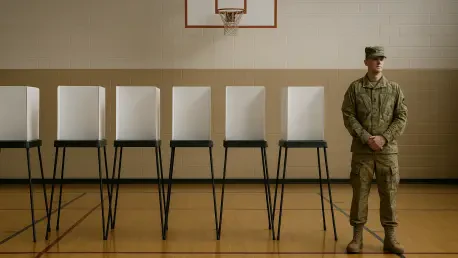

State-level leaders are increasingly turning to private cybersecurity firms and the National Guard to harden their networks as they grow suspicious of the federal government’s delayed or politically motivated warnings. This shift marks a significant departure from the collaborative atmosphere that defined the post-2016 era, where federal and state agencies worked in relative harmony to secure the democratic process. In the current landscape of 2026, the decentralized nature of the American voting system—comprising more than 10,000 distinct jurisdictions—has become both a resilient defense and a glaring vulnerability. While the sheer variety of voting machines and local procedures makes a nationwide technical hack nearly impossible, it also creates an immense coordination challenge. Local election supervisors, many of whom manage small offices with limited technical staff, now find themselves on the front lines of a digital cold war, forced to interpret vague federal intelligence while managing the physical logistics of an election.
The paradox of the current situation lies in the disconnect between rhetoric and resource allocation. While the executive branch continues to issue dire warnings about the intentions of foreign adversaries, the practical infrastructure used to share actionable data has been significantly hollowed out. This has created a “trust gap” that threatens to undermine the very stability these warnings are meant to protect. When state officials feel they are being kept in the dark, they are more likely to view federal intervention as a political tool rather than a security necessity. Consequently, the preparation for upcoming election cycles has become a fragmented effort, with each state essentially building its own fortress. This lack of a unified defensive perimeter leaves the door open for sophisticated actors to exploit the weakest links in the chain, targeting specific counties where resources are thin and the margin for error is non-existent.
The Global Chessboard and Digital Warfare
Adversarial Strategies: The Tripartite Threat
The threat landscape is currently dominated by a trio of foreign powers—Russia, China, and Iran—each pursuing distinct strategic goals to undermine American stability. Russia remains the most aggressive actor, focusing its efforts on sowing social discord and eroding public trust in the legitimacy of election results rather than attempting to alter physical vote counts. Their operations often involve the amplification of existing domestic grievances, using bot networks and manipulated media to ensure that regardless of the outcome, a significant portion of the electorate views the result as fraudulent. This strategy of “perceptual hacking” is far more damaging than a technical breach, as it targets the social fabric of the nation. By making the truth harder to discern, these actors ensure that the democratic process itself becomes a source of division rather than a mechanism for consensus.
China’s approach is notably more surgical and long-term, often targeting specific local or congressional races to favor candidates who align with Beijing’s economic and geopolitical interests. Rather than seeking general chaos, Chinese influence operations are designed to produce tangible policy shifts by influencing the composition of legislative bodies. Iran adds another layer of complexity by engaging in direct influence operations and cyberattacks designed to intimidate voters and harass election officials. These efforts often manifest as threatening emails or “hack-and-leak” operations intended to embarrass specific political figures. The combined pressure from these three nations creates a multi-front digital conflict that requires constant vigilance. However, without a synchronized federal response that provides specific, declassified intelligence to local administrators, these adversarial strategies are increasingly effective at bypassing traditional defenses.
Technological Shifts: The Artificial Intelligence Force Multiplier
The emergence of Generative Artificial Intelligence has acted as a massive force multiplier for foreign interference, fundamentally altering the economics of digital warfare. In previous cycles, creating convincing misinformation required a significant investment in human labor, including translators and content creators who could mimic American cultural nuances. Today, AI allows foreign actors to produce high-quality, localized content at a fraction of the previous cost and at a scale that was previously unimaginable. This includes the creation of deepfake audio and video clips that can impersonate trusted news anchors, local officials, or even candidates themselves. These fabricated media pieces are designed to go viral quickly, often reaching millions of voters before they can be effectively debunked by traditional fact-checking organizations or election authorities.
Furthermore, AI has made it significantly harder for automated monitoring systems on social media platforms to detect foreign interference. These algorithms, which were once capable of identifying repetitive bot patterns, are now struggling to keep up with the unique and highly personalized content generated by advanced large language models. The “hacking of the voter’s mind” has become a primary concern for security experts, as these AI-driven campaigns are tailored to exploit the specific psychological triggers of different demographic groups. When a voter sees a seemingly legitimate news report or a celebrity endorsement that has been entirely fabricated, the damage is often done instantly. This technological shift has placed an enormous burden on local election officials to act as the ultimate arbiters of truth, a role for which they are often underfunded and technically unprepared.
The Erosion of Federal Protections
Infrastructure Breakdown: The Dismantling of the Safety Net
Following the vulnerabilities exposed in the middle of the last decade, the United States established a robust defense network intended to serve as a permanent shield for electoral integrity. This included the elevation of the Cybersecurity and Infrastructure Security Agency (CISA) and the formation of the Election Security Group, a joint task force between the NSA and U.S. Cyber Command. This infrastructure was designed to provide a direct line of communication between the highest levels of the intelligence community and the 10,000 local jurisdictions responsible for the vote. However, the current reality in 2026 is one of systemic depletion. CISA has seen a significant reduction in its specialized election security workforce, with many key positions remaining vacant or filled by temporary staff who lack the deep institutional knowledge required to navigate complex state-federal relationships.
The closure of specialized foreign influence task forces within the FBI has further weakened the nation’s ability to track and neutralize domestic threats originating from overseas. These units were once instrumental in identifying and taking down foreign botnets before they could impact specific regions. Now, the federal response is often described as being in a “holding pattern,” characterized by a lack of Senate-confirmed leadership and a focus on high-level rhetoric over technical support. This hollowed-out state of federal agencies has created a vacuum of authority. When local officials reach out for guidance on a suspicious network intrusion, they often face significant delays or receive generic advice that fails to address the sophistication of the nation-state actors they are up against. This breakdown in the federal safety net has forced states to shoulder a burden they were never intended to carry alone.
Information Scarcity: The Silent Conduit of Data
The loss of consistent funding for the Elections Infrastructure Information Sharing and Analysis Center (EI-ISAC) has been one of the most damaging blows to the national security posture. For years, the EI-ISAC served as the primary, real-time conduit for sharing cyber threat data with state and local governments. It allowed a small county in the Midwest to benefit from the same level of intelligence as a major metropolitan area, ensuring that a vulnerability discovered in one part of the country could be patched everywhere else almost immediately. With the current administration’s shift in priorities, this data flow has slowed to a trickle. State officials now report that they are frequently “in the dark” regarding specific, credible threats, receiving declassified information only after a news cycle has already passed or the threat has already materialized.
This sequestration of information has led to a profound sense of isolation among local election supervisors. Without a centralized, reliable source of truth, these officials are left to rely on news reports or unofficial networks of peers to stay informed. This is particularly dangerous for smaller jurisdictions that do not have the budget for full-time IT security staff. In the past, these counties relied on the federal government to provide the forensic capabilities needed to investigate potential breaches. Now, they are often left to fend for themselves, creating a patchwork of security levels across the country. The silence from Washington on critical technical details has not only increased the technical risk but has also fueled the suspicion that intelligence is being shared selectively based on political considerations, further eroding the trust necessary for a functional national defense.
State Responses and the Shift Toward Privatization
Local Adaptation: Bypassing Federal Channels
In the absence of a reliable federal partner, state secretaries of state are increasingly taking matters into their own hands to protect their constituents’ votes. This adaptation has taken several forms, but the most prominent is the move toward internalizing security operations or bypassing federal agencies entirely in favor of state-level resources. Several states have pioneered the use of their own National Guard cyber units to conduct penetration testing and vulnerability assessments of county-level systems. These units, which often consist of private-sector experts serving in a military capacity, provide a level of technical rigor that was previously only available through CISA or the FBI. By keeping these operations within state borders, officials feel they have more control over the data and a clearer understanding of the specific threats facing their unique voting systems.
This shift is not merely a matter of logistics but also one of political autonomy. Officials in states like Utah and West Virginia have been vocal about their frustration with the federal government’s refusal to declassify specific intelligence that would allow local administrators to take proactive measures. This has led to the creation of regional alliances and interstate information-sharing compacts. States are now trading notes on everything from vendor reliability to the latest phishing tactics used by foreign actors. While this grassroots cooperation is a testament to the resilience of state leaders, it is inherently limited. State-level resources cannot match the global reach and signals intelligence of the NSA. By forcing states to bypass federal channels, the overall national security posture becomes fragmented, making it easier for a sophisticated adversary to find and exploit the gaps between these individual “state fortresses.”
Resource Disparity: The Inequality of Protection
The move toward privatized or state-led election security has introduced a significant resource disparity that threatens the perceived fairness of the national vote. Larger, wealthier states can afford to hire top-tier private cybersecurity firms to monitor their networks twenty-four hours a day, providing a level of protection that rivals many Fortune 500 companies. These states can also invest in sophisticated forensic tools and extensive training for their local election workers. In contrast, smaller or more rural jurisdictions often struggle to maintain even basic digital hygiene. In some counties, the individual responsible for election security is also the person in charge of property taxes and marriage licenses, with little to no formal training in cybersecurity. This creates a “weak link” problem where the security of a statewide election can be compromised by a single vulnerability in an underfunded county.
This inequality of protection is a gift to foreign adversaries who specialize in finding the path of least resistance. A breach in a small, rural county may not change the outcome of a national election, but in the current high-tension environment, it can be used as “proof” that the entire system is compromised. Foreign actors often target these vulnerable areas specifically to create a narrative of failure that can be amplified across the country. When the federal government provided centralized support, it acted as a leveling force, ensuring a baseline of security regardless of a county’s tax base. Without that unifying support, the quality of a voter’s protection is now largely determined by their zip code. This privatization of security not only leaves millions of voters more vulnerable to foreign interference but also exacerbates the growing divide between different regions of the country.
Military Intervention and the Risk of Delays
Structural Flaws: The Pivot to Defense
In a late attempt to fill the security vacuum left by depleted civilian agencies, the administration has recently pivoted toward a more military-centric approach to election defense. Directions have been issued to the Department of Defense to take an active role in “neutralizing” foreign interference, effectively putting the U.S. Cyber Command and the NSA on a war footing regarding the democratic process. While these agencies possess world-class technical capabilities, their involvement introduces significant structural and legal challenges. The military is fundamentally optimized for external combat against nation-state enemies; it is not designed to coordinate with 10,000 different civilian election offices, each with its own legal constraints and technical configurations. There is currently no established framework for the military to share highly classified intelligence with a local county clerk without violating strict protocols or risking the exposure of sensitive sources and methods.
This cultural and operational gap means that even if the military identifies a specific foreign threat, the information may not reach the people who need it in time to stop an attack. Civilian election officials are often wary of military involvement, fearing it could lead to the federalization of a process that the Constitution clearly delegates to the states. Furthermore, the focus on “neutralizing” threats externally does little to help local officials deal with the domestic fallout of an interference campaign. If the NSA stops a foreign server from spreading misinformation, but the content has already been downloaded and reshared by thousands of American citizens, the military’s mission is over, but the election official’s nightmare is just beginning. This reliance on a military solution for a civilian administrative problem highlights a fundamental misunderstanding of how modern election interference actually works.
Strategic Timing: The Activation Lag Problem
The effectiveness of any security plan is heavily dependent on its timing, and the current federal approach has been plagued by what experts call an “activation lag.” Strategic security plans and new task force directives released just weeks before an election are often essentially useless to the officials on the ground. By the time these federal initiatives are announced, ballots have already been printed, voting machines have been tested and sealed, and in many jurisdictions, early voting has already begun. Election administration is a long-term logistical process that requires months of lead time to implement new security protocols or software patches. A last-minute “pivot” by the Department of Defense or a sudden release of a CISA security plan provides little more than political cover for federal agencies, as it is far too late for local jurisdictions to integrate these changes into their live operations.
This delay is compounded by the uncertainty surrounding whether specific defense groups have even been fully mobilized for the current cycle. Reports from within the intelligence community suggest that the Election Security Group, once a powerhouse of interagency cooperation, has struggled to regain its footing after years of neglect. This lack of a proactive stance means that the federal government is constantly in a reactive mode, responding to threats after they have already begun to impact the electorate. For a local election supervisor, a warning that comes ten days before an election is not an asset; it is a distraction that can cause panic without providing a viable path to mitigation. The inability of the federal government to provide timely, actionable support has left the nation’s electoral system in a state of heightened fragility, where the most critical defensive actions are being taken at the eleventh hour.
The Political Consequences of a Trust Gap
Pretexts for Intervention: Transparency and Control
The lack of transparency regarding foreign threat intelligence has created an environment where security warnings can be easily perceived as a pretext for domestic political maneuvering. When the federal government identifies a threat but refuses to provide the specific data or forensic evidence to the states, it prevents local officials from verifying those claims. This sequestration of information allows for a narrative to be built that the election system is “dangerously vulnerable,” even if the actual technical risks are being managed effectively at the state level. Critics argue that this dynamic could be used by a sitting administration to manufacture a crisis, using the specter of “foreign interference” to justify unprecedented federal intervention, such as the nationalization of certain voting procedures or the deployment of federal assets to seize local equipment under the guise of an emergency.
This concern is shared by a growing number of state lawmakers who fear that the “consent of the governed” is being traded for “control by the bureaucracy.” If the public cannot see the evidence of foreign interference, they are forced to take the government’s word for it—a difficult proposition in an era of intense political polarization. This lack of clarity is a strategic asset for foreign adversaries, who benefit when Americans are more afraid of their own government than they are of external threats. By failing to foster a transparent and collaborative relationship with the states, the federal government has inadvertently validated the very narratives of division that Russia and China seek to promote. The stability of the democratic process depends on the public’s belief that the system is fair and that the results are accurate. When that belief is clouded by a lack of transparency, the foundation of the entire system begins to crumble.
Forward Considerations: Securing the Democratic Process
The path toward a more secure electoral future resided in the restoration of trust and the decentralization of intelligence. Leaders recognized that the most effective defense was not a single federal shield, but a robust network of informed and empowered local administrators. To achieve this, several key shifts were required. First, the federal government determined that declassifying threat intelligence by default was necessary to provide local officials with the actionable data they needed to defend their networks. This move shifted the federal role from one of “commander” to one of “supportive partner,” allowing states to lead their own defense while benefiting from the vast resources of the intelligence community. Agencies also moved to stabilize the funding for the EI-ISAC, ensuring that real-time cyber threat data flowed once again to even the smallest counties, regardless of the political climate in Washington.
Furthermore, the transition to a long-term, multi-year planning cycle proved essential for overcoming the activation lag that had previously paralyzed the system. Rather than waiting for an election year to surge resources, the nation invested in permanent, year-round cybersecurity training for all election personnel. This focus on “human firewalls” significantly reduced the efficacy of foreign phishing and social engineering campaigns. Finally, the role of the military was redefined to focus strictly on external offensive operations, leaving the domestic administration of elections to civilian authorities who possessed the necessary legal frameworks and local trust. These steps ensured that the American public could once again distinguish between genuine foreign threats and domestic political narratives. By prioritizing transparency and local empowerment, the United States successfully reinforced the democratic process against both external manipulation and internal division, ultimately securing the consent of the governed for the next generation of voters.