
Many Christian educators view the current regulatory environment as a deliberate attempt by the state to claim ownership over the moral formation of the next generation. This sentiment is not merely a reaction to a single policy change but a response to a multifaceted strategy that observers are calling a three-way squeeze on faith-based learning. In 2026, the landscape for independent Christian schools and home-educating families has become increasingly hostile, as the government seeks to consolidate its influence over the values taught to children. This shift represents a departure from the historical partnership between church and state in the realm of education, moving instead toward a model where the state acts as the sole arbiter of what constitutes acceptable social and moral instruction. The tension is palpable in every nation of the United Kingdom, from the urban centers of England to the rural communities of Wales and Scotland, as families grapple with the reality that their traditional convictions are being treated as secondary to state-mandated secularism.
This evolving dynamic is characterized by a transition from a pluralistic approach to one that favors a centralized, progressive framework. While the government maintains that its primary goal is to ensure high standards and social cohesion, critics argue that the methods employed—ranging from fiscal penalties to curriculum mandates—effectively marginalize religious perspectives. For many parents, the choice to seek an alternative to the state system is no longer just about academic preference; it is a defensive measure intended to protect the spiritual integrity of their children’s upbringing. As the state intensifies its oversight, the very existence of low-cost, independent Christian schools is being called into question. The ideological divide is widening, creating a scenario where the fundamental rights of parents are being traded for a uniform secular identity that often stands in direct opposition to traditional biblical teachings. This pressure is transforming the educational sector into a primary battleground for the future of religious freedom in the modern age.
The Financial Burden of New Tax Policies
The imposition of new fiscal measures has created a significant barrier for families seeking to exit the state-run educational system. Recently, the government moved to apply Value Added Tax (VAT) to independent school fees, a decision that has sent shockwaves through the community of small, faith-based institutions. Previously, education was treated as a fundamental public good that remained exempt from such levies, aligning with the broader European consensus that schooling should not be a direct source of tax revenue. By removing this exemption, the state has effectively increased the cost of private Christian education by 20%, a move that many perceive as a targeted financial penalty against those who prioritize religious instruction over secular state schooling. This policy change is not just a matter of economics; it is a statement about which forms of education the government deems worthy of support and which it considers to be luxuries that should be taxed accordingly.
The rhetoric surrounding this policy often frames it as a way to close tax loopholes for the wealthy, yet the reality on the ground tells a much different story. Many independent Christian schools operate as non-profit entities on very tight budgets, specifically to remain accessible to middle- and lower-income families who want a Christ-centered education but cannot afford elite tuition rates. For these institutions, the sudden requirement to collect and remit VAT is an existential threat that could lead to widespread closures. When schools are forced to raise their fees to cover the tax, many “ordinary” families find themselves priced out of the market. This creates a tiered society where only the affluent have the freedom to choose an education that aligns with their religious convictions, while everyone else is financially coerced into accepting the state’s secular curriculum. This fiscal pressure is now the subject of intense legal scrutiny, as advocacy groups argue that the government has failed to consider the discriminatory impact on religious minorities.
Fiscal Challenges: Independent Faith Schools
The financial viability of independent Christian schools has been pushed to the breaking point by the removal of the VAT exemption. Unlike the high-profile, high-fee preparatory schools that dominate the public imagination, many Christian schools like Emmanuel School or The King’s School Southampton rely on a model of sacrificial giving and modest salaries to keep their doors open. The 20% surcharge is not an amount that can be easily absorbed or offset through administrative efficiencies. For these schools, every penny is already allocated toward providing basic educational resources and maintaining a safe learning environment. Consequently, the tax burden falls directly on the parents, many of whom are already making significant lifestyle sacrifices to afford tuition. This creates a situation where schools must choose between significantly raising their rates—thereby losing their core student body—or operating at a loss that will eventually lead to bankruptcy and permanent closure in the coming months.
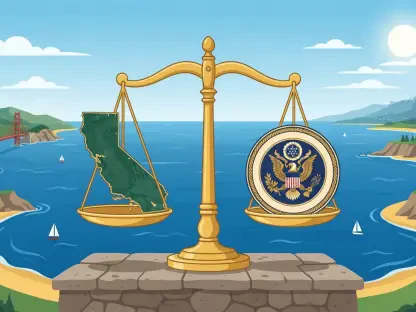
Legal challenges to this policy are currently making their way through the highest levels of the judiciary, focusing on the principle of proportionality. Lawyers representing these schools argue that the government’s fiscal goals do not justify the severe infringement on the right to religious freedom and the right of parents to educate their children in accordance with their beliefs. They contend that by making faith-based education prohibitively expensive, the state is effectively creating a monopoly on the moral and spiritual development of children. This legal battle is seen as a landmark case that will define the limits of state power in taxing religious activities. If the Supreme Court rules in favor of the government, it will set a precedent that allows for the economic marginalization of any religious or philosophical group that seeks to maintain a separate educational infrastructure. The outcome will determine whether pluralism remains a protected value or if it is a privilege reserved for those with the financial means to buy it.
Economic Barriers: Social Stratification in Education
The long-term consequence of these tax changes is a deepening of social and religious stratification within the United Kingdom. By turning faith-based education into a high-cost service, the government is essentially dismantling the “low-cost” sector that has historically provided a bridge for working-class religious communities. This move ensures that the state system becomes the only viable option for the vast majority of the population, thereby standardizing the worldview to which children are exposed. It is a form of social engineering that uses the tax code to achieve ideological uniformity. When families of modest means are forced to return to the state system because of costs, they are often placed in schools that do not respect or acknowledge their foundational values. This creates a sense of alienation and cultural dispossession among religious citizens who feel that their contribution to the common good through independent schooling is being actively discouraged.
Furthermore, the state’s refusal to acknowledge the unique role of small religious schools suggests a lack of value for institutional diversity. The government’s insistence on a “one-size-fits-all” approach to educational funding ignores the reality that many families choose independent schools not for prestige, but for survival in a culture they find increasingly hostile. This economic exclusion has broader implications for the vitality of the Christian community, as schools often serve as the heart of local congregational life and community service. Without these institutions, the ability of the church to pass on its traditions and ethical frameworks to the next generation is severely hampered. The ongoing struggle against the VAT imposition is therefore not just about balance sheets; it is about the right of a community to sustain its own identity and resist being absorbed into a homogenized secular state. The upcoming court decisions will be a critical indicator of whether the state views religious education as a legitimate choice or a tolerated deviation.
Curricular Shifts and the Dilution of Religious Instruction
While the financial squeeze targets the institutions, the curricular squeeze targets the content of what is taught to students within the state-funded system. Across the four nations, there has been a systematic move to transition Religious Education (RE) from a study of historical faith and biblical truth to a broader, more abstract framework often called “Religion and Worldviews.” This model seeks to place Christianity on a level playing field with a myriad of competing secular and religious perspectives, often framing faith through a sociological or psychological lens rather than an objective one. For Christian parents and educators, this is a significant concern because it treats the Gospel not as a foundational truth but as one “narrative” among many in a carousel of human experiences. The result is a curriculum that often prioritizes religious “literacy” and social cohesion over a deep, meaningful engagement with the actual claims of the faith.
This shift is increasingly being enforced through mandatory frameworks that leave little room for schools or parents to emphasize their specific religious commitments. The new approach often focuses on the social construction of religion, teaching students that faiths are products of human culture and history rather than divine revelation. Critics argue that this effectively indoctrinates children into a relativistic worldview that is inherently secular. In this environment, the distinctiveness of Christian morality and theology is often smoothed over to fit into a standardized “ethics” package that aligns with current state-approved social norms. The centralization of curricular control allows the government to set the boundaries of what is considered “reasonable” or “inclusive” religious expression, often excluding traditional or orthodox views that the state deems too exclusive or non-progressive. This transformation of the classroom into a laboratory for secular social values is a primary reason why many families are desperately seeking alternatives.
Redefining Faith: The Classroom Transformation
The redefinition of religious instruction is most visible in the way the classroom experience has changed for the average student. In many state schools, the time formerly dedicated to exploring the Bible and Christian history has been replaced by modules on “values and ethics” that are often disconnected from any specific religious tradition. This approach tends to emphasize a set of universalized secular values—such as tolerance, diversity, and individual autonomy—while presenting religious beliefs as merely personal choices or cultural background noise. When Christianity is taught, it is frequently through the lens of modern social issues, where the primary goal is to show how religious people can contribute to a progressive society. This does not provide students with an understanding of the faith on its own terms; instead, it utilizes the faith as a tool for promoting state-approved civic behavior. For many, this represents a hollowing out of the religious experience and a failure to respect the internal logic of faith.
Moreover, the “worldviews” framework tends to prioritize the subjective experience of the individual over the objective claims of the religious community. Students are encouraged to develop their own “personal worldview,” a process that often treats religious traditions as a buffet of ideas from which one can pick and choose. This methodology is fundamentally at odds with the Christian understanding of education as a process of being formed by an external truth and a historical community. By teaching children that they are the ultimate arbiters of truth, the state is undermining the authority of the church and the family to pass on a coherent religious heritage. The result is a generation of students who may be “literate” in the names and dates of various religions but lack any real grasp of what it means to live under the authority of a tradition. This educational shift is a key component of the state’s broader effort to create a more manageable, homogenized citizenry that shares a common secular outlook.
Regional Variations: Diverse Approaches to Reform
The implementation of these curricular changes has varied across the UK, but the underlying trend remains the same. In Wales, the curriculum was recently overhauled to replace traditional RE with “Religion, Values and Ethics” (RVE). A significant and controversial aspect of this change was the removal of the parental right to withdraw children from these lessons, a right that had existed for decades as a safeguard for religious freedom. This move sent a clear message that the state considers its moral instruction to be mandatory for all children, regardless of the parents’ convictions. Reports from Welsh secondary schools indicate that RVE is often neglected or integrated into other subjects in a way that further dilutes its content, sometimes receiving as little as fifteen minutes of instruction per week. This lack of rigor, combined with the loss of parental opt-outs, has left many families feeling that their children are being force-fed a secularized version of ethics that they cannot escape.
In Scotland, the system has moved toward a similar “progressive” model under the banner of “Religious and Moral Education” (RME). Recent proposals have included “decolonizing” the religious curriculum and expanding content related to LGBT identities, often at the expense of traditional theological instruction. Like their counterparts in Wales, Scottish parents have seen a significant erosion of their authority, as the government has restricted the ability to opt out of sensitive topics. In Northern Ireland, where religious education has historically been a cornerstone of the school system, there is an ongoing debate about revising the syllabus to be more “inclusive.” While this is framed as a move toward peace and reconciliation, critics argue that it often involves stripping away the historical and spiritual foundations of the faith to satisfy a secular political agenda. Across all regions, the state is increasingly positioning itself as the primary educator in matters of conscience, leaving parents with fewer tools to protect their children’s spiritual formation.
Regulatory Oversight and the Policing of Home Education
The final component of the state’s three-way squeeze is the increased monitoring of those who choose to educate their children outside the formal school system. As more parents turn to home education to escape the perceived secular indoctrination of the state, the government has responded by proposing tighter regulations and surveillance. The introduction of “Children Not in School” registers is a primary example of this trend. These registers would require local authorities to maintain detailed records of every home-educated child, including unique identification numbers that can be shared across multiple government departments. While the state justifies these measures as necessary for “safeguarding” and ensuring that every child receives a “suitable” education, many religious families see them as a pretext for intrusive state interference in the private life of the family. The fear is that these tools will be used to target households whose religious beliefs regarding gender, identity, and morality do not align with state-approved ideologies.
This regulatory encroachment represents a fundamental shift in the relationship between the state and the family. Historically, the law recognized parents as the primary guardians of their children’s welfare and education, with the state intervening only in cases of clear harm. However, the current trend suggests that the state now views itself as the ultimate authority, with parents acting as mere delegates who must be constantly supervised. The demand for “transparency” in home education often leads to intrusive home visits where officials may question children about their parents’ teachings. This creates a climate of fear and suspicion, as families worry that their traditional religious views will be pathologized as “extremist” or “harmful” to the child’s social development. By expanding its reach into the home, the government is ensuring that no part of a child’s life is truly beyond the influence of the state’s secular norms, effectively closing the last loophole for those seeking educational independence.
The Struggle for Parental Authority
The debate over state surveillance of home education is ultimately a conflict over the source of parental authority. Christian parents believe that their responsibility to raise and educate their children is a divine mandate that exists independently of the state’s permission. In contrast, the current regulatory push is built on the assumption that children are “assets of the state” and that the government has a right to monitor every aspect of their development to ensure they are being molded into productive, compliant citizens. This philosophical divide makes compromise difficult, as any increase in state monitoring is seen by religious families as a direct violation of their sacred duty. The use of “safeguarding” as a catch-all justification is particularly concerning, as it allows the state to bypass traditional legal protections for privacy and religious practice. When the definition of “well-being” is expanded to include a child’s adoption of state-approved social attitudes, any parent teaching a traditional biblical worldview can be framed as a potential risk.
This tension has led to a growing number of legal and political confrontations between home-educating communities and local authorities. Families have reported instances of officials demanding to see lesson plans and textbooks to ensure they do not contain “biased” or “non-inclusive” material. For many Christian families, the very act of teaching that there is an objective moral truth is seen by some officials as a form of bias that must be corrected. This creates a high-pressure environment where parents feel they must hide their religious convictions or face the threat of a school attendance order that would force their children back into the state system. The state’s insistence on monitoring the private sphere is a clear indication that it no longer trusts parents to act in the best interests of their children if those interests involve a departure from secular orthodoxy. This erosion of trust is a significant blow to the social fabric, as it positions the government as an adversary to religious families rather than a partner.
Resilience and the Defense of Faith-Based Learning
In response to the mounting pressures of 2026, a resilient movement of educators, parents, and legal experts worked to establish new networks of support and defense. These groups recognized that the survival of Christian education required a shift from passive compliance to active resistance. By pooling resources, they were able to provide legal counsel to schools facing VAT-related closures and offer guidance to home-educating families navigating intrusive state inspections. The “Education Revolution” movement gained momentum as it equipped parents to articulate a robust defense of their rights, emphasizing that the formation of a child’s soul was a responsibility that could not be delegated to a secular bureaucracy. This period saw the rise of innovative educational models, including “micro-schools” and co-operatives that sought to balance academic excellence with a deep, uncompromising commitment to biblical truth. These initiatives provided a lifeline for families who felt abandoned by the state’s increasingly rigid and uniform educational policies.
Looking back, the success of these efforts provides a clear roadmap for future generations seeking to preserve religious freedom in a secular age. The key takeaway was the necessity of institutional independence; by reducing their reliance on state funding and oversight, Christian communities were better able to maintain their integrity. Actionable steps for the future include the continued development of alternative accreditation systems and the creation of private scholarship funds to offset the burden of discriminatory taxes. Furthermore, it remains essential for religious communities to engage vigorously in the legal and political spheres to challenge the expansion of state authority over the family. The battle for the hearts and minds of the next generation was not won by a single victory but by the daily commitment of thousands of families to honor their convictions in the face of immense pressure. By standing firm, they ensured that the light of faith-centered education continued to shine, providing a vital alternative to the state’s centralized secular vision.