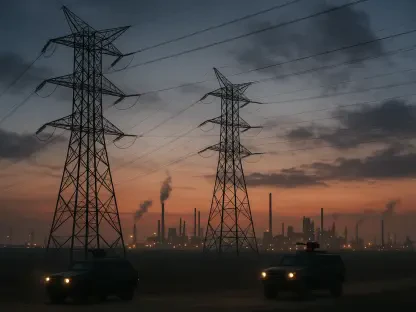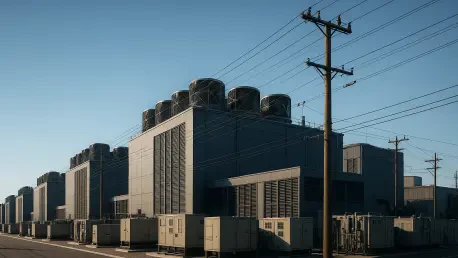

The rapid expansion of artificial intelligence is no longer just a digital phenomenon; it has become a massive physical transformation of the American landscape. The January 2025 revocation of Executive Order 14173 removed the primary government-wide framework for environmental justice just as AI infrastructure is accelerating. This shift occurred at a pivotal moment when the transition from traditional cloud storage to high-intensity generative AI processing began demanding unprecedented levels of resource consumption. While the digital economy thrives on the abstract nature of code, the reality of these operations is anchored in massive concrete shells that consume vast quantities of water and electricity. As these facilities proliferate across rural and suburban corridors, the existing regulatory oversight is struggling to keep pace with the sheer speed of development. The tension between industrial ambition and the protection of local resources has reached a critical boiling point, exposing fundamental weaknesses in federal statutes that were drafted decades before the advent of the modern computing era.
Environmental Justice and the Burden of Cumulative Harm
Historical Siting Disparities: The Evolution of Industrial Burden
The friction surrounding the placement of AI data centers is rooted in a long history of environmental justice concerns within the United States. Throughout the late 20th century, industrial developments were frequently concentrated in marginalized communities, a pattern that established the necessity for robust federal oversight. These historical precedents set the stage for protections intended to prevent the disproportionate impact of pollution on vulnerable populations, yet the nature of the industry has changed faster than the laws governing it. As developers seek out locations with low land costs and proximity to power substations, they often find themselves in the same areas that have historically borne the brunt of heavy industry. The current surge in data center construction is repeating these cycles of concentrated development, but with a different set of environmental stressors that are not always captured by traditional pollution monitoring systems.
The absence of a centralized federal directive to prioritize the well-being of overburdened communities has left agencies with fewer tools to address the social consequences of industrial siting. Without the guardrails once provided by executive guidance, the process of selecting locations for massive server farms has become increasingly opaque. Local governments are often lured by the promise of short-term construction jobs and tax revenue, sometimes overlooking the long-term environmental degradation that follows. This creates a scenario where the benefits of technological advancement are distributed globally, while the physical and ecological costs are borne by specific, often disadvantaged, localities. The lack of a unified federal standard for evaluating the social equity of project placement means that each state and municipality is left to negotiate with trillion-dollar corporations on their own, often without the technical expertise to fully assess the long-term impacts.
The shift toward a more deregulated environment in early 2026 has further complicated the ability of community advocates to challenge these projects. When environmental justice is no longer a mandatory consideration for federal permitting, the legal standing for local groups is significantly weakened. This allows projects to proceed without a comprehensive analysis of how they might exacerbate existing health disparities or resource scarcity in a given region. The infrastructure that powers the AI revolution is being built on a foundation of regulatory uncertainty, where the drive for competitive dominance frequently supersedes the foundational principle of community consent. As the industry moves into a phase of rapid expansion from 2026 to 2028, the need for a renewed focus on the cumulative effects of these facilities has never been more urgent, particularly as the physical footprint of the digital world continues to expand into residential and agricultural zones.
Legislative Loopholes: Identifying Barriers to Legal Recourse
A primary issue in current federal law is the lack of a clear threshold for what constitutes an unacceptable cumulative burden on a community. While a single data center might meet individual air or water permits, the total impact of its noise, emissions, and resource use can be overwhelming when added to existing industrial activity. This siloed approach to permitting ignores the reality of how these facilities function as massive, singular industrial nodes that operate twenty-four hours a day. Under the Clean Air Act, for example, individual backup generators are often permitted separately rather than as a single large source of emissions. This fragmentation allows developers to stay below the thresholds that would trigger more stringent federal reviews and requirements for advanced pollution control technologies. The result is a landscape where massive industrial clusters can be built piece by piece, avoiding the oversight that would naturally apply to a traditional factory of the same scale.
The xAI project in Mississippi serves as a prime example of how regulatory definitions can be leveraged to avoid strict oversight. By classifying power-generating turbines as nonroad engines, operators can bypass the stringent permitting processes required for stationary industrial sources. This allows for the release of significant amounts of nitrogen oxide and formaldehyde without the high-level scrutiny typically applied to major utility-scale facilities. Such tactical maneuvers highlight the flexibility within federal statutes like the Clean Air Act, which was not designed to categorize the unique power-generation needs of massive AI clusters. When thousands of servers require constant, uninterruptible power, the reliance on massive arrays of gas or diesel generators becomes a necessity, yet the law continues to treat these as minor or mobile sources rather than a permanent, large-scale industrial presence.
Furthermore, the National Environmental Policy Act provides a procedural requirement for agencies to disclose environmental risks but does not necessarily force a change in project outcomes. Legal precedents have established that as long as an agency takes a hard look at the consequences, it is not required to choose the most environmentally friendly option. This limitation often leaves local regulators and residents without the federal support needed to block projects that are technically lawful but practically harmful. Civil rights protections have also faced significant hurdles in the courts, particularly regarding the ability of private citizens to sue over disparate impacts. Following key Supreme Court rulings, residents must now prove intentional discrimination to find relief under certain federal statutes, a standard that is notoriously difficult to meet in modern administrative disputes. This legal shift has effectively stripped many communities of their most potent weapon for fighting unfair industrial placement.
Energy Economics and the Federal Power Act
Grid Strain: The Pressure of Unprecedented Electricity Demand
The scale of energy consumption required by AI facilities is unlike anything the electrical grid has previously handled in the modern era. A single large-scale data center can require as much power as a city of one million homes, creating a massive spike in demand that strains existing utility infrastructure. This sudden need for power forces utility companies to embark on expensive grid upgrades and generation projects to maintain reliability for all customers. Between 2026 and 2028, the projected increase in demand from the data center sector is expected to account for the majority of load growth in several key regional transmission organizations. This rapid escalation threatens to outpace the installation of renewable energy sources, leading some utilities to delay the retirement of older, carbon-intensive power plants to keep up with the data center load. The physical limits of the grid are being tested daily, as transformers and transmission lines reach their thermal capacities under the weight of constant AI processing.
The financial burden of these massive grid upgrades often falls on the shoulders of residential ratepayers through a process known as cost-shifting. When utilities pass the expenses of serving massive industrial customers onto the general public, it results in significant price increases for essential services. In some high-demand regions, residents have seen their electricity bills climb significantly as a direct result of data center expansion. This occurs because current regulatory frameworks often allow utilities to recover the costs of new transmission lines and substations from their entire customer base, regardless of who is driving the need for the expansion. While these multi-billion dollar technology firms generate immense profits, the infrastructure required to support them is being subsidized by families and small businesses. This creates a stark economic disparity where the public is essentially financing the private growth of the AI industry through their monthly utility payments.
Executive priorities in 2026 often emphasize the rapid build-out of industry to maintain a competitive technological edge, but this focus frequently overlooks the immediate financial impact on local populations. The drive for national technological supremacy can sometimes conflict with the basic economic stability of the communities hosting these facilities. When a utility commits to a long-term infrastructure project to support a cluster of data centers, that cost is locked into the rate structure for decades. If the data center industry were to face a downturn or if the technology shifted away from centralized hubs, the remaining ratepayers would be left to pay for the stranded assets. This long-term financial risk is rarely discussed during the initial permitting and economic incentive phases, leaving local communities vulnerable to future price shocks while the corporations remain mobile and less tethered to specific geographic locations.
Ratepayer Fairness: FERC Mandates and the Quest for Just Rates
The Federal Energy Regulatory Commission is tasked with ensuring that electricity rates remain just and reasonable under the Federal Power Act. Sections 205 and 206 of this act prohibit utilities from creating unreasonable differences in rates based on location or customer class. If a data center’s presence causes rates to skyrocket for everyone else, it can be argued that the utility is failing its legal mandate to protect consumers. The challenge lies in defining what constitutes an unreasonable difference in the context of the AI boom. Utilities often argue that the presence of large, steady loads provides a benefit to the grid by increasing overall efficiency, but this argument falls apart when the cost of the necessary infrastructure exceeds those marginal benefits. As more communities become aware of the connection between data center growth and their rising bills, the pressure on regulators to redefine rate classes is mounting.
Legal precedents suggest that utility costs must be allocated based on who actually benefits from the service. Since many data centers offer limited long-term local employment after their construction phase is over, the broad community often sees very little benefit from the projects they are subsidizing. This mismatch between who pays for the grid and who profits from it is a central point of legal contention in 2026. Regulators in some states are beginning to explore separate rate classes for large-load data centers to ensure they internalize their own infrastructure costs. By isolating these high-demand users, utilities can prevent the expenses associated with their massive power needs from bleeding into the bills of residential customers. This approach treats data centers as a distinct industrial category, acknowledging that their impact on the grid is fundamentally different from that of a shopping mall or a traditional office park.
Just as large industrial customers are often required to pay for specific upgrades to prevent regional blackouts, data centers should be held accountable for the strain they place on the grid. Requiring these facilities to pay their fair share of connection and upgrade costs aligns with existing reliability standards and ensures that the grid remains stable for all users. This transition would move the industry away from externalizing its growth costs and toward a more sustainable and equitable energy model. However, the implementation of such rates is often met with intense lobbying from the technology sector, which argues that higher energy costs will drive innovation offshore. This narrative creates a difficult environment for regulators who must balance the desire for local economic development with their statutory duty to protect ratepayers from unjust and unreasonable charges.
Invisible Toxins and Chemical Management
Chemical Hazards: The Prevalence of Regulated Substances in AI Operations
While data centers are not typically viewed through the same lens as chemical plants, their operation involves a vast array of regulated substances that present significant environmental risks. To keep thousands of high-performance servers running and cool, these facilities rely on complex cooling systems and backup power units that use high volumes of hazardous chemicals. The Toxic Substances Control Act gives the EPA the authority to oversee these materials, yet the agency has historically focused its resources on traditional manufacturing sectors. As AI workloads increase, the density of heat generated within data halls has reached levels that traditional air cooling can no longer handle. This has led to a widespread shift toward liquid cooling solutions, which utilize specialized fluids that must be carefully managed to prevent environmental contamination and human exposure.
One of the most pressing concerns involves the use of fluorinated coolants, commonly known as PFAS or forever chemicals, in these liquid cooling systems. These substances are prized for their efficiency in heat transfer and their non-conductive properties, making them ideal for immersion cooling where servers are literally dunked in vats of chemical fluid. However, PFAS are notorious for their persistence in the environment and their potential toxicity to humans, including links to cancer and developmental issues. As the EPA moves toward stricter regulations on PFAS in other industries, the data center industry faces a significant challenge in managing its reliance on these compounds. The sheer volume of these chemicals present in a large-scale data center creates a massive potential liability if a leak or spill were to occur, yet many facilities operate with minimal public disclosure regarding the specific chemicals they use.
In addition to coolants, the physical hardware of a data center is saturated with flame retardants and heavy metals that pose risks throughout their lifecycle. Servers and networking equipment must be treated with halogenated flame retardants to prevent catastrophic fires in the high-voltage environments of a data hall. These substances, along with the lead, cadmium, and lithium compounds found in massive uninterruptible power supply systems, represent a significant chemical footprint. While these materials are contained within the equipment during normal operation, the constant maintenance and upgrading of hardware create a steady stream of hazardous materials that must be tracked and managed. The lack of a specific federal framework for data center chemical safety means that oversight is often left to general industrial standards that may not account for the specific handling requirements of high-density electronic environments.
Waste Management: Disposal Pathways and the Enforcement Gap
The environmental risks associated with these chemicals become most apparent during the disposal and maintenance phases of a data center’s lifecycle. Cooling tower blowdown, which is the water periodically discharged to prevent mineral buildup and bacterial growth, often contains a mixture of chemical treatments including biocides, anti-corrosives, and scale inhibitors. When this water enters municipal sewage systems or surface waters, it can introduce pollutants that local treatment plants are not equipped to handle. Some facilities have been found to discharge water with high levels of copper and zinc, which are toxic to aquatic life even at low concentrations. The sheer volume of water used—millions of gallons per day for a single site—means that even low concentrations of chemicals can add up to a significant environmental burden over time.
The rapid turnover of hardware in the AI industry also contributes to a growing e-waste problem that has global implications. Servers are often replaced every three to five years to keep up with the processing demands of newer AI models, leading to a constant stream of discarded electronics. If these components are not handled with extreme care, the flame retardants and toxic metals within them can leach into groundwater or be released into the air through incineration. While many major tech companies claim to follow rigorous recycling protocols, the lack of federal mandatory tracking for electronic waste makes it difficult to verify these claims. The global nature of the e-waste trade means that components discarded in the United States often end up in developing nations where environmental regulations are non-existent, further complicating the ethical footprint of the AI boom.
There is a notable gap between the EPA’s statutory authority and its current enforcement actions regarding data center waste. While federal law is technically technology-neutral and covers chemical substances regardless of the industry using them, specific oversight of data center operations has remained minimal compared to other industrial sectors. Applying existing safety standards more aggressively would not necessarily hinder innovation, but it would ensure that the digital economy does not leave a trail of environmental degradation. As the industry moves into 2027 and 2028, the push for more sustainable cooling technologies, such as closed-loop systems that minimize water discharge, is gaining traction. However, without federal mandates to adopt these cleaner technologies, many developers will continue to opt for the cheapest and most environmentally taxing methods available to them under current law.
The Crisis of Federal Inaction and Jurisdiction
The Accountability Vacuum: Conflict of Jurisdictions
The expansion of AI infrastructure is further complicated by the overlapping and sometimes conflicting roles of state and federal authorities. In many cases, state agencies grant permits and exemptions under authority delegated to them by the federal government, yet they may lack the resources or political will to conduct thorough environmental reviews. This creates a jurisdictional trap where local communities find it difficult to identify which agency is truly responsible for the oversight of a project. When a data center developer receives a state-level air permit that bypasses federal stationary source requirements, the community is left without a clear path for appeal. This fragmentation of authority effectively shields large projects from the kind of integrated environmental assessment that their scale requires, allowing them to proceed under a patchwork of minor permits rather than a comprehensive industrial review.
Under current National Environmental Policy Act guidelines, a project must often involve major federal action to trigger a comprehensive environmental impact statement. Developers have become highly effective at avoiding this threshold by relying on local zoning and state-level economic incentives that do not involve federal funding or federal land. By bypassing these federal triggers, massive industrial projects can avoid the hard look that would otherwise be required for projects of their size and impact. This strategy has led to the development of data center alleys where dozens of facilities are built in close proximity, each permitted individually but together creating the environmental impact of a massive industrial zone. The lack of a federal requirement to analyze the cumulative impact of these clusters means that the true cost to the regional air quality and water table is rarely assessed until after the damage has been done.
The shift in energy prices and chemical risks highlights a broader failure to address the externalities of the AI boom at the federal level. When the market fails to force companies to pay for the environmental and social costs of their operations, the public ends up bearing the burden through higher bills and health risks. Strengthening federal baselines for cumulative harm and cost allocation was identified as a primary necessity for ensuring that the development of artificial intelligence remains compatible with the rights and safety of the American public. Without a fundamental shift in how these facilities are categorized and regulated, the gap between technological progress and public protection will only continue to widen. The current accountability vacuum serves the interests of rapid deployment, but it does so at the expense of the long-term health and economic stability of the communities that host the physical infrastructure of the digital age.
Strategic Reform: Navigating the Path Forward
The investigation into federal regulatory gaps revealed that several concrete steps were necessary to align the AI industry with public interests. Legislators recognized that updating the Federal Power Act to include specific definitions for high-density computing loads could prevent the inequitable cost-shifting that burdened residential ratepayers. By establishing these new customer classes, the legal framework allowed for more transparent cost-benefit analyses, ensuring that those driving the demand for grid expansion were also responsible for its financing. This structural change shifted the financial risk away from the public and toward the corporations profiting from the infrastructure, creating a more stable economic environment for utility customers. These reforms were seen as essential for maintaining public trust in the electrical grid as it underwent the most significant transformation of the century.
Furthermore, the integration of cumulative impact assessments into the permitting process emerged as a critical solution for addressing environmental justice. Agencies began to move away from the siloed approach of individual permits, instead adopting a holistic view that accounted for the total noise, water, and air quality impacts of data center clusters. This transition was supported by new technical standards that required developers to provide detailed chemical disclosures and waste management plans as a condition of their operating licenses. By closing the loopholes that allowed industrial sources to be classified as nonroad engines, the regulatory system regained its ability to monitor and control the emissions from the massive generator arrays that power AI hubs. These steps were instrumental in ensuring that the physical footprint of the digital world did not come at the expense of the communities it inhabited.
In the final analysis, the development of a technology-specific federal framework for data center oversight provided the clarity needed for both industry and the public. This approach did not seek to stifle innovation but rather to provide a stable and predictable set of rules that prioritized resource efficiency and community safety. Local governments were empowered with better technical resources to evaluate the long-term consequences of massive industrial sitings, allowing for more informed decision-making during the zoning process. As the industry moved forward into 2027 and 2028, these regulatory foundations proved vital in transitioning toward a sustainable AI infrastructure that respected both environmental limits and the economic rights of citizens. The shift from a reactive to a proactive regulatory posture ensured that the “golden age of AI” was built on a foundation of accountability rather than a vacuum of oversight.