
Donald Gainsborough stands at the intersection of high-stakes diplomacy and legislative maneuvering as the leader of Government Curated. With a career defined by navigating the labyrinthine corridors of power, Gainsborough offers a rare, bird’s-eye view of how domestic policy often dictates the pulse of international warfare. Our conversation delves into the strategic pivot of the American administration as it moves away from the specter of “World War II-level” strikes toward a calculated, grinding economic siege of Iran. We explore the tactical realities of a naval blockade that has paralyzed the Strait of Hormuz, the internal friction within the Pentagon over dwindling munition stockpiles, and the looming shadow of the November midterm elections that are forcing a radical rethink of America’s role in the Middle East.
The administration recently moved away from threats of World War II-scale attacks, opting instead for what has been described as “low-keying” the conflict. How do you interpret this pivot toward economic pressure, and is it a sign of strategic strength or a necessary retreat?
This shift is a classic example of what the administration calls a “chess game,” where the pieces are no longer missiles but barrels of oil and currency valuations. By backing away from the catastrophic strikes threatened just weeks ago, the President is banking on the fact that Iran’s internal financial architecture is crumbling under the weight of hyper-inflation and a desperate inability to pay its own soldiers. It is a sensory reality for those on the ground; imagine the morale of an army that hasn’t seen a paycheck in months while the cost of basic goods skyrockets daily. When the President mentions that Iran is in “very bad shape,” he is looking at the cold, hard numbers of a domestic economy in freefall. This isn’t just a “low-key” approach for the sake of quiet; it’s a realization that the $78 per barrel oil price on Monday provides a safety net for the American consumer, allowing the U.S. to tighten the noose without causing a political firestorm at the gas pump back home.
The naval blockade has effectively reduced Iranian crude exports to near-zero levels, leading to extreme economic distress; how does this “wall of steel” look on the ground and what are its broader implications?
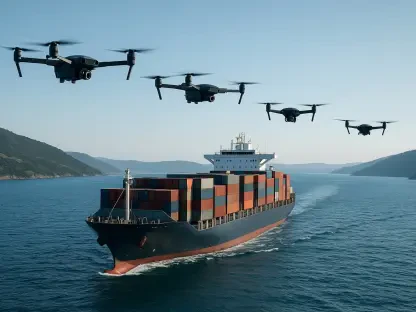
The “wall of steel” is a visceral presence in the region, characterized by the constant hum of engines and the sight of grey hulls patrolling the horizon. Since mid-April, the U.S. Central Command has been relentless, redirecting 53 commercial vessels and physically boarding two others to ensure no crude leaves Iranian shores. To appreciate the scale, you have to remember that Iran was moving 1.5 million barrels per day before this blockade tightened; seeing those numbers drop to near-zero is a death knell for their primary revenue stream. The water in the Strait of Hormuz, once thick with the traffic of tankers, is now a theater of tension where two vessels were even disabled to send a clear message. While Iran and Oman have tried to signal a nearing agreement on managing these waters, the U.S. remains “semi-negotiating” at best, keeping the pressure high while the Iranian infrastructure continues to rot from the damage sustained since the war’s launch in late February.
With reports of depleted air defense interceptors and warnings from the Joint Chiefs of Staff, how concerning is the current state of the U.S. munitions stockpile for sustaining a two-front strategic commitment?
There is a palpable friction between the high-level warnings from General Dan Caine and the operational confidence being projected by the Pentagon’s frontline officials. When the Chairman of the Joint Chiefs cautions that a shortage of interceptors could hamper the protection of our allies, it creates an atmosphere of vulnerability that our adversaries are certainly watching. However, the official stance from the Defense Innovation Unit remains unyielding, with leaders like Jarred Conley insisting the department has everything it needs to execute a war today. This memo-to-memo battle reflects a deeper anxiety about the rapid escalation of weapon delivery requirements across both the Middle East and Ukraine. The sensory reality here is the industrial hum of the American defense industry being told to “rapidly escalate,” a heavy lift when you’re already 23 weeks into a war that shows no signs of a clean military conclusion.
Given that only thirty-five percent of Americans approve of this war, how is the domestic political climate and the upcoming midterm elections reshaping the administration’s long-term strategy?
The political math is becoming impossible to ignore as we approach the November midterms, with the Republican party’s narrow congressional majority hanging by a thread. For the first time since December 2024, the Democrats have edged ahead in the polls, leading 37 percent to 36 percent on the question of who handles “terrorism” and war more effectively. This is a staggering shift for an administration that entered the White House promising to avoid “stupid wars,” yet now finds itself nearly half a year into a conflict that most of the electorate views with skepticism. You can feel the nervousness in Washington; it’s the sound of door-knocking volunteers hearing complaints about foreign spending while domestic issues simmer. This unpopularity is likely why we see the Vice President and Jared Kushner being dispatched to Switzerland for Pakistani-mediated talks, desperately searching for a way to “low-key” the conflict before voters head to the booths.
In light of the failed June memorandum of understanding and the complex mediation efforts involving Pakistan and Switzerland, what are the primary obstacles preventing a definitive resolution in the Strait of Hormuz?
The primary obstacle is a fundamental lack of trust that caused the June 17 memorandum of understanding to unravel in a matter of days. While the MoU touched on the lifting of sanctions and the creation of a reconstruction fund, it failed to bridge the gap on the management of the Strait of Hormuz, which remains the world’s most critical energy chokepoint. The Iranians are demanding compensation for the significant damage their infrastructure has suffered since February, while the U.S. has quietly dropped its demand for regime change but refuses to budge on ballistic missile restrictions. There is a sense of “moving the goalposts” on both sides that makes the negotiating table in Switzerland feel more like a theater of the absurd than a venue for peace. Until someone is willing to extend an arm and take that first step toward a compromise, the regional neighbors like Qatar and the UAE will continue to feel the heat from Iranian missile and drone pressure.
Reflecting on the initial objectives established at the war’s outset on February 28, how has the mission evolved now that the goal of regime change has seemingly been sidelined?
The war began with the seismic event of killing Iranian Supreme Leader Ali Khamenei on February 28, a move intended to force a total collapse of the existing order. Since then, the objectives have blurred from preventing nuclear development to a much broader, and perhaps less attainable, goal of dismantling Iran’s support for groups like Hezbollah in Lebanon and the Houthis in Yemen. The administration has had to reconcile the reality that the Iranian political system is highly repressive; the leaders in Tehran are more concerned with staying in power than they are with the plight of their middle class. We are seeing a strategic downsizing where the U.S. is no longer shouting for regime change but is instead trying to find a way to stop the global energy crisis unleashed by the strait’s closure. It is a sobering evolution from the early days of “catastrophic strikes” to the current reality of “semi-negotiating” over the fine print of a maritime management agreement.
What is your forecast for the Iranian conflict?
My forecast is that we are entering a period of prolonged, agonizing stalemate where economic endurance will outpace military action. The current naval blockade will likely remain a “wall of steel” for the foreseeable future, as the U.S. uses the near-zero export reality as its primary leverage to force Iran back to the table for a more permanent version of the June 17 agreement. However, with the midterms looming and public approval stuck at 35 percent, the administration will be forced to make significant concessions, likely involving the unfreezing of Iranian assets or a formal lifting of certain sanctions, just to secure a reopening of the Strait of Hormuz. We should expect more “low-key” diplomacy mediated by third parties like Pakistan, as neither side wants the “World War II” scenario, yet neither is ready to admit the 23-week war has failed to achieve its original, loftier goals. The “chess game” will continue, but the board is becoming increasingly crowded with domestic political risks and regional economic fallout that may ultimately force a settlement neither side truly loves.