
A maritime chokepoint slams shut, fuel prices rocket across continents, and boardroom agendas flip overnight from decarbonization timelines to the stark arithmetic of keeping the lights on without bankrupting treasuries or torching credibility.
From Chokepoint to Boardroom: Why Energy Security Now Defines the Bretton Woods Agenda
This roundup gathers perspectives from finance ministers, development economists, utility executives, and civil-society advocates on how the International Monetary Fund and the World Bank are handling an acute energy security shock triggered by Iran’s closure of the Strait of Hormuz. Across interviews and briefings, one theme dominates: energy reliability has become the core filter for policy and lending choices. The shift is not rhetorical flair; it is the byproduct of a market jolt on top of lingering fragility from the pandemic and war-related disruptions.
Practitioners describe a scramble. Import-dependent governments face a 40 percent oil price jump and spiraling fertilizer and liquefied natural gas costs that batter food systems and utility balance sheets. Budget officers weigh how much foreign exchange to burn on emergency cargoes while inflation and currency risk mount. In contrast, countries with domestic coal or gas move swiftly to stabilize grids, trading emissions concerns for short-term predictability.
Yet few voices argue for a single playbook. Instead, interviewees coalesce around diversification as a risk hedge. Renewables, batteries, gas peakers, hydropower, and even coal in some contexts are cast as portfolio components, not ideological stakes. The common metric, echoed from energy ministries to central banks, is a “least-cost, reliable mix” that keeps economies running while cushioning future shocks.
How the Mandates Bend Without Breaking
Institution insiders and policy analysts note that shareholder politics—especially pressure from Washington—shape what the Fund and the Bank say in public and how quickly they move in private. The result is a careful pivot: less climate-first language, more talk of security, access, and macro stability. Insiders call it pragmatic; advocacy groups call it cautious to a fault. Both agree the institutions are threading a tight needle.
Even so, program officers point to continuity under the surface. Nearly half of recent World Bank commitments carried climate co-benefits, and Fund teams increasingly flag environmental shocks as macro risks. The rhetorical center of gravity tilts toward reliability and affordability, but the operational pipeline still includes renewables, transmission upgrades, and resilience projects—justified as stability tools rather than as climate trophies.
When Washington Sets the Tone: Messaging Shifts to “Reliable, Least-Cost” Energy
Policy watchers close to the spring meetings describe coordinated messaging that avoids direct confrontation with the United States’ fossil-forward stance. Statements from senior leaders highlight “diversification,” “reliability,” and “least-cost” choices tailored to national circumstances. Communications strategists say the point is to keep all shareholders at the table while unlocking space for country-led decisions.
Civil-society voices, while wary of diluted climate emphasis, acknowledge the political math. Their view: reframing clean energy as a stability instrument can preserve ambition without triggering veto politics. Investment managers echo this logic, arguing that markets reward credible plans to reduce import exposure and price volatility—goals that clean power can meet regardless of the climate debate.
Budgets Under Siege: Price Volatility, Cost of Capital, and the Case for Domestic Clean Power
Finance ministry officials describe a brutal calculus. Spiking fuel prices, depreciating currencies, and rising global interest rates squeeze already tight budgets. Subsidies to shield households drain reserves; utilities accumulate arrears; commercial borrowing becomes prohibitive. The shock ripples into agriculture through fertilizer costs and threatens growth projections.
Amid this squeeze, development economists and grid operators make a pointed argument: domestic renewables and storage are not only greener; they are macro hedges. By replacing dollar-denominated fuel imports with local generation, countries reduce exchange-rate risk and inflation pass-through. Case studies—from fast-tracked solar in the Philippines to distributed systems in Pakistan—are cited as early proof that clean supply can stabilize bills and balance sheets.
Two-Speed Transitions: Fossil Backstops vs. Distributed Renewables in Real Time
Energy advisors across Asia and Africa report a two-speed reality. Where domestic coal or gas is abundant, governments lean on what is available to backstop reliability now. India and Thailand signal greater coal use amid gas uncertainty; Mexico leans on national gas to curb import exposure. These steps are framed as temporary stabilizers rather than strategic reversals.
Meanwhile, import-dependent countries accelerate renewables to cut commodity risk. Indonesia’s large-scale solar ambitions and consumer-led rooftop growth in Pakistan illustrate how different tracks can run simultaneously: fossil units handle immediate demand spikes; distributed solar and batteries chip away at import bills and defer costly grid expansions. Utilities say the endgame is the same—diversification—but sequencing differs by resource endowment and fiscal space.
Can the Toolkits Catch Up? From Mega-Projects to Microgrids and Mission 300
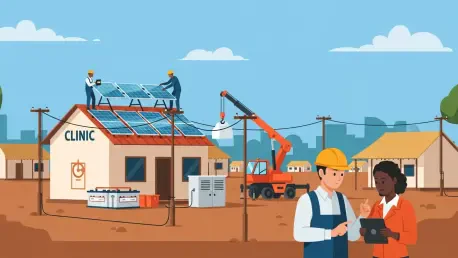
Development finance veterans highlight a structural mismatch: multilateral banks have historically favored mega-projects with lengthy gestation, while clients now ask for faster, modular deployments—microgrids, rooftop solar, and battery storage. Procurement templates, risk models, and safeguard processes were built for dams and power plants, not fleets of small systems.
In response, Bank teams promote blended finance and results-based platforms, and coordination with the International Energy Agency aims to sharpen crisis diagnostics. Mission 300—targeting electrification for 300 million people in sub-Saharan Africa—shows the access agenda remains central. Implementation experts urge bolder moves: standardized contracts for distributed assets, warehousing facilities for small-ticket loans, and guarantees that crowd in local banks at scale.
What to Do Now: A Playbook for Balancing Security, Cost, and Resilience
Portfolio thinking tops almost every expert’s list. Grid planners advocate “no regrets” moves: demand-side efficiency to shave peak loads, targeted storage to firm variable supply, and flexible gas peakers where they displace costly diesel. Risk officers add currency hedges and hedged fuel contracts to buffer fiscal shocks, paired with transparent pricing that protects the poor without open-ended subsidies.
Financiers stress capital stack innovation. Concessional tranches to de-risk first-of-a-kind storage, local-currency facilities for rooftop solar, and insurance for political and offtake risk can unlock private money at lower all-in costs. Civil-society groups press for social protections and community ownership models to anchor public trust, arguing that resilience is as much social as it is technical.
Beyond the Shock: Making Diversification a Durable Strategy Amid Political Crosswinds
Strategists caution that today’s scramble should not harden into perpetual emergency mode. To make diversification durable, countries need planning rules that reward system flexibility: open access for distributed resources, modernized grid codes, and performance-based regulation that values reliability and resilience, not just megawatt-hours delivered. These rules, experts say, reduce investor uncertainty and speed deployment.
Governance also matters. Stakeholders recommend independent market monitors, time-bound subsidy reforms, and transparent tenders that favor least-cost outcomes, whether utility-scale or distributed. By institutionalizing these practices, governments and lenders can navigate shifting shareholder politics while sustaining a steady buildout of mixed portfolios that lower risk over time.