
The rapid disappearance of ancient forests across the Amazon, Southeast Asia, and the Congo Basin has forced a fundamental shift in how international trade operates, moving away from voluntary corporate pledges toward strict, legally binding mandates. These legislative frameworks require companies to prove that their products—ranging from coffee and cocoa to rubber and wood—were not produced on land deforested after a specific cutoff date. This shift represents a massive undertaking in supply chain transparency, necessitating the integration of real-time geospatial data with complex logistical networks that span multiple continents. While the intent is to leverage the purchasing power of wealthy nations to protect global carbon sinks, the practical execution faces immense hurdles, including the reliability of tracing products back to their exact point of origin. The effectiveness of these measures remains a subject of debate among experts who question if trade barriers alone can dismantle the financial incentives driving land clearing.
Technological Implementation and Traceability
Satellite Monitoring and Real-Time Oversight
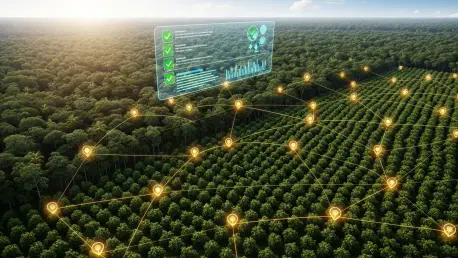
The enforcement of modern trade regulations depends heavily on the accuracy of high-resolution satellite imagery and the ability of automated systems to detect changes in canopy cover over time. Platforms like Global Forest Watch and satellite constellations from operators like Planet Labs provide daily updates that allow regulators to monitor sensitive biomes with unprecedented precision. However, raw imagery is only part of the solution; it must be cross-referenced with property boundaries and land use registries that are often incomplete or outdated in tropical regions. This data gap creates a significant vulnerability, as illicit timber or soy can be laundered through legitimate farms that appear compliant on paper. To combat this, technology firms are developing integrated platforms that combine geospatial data with field-level audits to verify the legality of land use. The goal is to create a digital twin of the supply chain where every ton of cargo is linked to a specific geographic coordinate to ensure full compliance.
Blockchain Integration and Data Verification
Moving beyond simple observation, the integration of artificial intelligence and distributed ledger technology is providing a more robust framework for verifying the agricultural goods provenance. Machine learning algorithms are now capable of distinguishing between natural forest loss from wildfires and intentional clearing for plantations, allowing for more targeted enforcement actions. By recording these observations on a blockchain, regulators ensure that the data cannot be tampered with as the product moves from a remote farm to a processing facility and finally to a consumer market. This level of transparency is essential for building trust among international partners who are often skeptical of unilateral trade restrictions. Furthermore, these technological systems allow for the rapid identification of high-risk regions, enabling authorities to allocate their limited inspection resources more effectively. These tools are becoming the new standard for global trade participation across all major forest-risk commodities.
Socioeconomic Challenges and Strategic Solutions
Smallholder Farmers and Market Inclusivity
One of the most significant concerns regarding the implementation of strict trade regulations is the disproportionate impact they may have on smallholder farmers who lack the financial and technical resources to comply. In regions like West Africa and Southeast Asia, millions of families rely on small-scale production of cocoa, coffee, and palm oil for their primary livelihood. Without significant international support, these farmers may find themselves effectively barred from high-value markets, potentially pushing them further into poverty or incentivizing them to clear even more land to compensate for lower prices. Current data suggests that compliance costs for digital mapping and certification can exceed the annual profit of a typical small-scale farm, creating a barrier to entry that favors large corporate plantations. To address this inequity, environmental groups are proposing tiered compliance systems or direct financial assistance to help smallholders transition to sustainable practices to prevent market exclusion.
Future Perspectives and Collaborative Conservation
The journey toward deforestation-free trade was marked by both technological breakthroughs and significant diplomatic challenges that forced a total reimagining of global logistics. To ensure long-term success, stakeholders focused on building local capacity within producing nations rather than relying solely on punitive measures. Investing in the digital infrastructure of developing countries proved essential, as it allowed smallholders to participate in the formal economy while providing the transparency that international buyers demanded. Furthermore, the expansion of green financing initiatives provided the necessary capital for farmers to switch to regenerative agricultural models, which significantly reduced the pressure to clear virgin forests. Governments also moved toward bilateral agreements that recognized local conservation efforts, fostering a sense of partnership rather than one-sided imposition. This multifaceted strategy successfully balanced the preservation of vital ecosystems with the economic realities of global commodity production.