
The shimmering heat rising from the asphalt at local gas stations now carries a scent of financial dread as American drivers confront the highest fuel prices in the nation’s history. As citizens pull into stations this season, they are being greeted by a fiscal reality that eclipses even the most volatile periods of the recent past. The national average for diesel has surged to an unprecedented $5.85 per gallon, effectively shattering the records set during the 2022 invasion of Ukraine. For the first time in history, Labor Day weekend saw gasoline prices settle at a staggering $4.14 per gallon, signaling a fundamental shift in the domestic energy landscape driven by geopolitical friction thousands of miles away.
The Price of Instability: A New Peak at the Pump
This sudden surge in fuel costs has transformed the simple act of commuting into a significant economic burden for millions of households. The current pricing structure suggests that the relative stability enjoyed in previous years has evaporated, replaced by a market that reacts violently to every headline. Beyond the immediate shock to the consumer, these record highs represent a structural challenge to the American way of life, forcing many to choose between essential travel and other basic necessities.
The energy markets are currently navigating a storm where traditional buffers no longer seem to apply. Analysts observe that the typical seasonal cooling of prices has failed to materialize, suggesting that the underlying causes are far more entrenched than simple demand cycles. This shift toward permanent high-cost energy is reshaping the domestic economy, as the ripple effects of $5.85 diesel begin to infiltrate every sector of commerce.
The Strait of Hormuz: A Global Chokepoint Under Siege
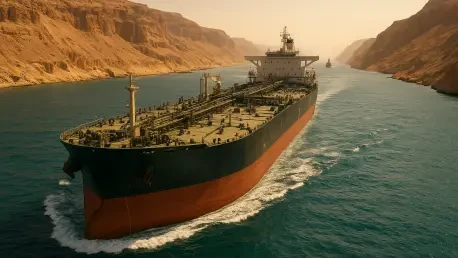
The current energy crisis is not a product of simple supply and demand, but a direct consequence of the escalating military confrontation between the United States and Iran. Following U.S. and Israeli strikes in February, the Strait of Hormuz became the epicenter of a global supply shock. With Iran asserting control over the waterway and the U.S. military attempting to force its reopening, the uncertainty surrounding the flow of 18 million barrels of oil per day has sent shockwaves through global markets, leaving the American consumer to foot the bill for regional instability.
As the world’s most vital energy corridor remains a theater of military maneuvers, the logistical reality of oil transport has become increasingly precarious. Every attempted transit through the strait now carries a significant risk, which is immediately reflected in the price of crude oil. The tension in these waters acts as a direct throttle on the American economy, proving that domestic prosperity is inextricably linked to the fragile peace of the Middle East.
Disconnected Narratives and Market Volatility
The economic crisis is further complicated by a stark contrast between official government reports and the reality observed by global energy traders. President Trump and Vice President JD Vance have publicly asserted that the U.S. military has successfully secured the strait, even suggesting the waterway be renamed the “Trump Strait” to signify renewed American dominance. However, verification of these claims is hampered by “dark” shipping practices, where tankers under U.S. protection disable transponders to avoid Iranian detection, creating a data vacuum that fuels market speculation.
Tehran continues to maintain its presence in the waterway, backed by frequent reports of kinetic attacks on shipping vessels that contradict the narrative of a restored and safe corridor. Because market analysts cannot confirm the safety of oil transit, “fear premiums” remain baked into fuel prices, keeping costs high regardless of the administration’s optimistic rhetoric. This disconnect between political messaging and maritime reality leaves investors and consumers in a state of perpetual uncertainty, preventing any meaningful price correction.
Expert Analysis on the Economic Ripple Effect
Economic historians and energy analysts warn that the current price hike in diesel—the primary fuel for the nation’s freight and agricultural sectors—is a harbinger of broader inflationary pressure. Industry experts note that when it costs nearly six dollars a gallon to move a truck, the price of groceries, construction materials, and consumer goods must inevitably rise. This hidden tax on the American public is creating a sense of domestic urgency, as public opinion polls indicate that the war is increasingly unpopular.
The rising cost of living has become the primary concern for voters heading into the November midterm elections. This economic strain is not localized to the pump; it is felt in the checkout line and the monthly utility bill. As the cost of moving goods across the country climbs, the competitive edge of American industry is being tested, leading to a broader conversation about energy independence and the true cost of foreign military engagement.
Navigating the Economic Impact of High Energy Costs
While the geopolitical situation remains in flux, businesses and consumers must adopt specific frameworks to mitigate the impact of record-breaking fuel costs. Logistical experts suggested that companies consolidate shipments and utilize fuel-efficient routing software to minimize the “diesel drain” on their bottom lines. Following independent maritime intelligence rather than political briefings allowed many stakeholders to obtain a more accurate picture of when fuel prices might stabilize.
Preparing for a secondary wave of price increases in the retail and food sectors proved essential as higher transportation costs filtered through the economy. Understanding how military expenditures in the Middle East correlated with domestic pump prices allowed citizens to make informed decisions regarding the intersection of foreign policy and economic health. These proactive strategies helped many navigate the turbulence while the global community sought a path toward long-term energy security.