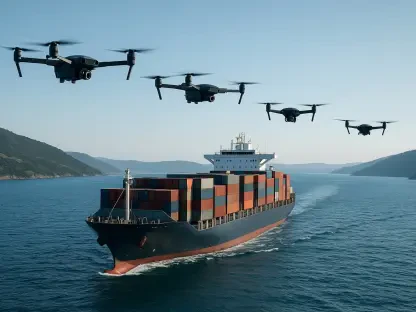

The European Union stands at a critical juncture in its attempt to overhaul a fragmented security architecture that has historically relied on individual national interests rather than a cohesive regional strategy. For decades, the continent has operated with a patchwork of procurement cycles and military standards, but the current geopolitical climate necessitates a shift toward a more integrated defense framework under the 2030 rearmament roadmap. Central to this ambitious transition are flagship projects like a unified air defense shield and sophisticated drone constellations designed to protect the sovereign borders of member states from increasingly complex threats. This transformation represents more than just a hardware upgrade; it is a fundamental realignment of how Europe perceives its collective safety in an era of rapid technological change and shifting global alliances. Success requires moving beyond high-level political rhetoric to establish operational systems that can be effectively deployed across the continent’s diverse terrain and varied security environments.
Addressing the current vulnerability window remains a primary concern for policymakers as they monitor frequent drone incursions along the eastern borders that expose gaps in existing detection and interception capabilities. These immediate security pressures have forced a recalibration of priorities, emphasizing the need for rapid deployment solutions alongside long-term development of next-generation hardware. To bridge this technical gap, the European Union has engaged in an intensive exchange of real-world tactical knowledge with partners in Ukraine, gaining insights into electronic warfare and unmanned aerial vehicle dynamics that are reshaping modern combat. These insights are being integrated into the 2030 goals to ensure that future systems are resilient against the evolving tactics seen in current active conflicts. By balancing the urgent need for border protection with the methodical pace of industrial production, the Commission aims to create a robust defense ecosystem that can withstand both hybrid threats and conventional military challenges.
Financing the Strategy: From SAFE Loans to Long-Term Commitments
The financial architecture supporting these defense ambitions hinges on the SAFE instrument, a sophisticated loan facility that functions as a litmus test for the commitment of individual member states to the common cause. National capitals are currently submitting their procurement plans to the European Commission, which acts as the arbiter to determine which projects will receive the necessary backing to lead these continent-wide initiatives. This mechanism is intended to pool immense financial resources and streamline the purchase of standardized equipment, thereby reducing the unit costs through economies of scale that were previously unreachable for smaller nations. However, the success of this strategy depends heavily on the willingness of sovereign governments to prioritize the needs of the collective over the protection of their domestic industrial bases. If member states continue to favor local manufacturers at the expense of regional interoperability, the financial efficiency of the SAFE instrument will be significantly undermined, leaving the 2030 roadmap underfunded.
Beyond the temporary relief provided by current loan facilities, the European Union is fast approaching a significant fiscal cliff scheduled for 2027 when existing funding streams are slated to expire. The future of these defense initiatives will inevitably depend on the outcome of the next Multiannual Financial Framework negotiations, where defense spending must compete for resources against post-pandemic recovery obligations and other pressing domestic priorities. To prevent a catastrophic loss of momentum, the Commission has proposed substantial budget increases aimed at sustaining the development of critical infrastructure throughout the remainder of the decade. These negotiations are expected to be exceptionally contentious as member states navigate limited fiscal maneuverability and varying levels of public support for military expenditures. Ensuring a stable and predictable flow of capital beyond 2027 is essential for providing the defense industry with the confidence needed to invest in long-term research and production lines, which are necessary to achieve autonomy.
Geopolitical Alignment: Bridging the Gap Between East and West
A persistent challenge to a unified defense policy is the stark disparity in threat perceptions among the various member states, often categorized by their geographical proximity to active conflict zones. Eastern European nations view the completion of air defense shields and rapid response systems as existential necessities, given their position on the front lines of current regional instability. In contrast, Western and Southern members, while supportive of the general concept of security, frequently approach these costly projects with a greater degree of skepticism or focus on different maritime and migration-related priorities. Proponents of the 2030 plan are working to bridge this ideological divide by framing the new capabilities as having universal utility across all regions of the continent. By demonstrating that surveillance technologies and drone systems intended for the eastern flank can be equally effective for monitoring maritime corridors in the Mediterranean, the Commission hopes to maintain the political endurance required.
The complexity of industrial cooperation presents another significant hurdle, as historical large-scale programs like the Eurofighter have become cautionary tales regarding delays and excessive cost overruns. To mitigate these inherent risks, a new trend is emerging that favors smaller and more flexible partnerships between two or three countries rather than attempting to involve every member state in every project. This streamlined industrial approach allows for much faster decision-making processes and helps to avoid the bureaucratic gridlock and juste retour requirements that have traditionally characterized pan-European military efforts. By focusing on agile consortiums, the European Union can foster more rapid innovation and ensure that equipment reaches the field while the technology is still relevant and effective. This shift toward modular and collaborative development reflects a growing recognition that speed and adaptability are just as important as the total volume of investment when maintaining a competitive edge.
Strategic Governance: Overcoming Hurdles and Defining Success
The evolving role of the European Commission marked a significant departure from its traditional function as a mere coordinator, as it sought to provide active industrial and financial leadership in the defense sector. Despite this shift, the ultimate responsibility for joint procurement still rested with individual member states, who had to overcome a deep-seated cultural aversion to sharing sovereignty in matters of national security. To incentivize participation and lower the barriers to cooperation, the European Union introduced various regulatory benefits, including tax exemptions and expedited permitting processes for projects designated as being of common interest. These measures were designed to reduce the administrative burden on defense contractors and encourage private investment in cutting-edge military technologies that might otherwise have been considered too risky. However, these incentives alone were not always enough to shift the needle, as national governments remained hesitant to fully integrate their defense planning.
Ultimately, the achievement of the 2030 goals necessitated a fundamental change in how the European Union approached risk and innovation within its procurement processes. The previous culture of risk aversion often prevented the adoption of breakthrough technologies, favoring instead the incremental improvement of existing systems that were not sufficient to address future battlefield requirements. As a result, the prospect of joint borrowing for defense became an increasingly vital topic of debate among policymakers who recognized that traditional funding models were inadequate for the scale of the challenge. Success was determined by the ability of sovereign nations to move toward a tightly integrated governance model that ensured both long-term financial commitment and political stability. By successfully navigating these structural hurdles, Europe not only enhanced its internal security but also established itself as a more capable actor, ready to manage the complexities of the defense landscape with a unified and advanced force.