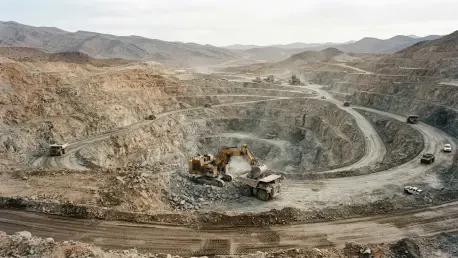

Mining for transition minerals like cobalt now requires rigorous environmental impact assessments under the latest bilateral trade frameworks between Europe and Asia. This regulatory shift highlights a critical juncture where the ambition for economic prosperity through the green transition intersects with the immediate need for ecological preservation. As global powers attempt to decarbonize their industrial bases, the geopolitical landscape has transformed into a complex web of resource-linked dependencies. These new trade paradigms are no longer just about moving goods; they are about establishing a baseline for environmental accountability that transcends national borders. In this era of heightened transparency, stakeholders are increasingly wary of greenwashing and demand concrete evidence of sustainable practices. The challenge lies in reconciling the massive demand for raw materials with the finite limits of local ecosystems, ensuring that the quest for clean energy does not leave a trail of environmental destruction in its wake.
Strategic Shifts in Global Resource Management
Developing Frameworks for Critical Minerals
The signing of the Comprehensive Economic Partnership Agreement (CEPA) between the European Union and Indonesia represents a significant milestone in the quest for mineral security. Central to this agreement is the stable supply of nickel and cobalt, which are the lifeblood of modern battery production for electric vehicles. Indonesia, as a global powerhouse in mineral reserves, has positioned itself as an indispensable partner for the European bloc’s industrial ambitions. This strategic alignment aims to reduce the volatility of supply chains that have historically been susceptible to geopolitical shifts and market fluctuations. By formalizing this partnership, both regions are setting a precedent for how resource-rich developing nations can engage with advanced economies. The focus remains on creating a resilient infrastructure that supports the mass adoption of renewable technologies while fostering economic stability for all parties involved in the value chain through the end of 2026.
From a fiscal perspective, the CEPA is projected to be transformative, with Indonesia agreeing to eliminate import duties on a staggering percentage of tariff lines. This move is expected to save European exporters significant sums annually, while bilateral trade is forecasted to grow by forty percent from 2026 to 2041. Beyond the immediate financial benefits, the agreement serves as a vital framework for technology transfer and infrastructure development. It encourages investment in local processing facilities, ensuring that value is added within the source country rather than just exporting raw ore. This shift in trade dynamics is crucial for building a more equitable global economy where industrial growth is shared more broadly. As the global demand for energy storage continues to surge, the ability to maintain a steady and ethical flow of materials will determine the pace of the global transition, making these bilateral deals more critical than ever for the stability of international markets.
Balancing Market Access with Environmental Standards
Integrating the Paris Agreement as an essential element of trade deals marks a significant evolution in how international commerce is conducted. In the context of the EU-Indonesia CEPA, this means that market access is no longer a standalone privilege but is contingent upon a commitment to climate goals. The inclusion of environmental impact assessments for mining operations is a proactive measure designed to mitigate the damage often associated with large-scale extraction. These assessments are intended to provide a transparent look at how mineral procurement affects biodiversity and local water tables. By making these standards a legal requirement, the agreement seeks to harmonize industrial expansion with the preservation of natural habitats. This approach reflects a growing global consensus that economic progress must be decoupled from environmental degradation, forcing companies to adopt cleaner extraction methods to remain competitive in the modern international marketplace.
While bilateral agreements show promise, the broader landscape of global climate diplomacy is currently facing significant headwinds. Recent stagnation at COP31 highlighted a deep-seated ideological divide regarding the future role of fossil fuels in a decarbonizing world. A primary point of contention remains the implementation of carbon capture and storage technologies, which some nations view as a lifeline for existing energy assets. Proponents argue that such technologies are a necessary bridge for hard-to-abate sectors, whereas critics contend they serve as a delay tactic that diverts investment away from genuine renewable alternatives. This deadlock has slowed the momentum for international climate finance, leaving many developing nations without the resources needed for adaptation. The inability to reach a consensus on these technical issues underscores the difficulty of managing a global transition that impacts diverse economic interests and national energy security priorities.
Prioritizing Efficiency and Resource Implementation
Parallel to these infrastructure challenges is the realization within the European Union that electrification must be paired with extreme energy efficiency to be viable. There is an emerging policy gap where ambitious targets for electric power consumption are not being met with the necessary regulations for product design. Advocacy groups have warned that delays in implementing updated Ecodesign and energy labeling rules could lead to millions of tons of avoidable carbon emissions. If appliances, heat pumps, and industrial systems are not optimized for efficiency, the increased load on the electrical grid will necessitate more generation capacity than is sustainable. This highlights the need for a synchronized strategy where technological advancement in power generation is matched by reductions in overall demand. Without strict efficiency standards, the transition to a renewable-based economy could become unnecessarily expensive and resource-intensive, complicating the path toward long-term goals.
The transition from setting ambitious targets to executing complex regulations defined the landscape of global energy policy during the recent cycle. In regions like Johor, Malaysia, the surge in data center development forced a reevaluation of industrial water footprints as authorities prioritized public utilities over tech expansion. It became clear that high-level agreements were only as strong as the accountability mechanisms that governed them on a local level. The focus shifted toward granular policy implementation, where the success of trade deals was measured by actual ecological outcomes rather than just export volumes. Governments and industries began to prioritize resource efficiency and transparent monitoring to ensure that digital transitions did not compromise community stability. By integrating stewardship into commercial strategy, stakeholders managed to navigate the friction between growth and sustainability. These developments provided a clear set of actions, proving that resource conservation was the metric of progress.