



A Search That Starts With Everyone
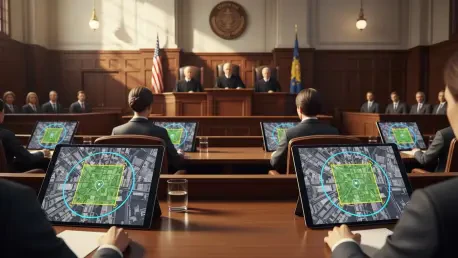
From the moment a map app opens and a blue dot blinks to life on a morning commute, that tiny signal can become a lead, a suspect list, or a dragnet—all before anyone has a name. Police across the country now ask companies to identify every device within a virtual circle during a narrow slice of time, a tactic designed for moments when a case begins with place and hour, not with a suspect.
That tactic—known as a geofence warrant—has landed before the Supreme Court in Chatrie v. United States, setting the stage for a ruling that could redraw the boundaries of digital search. The justices signaled that the tool may survive, but only if it is sharply trimmed to fit the Fourth Amendment’s demand for particularity and reason.
Why This Case Touches Every Phone
The Court’s decision will determine whether police can compel a company like Google to look across its users’ Location History and return anonymized dots inside a specified radius and window, then unmask identities in later steps. That approach helps find someone who passed through a scene when investigators have no name, no plate, and only a clock and a map.
Because location trails reveal routines—homes, work, worship, clinics, protests—rules here reach everyday life. The outcome will govern robberies and kidnappings, but also sweeps near sensitive places where innocent bystanders could be logged, flagged, and later questioned, simply because they were there.
From Carpenter to Chatrie
The Court’s 2018 decision in Carpenter held that historical cell-site data requires a warrant, recognizing that location records can expose the “privacies of life.” Chatrie extends that logic to app-based data that many users enable for navigation, weather, or ride-hailing—data that can be more precise than cell towers and often longer retained.
At issue is whether choosing such services amounts to “consent” that erases a reasonable expectation of privacy under the third-party doctrine. Several justices appeared skeptical of a blanket theory. If sharing with a company always counted as consent for the government, as Justice Sonia Sotomayor pressed, then photos, calendars, and private notes might be open for warrantless grabs.
How a Robbery Became a Constitutional Test
The dispute traces to a credit union robbery in Midlothian, Virginia. Investigators drew a 150-meter geofence around the bank for one hour and served Google with a warrant. In the first stage, the company sent anonymized device hits within the fence. Officers then requested additional points for nine dots to see broader paths, still anonymous.
In the final step, the detective asked for account identities for three dots without obtaining a new warrant, and one belonged to Okello Chatrie. Defense counsel argued that the search was unconstitutional from the start and that unmasking without separate judicial approval compounded the violation. The government countered that the steps were narrowly focused, tied to a specific crime, place, and time.
Consent, Particularity, and Sensitive Places
Debate now centers on whether geofences are “general warrants” that start with everyone and work backward, or whether they can be particular if they use tight radii, short windows, and staged review. Courts must decide what counts as probable cause for a place-and-time query when individual suspects are unknown.
Another pressure point is the collateral sweep through sensitive spaces. A one-block circle around a storefront may also include apartments above, a clinic next door, or a small church across the street. Even a 30-minute window during rush hour can net commuters who merely passed by, drawing innocents into an investigation through no act beyond proximity.
Signals of a Middle Path
During argument, the justices pushed both sides off their extremes. “Is there a workable rule that isn’t all or nothing?” Justice Amy Coney Barrett asked, hinting at limits rather than a categorical ban. Questions probed how “small” a geofence must be, how “short” a window should run, and when de-anonymizing demands a fresh warrant.
Sotomayor’s critique of consent theories landed hard: if storage with a company nullifies privacy, nearly all cloud content could be reached without a warrant. That skepticism aligned with Carpenter’s recognition that pervasive tech use is not a voluntary forfeiture of constitutional protection.
Policing, Tech, and Everyday Life
Law enforcement argues that geofences are among the narrowest tools for unknown-suspect crimes, especially compared with mass canvasses or roadblocks. States filed a bipartisan brief urging the Court not to strip away a method that has generated breakthrough leads in cases from serial arsons to hit-and-runs.
Technology companies, led by Google, warn that even “small” fences can capture many devices in dense areas and that Location History is sensitive enough to require a warrant at the outset. Some firms have redesigned storage to minimize retained data, but comparable logs still exist across apps and adtech brokers, raising the risk that a ruling limited to one platform leaves workarounds untouched.
Curbing Without Banning
A likely result is a warrant-plus model. First, courts would recognize geofence queries as Fourth Amendment searches that generally require a warrant supported by specific facts tying the radius and window to the crime. Second, production would be staged: anonymized dots initially, more points only with renewed judicial approval, and identities disclosed only upon a particularized showing.
Such guardrails would include minimization, rapid deletion of non-relevant data, and documented audits. Fences covering homes or sensitive venues would face heightened scrutiny or bright-line limits. For investigators, that means drafting tighter affidavits, explaining why geofencing is necessary, planning stepwise requests, and avoiding sensitive-site overlap unless no alternative exists.
What Should Happen Next
The path forward was clear: legislatures codified staged warrants, tight time-boxing, and sensitive-location checks; judges insisted on concrete nexus showings, deletion timelines, and audit trails; companies hardened response protocols to block premature unmasking and flagged overbroad circles for narrowing. Users, meanwhile, learned how location settings worked without being told that enabling a map app meant blanket government access.
Adopting those measures had preserved a tool for the hard cases—the unknown suspect, the fleeting moment—while honoring the lesson of Carpenter that location reveals the fabric of life. A middle course had not pleased maximalists on either side, but it promised something sturdier: rules that scaled with technology, protected by clear thresholds, and enforced by layered judicial review.







