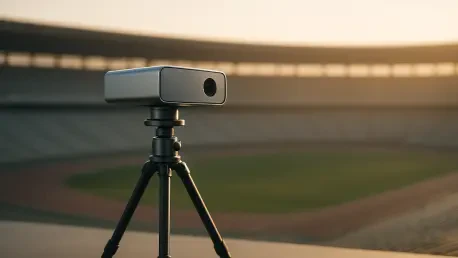

The successful conclusion of the recent summer FIFA World Cup has left behind a legacy that extends far beyond the final score on the pitch, fundamentally altering the fabric of the American Unmanned Aircraft Systems security market through a massive, high-pressure infusion of capital and regulatory urgency. This international sporting event served as a critical forcing function, pushing the United States to modernize its domestic airspace management in ways that had been stalled for years by jurisdictional confusion and bureaucratic friction. By mandating a secure environment for millions of visitors across diverse metropolitan areas, the tournament transformed drone security from a niche technological interest into a central pillar of modern public safety infrastructure.
The purpose of this analysis is to examine the specific legislative, financial, and technological shifts that occurred under the pressure of the tournament deadline. This evolution was not merely about temporary safety during a series of soccer matches but rather about establishing a permanent blueprint for how American skies are governed. As the industry moves forward, the precedents set during this period will dictate the trajectory of both public safety operations and the scalability of commercial drone applications. Understanding these changes is essential for stakeholders navigating the current landscape, where the integration of advanced flight systems into urban environments has become an operational reality.
The key insights of this market shift reveal a successful stress test of multi-jurisdictional coordination and the deployment of non-kinetic mitigation technologies. The analysis highlights how the resolution of legal authority gaps allowed state and local governments to exercise control over their immediate airspace for the first time. Furthermore, the massive injection of federal funding has created a sustainable market for counter-drone hardware and software, ensuring that the progress made during the summer is not lost. This transition represents a fundamental move toward “airspace sovereignty,” where the sky is treated with the same level of security and oversight as ground-level transportation networks.
The Pre-Tournament Landscape: Understanding the Initial Security Gaps
Before the arrival of the World Cup, the United States operated within a fragmented and often contradictory framework regarding Unmanned Aircraft Systems (UAS). While the private sector was rapidly advancing drone capabilities for photography, delivery, and inspection, the regulatory environment lagged behind. The primary issue resided in the exclusive jurisdiction of the Federal Aviation Administration (FAA) over the national airspace. This legal monopoly meant that state governors and local police departments were technically powerless to intercept or mitigate drone threats, even when those drones were hovering directly over sensitive infrastructure or massive public gatherings.
This gap in authority created significant vulnerabilities that became a point of contention for public safety leaders. Historically, local law enforcement could do little more than attempt to locate the operator on the ground, a process that was often slow and ineffective against modern, long-range drones. The distinction between a “nuisance” hobbyist and a criminal actor was difficult to determine in real-time, leaving security teams in a reactive posture. Without the legal right to jam frequencies or physically interdict an aircraft, stadiums and urban hubs remained exposed to risks ranging from privacy violations to potential payload deliveries.
These foundational weaknesses were magnified by the realization that an international event like the World Cup would act as a magnet for unauthorized drone activity. The prospect of managing millions of spectators across multiple states without a unified defense strategy was untenable. This realization shifted the conversation from theoretical policy debates to an urgent requirement for a national strategy. The pre-tournament landscape was characterized by a desperate need for a legal and technological bridge between federal oversight and local enforcement capabilities, a bridge that would eventually be built under the intense scrutiny of the global stage.
Legislative and Financial Catalysts: Building the Foundation for Airspace Sovereignty
Part 1. Strengthening Legal Authority and Federal Mandates
The transition toward a secure domestic sky began with pivotal legislative maneuvers that empowered local leaders with the rights they had long requested. A major turning point occurred through the National Defense Authorization Act (NDAA), which officially granted states the legal authority to detect and mitigate drone threats. This legislative shift corrected a long-standing imbalance of power, allowing local jurisdictions to act as the primary defenders of their own airspace during times of heightened risk. By decentralizing this authority, the federal government enabled a more responsive and localized approach to security that was necessary for the geographically dispersed nature of the tournament.
This move was further bolstered by executive actions focused on “airspace sovereignty” and “American drone dominance.” These orders were designed to prioritize the protection of domestic skies while simultaneously fostering a domestic technology market that could compete with international manufacturers. The emphasis was placed on maintaining total control over the sky, ensuring that unauthorized or foreign-made drones could not compromise the safety of high-profile events. This policy shift signaled to the market that drone security was no longer an optional add-on but a mandatory requirement for any municipality hosting large-scale public activities.
Part 2. Overcoming Bureaucratic Hurdles and Funding Delays
The financial engine for this transformation was the “One Big Beautiful Bill Act,” which established the Counter Unmanned Aircraft Systems (C-UAS) Grant Program. This program injected $500 million into the security sector, specifically earmarked for the procurement of detection and mitigation hardware. However, the rollout of these funds was not without its complications. A 76-day partial government shutdown paralyzed the Department of Homeland Security (DHS) and the Federal Emergency Management Agency (FEMA) just as the tournament preparations were entering their final phase. This delay stalled the distribution of the initial $250 million in grants, creating a chaotic environment for host cities.
Despite the shutdown, the hard deadline of the tournament opening kickoff acted as a unique motivator that forced agencies to bypass traditional bureaucratic slow-walking. When the government reopened, the scramble to install complex sensors and train personnel was unprecedented. Host cities were forced to work in weeks what would normally take months or years. This period proved that rapid modernization of public safety infrastructure is possible when the stakes are high enough. The urgency of the situation ultimately led to a more streamlined procurement process that has since become a model for future federal grant distributions.
Part 3. Technological Integration and Multi-Jurisdictional Success
The operational success of the security mission relied heavily on private-sector innovations that solved the challenge of fragmented data. In host regions like Kansas City, where the security perimeter crossed state lines and county boundaries, companies provided “single operating picture” dashboards. These platforms unified data from various sensors and local agencies into a single interface, allowing federal and local agents to see the same drone traffic in real-time. This level of coordination was previously unheard of in domestic drone defense and represented a significant leap forward in situational awareness.
On the mitigation front, the tournament showcased the effectiveness of “non-kinetic” technology. Rather than using physical force to destroy unauthorized drones—which could result in falling debris and injuries—security forces utilized radio frequency (RF) cyber-takeover capabilities. This technology allowed operators to take control of a drone’s flight path and land it safely in a pre-designated secure area. Over 700 drones were intercepted during the tournament using these methods, ensuring that the games continued without disruption. This approach demonstrated a sophisticated alternative to kinetic force, proving that urban airspace can be defended safely and quietly.
Emerging Trends: The Commercial and Operational Evolution of Drone Systems
The innovations sparked by the World Cup are currently evolving into permanent features of the American economy and safety landscape. One of the most significant trends is the rapid expansion of “Drone as a First Responder” (DFR) programs. Police departments across the country are now using the infrastructure and legal precedents established during the tournament to deploy their own drones to emergency scenes before ground units can arrive. This capability provides incident commanders with immediate aerial views, allowing for more efficient resource allocation and faster response times in critical situations.
Simultaneously, the commercial sector is leveraging these new security protocols to scale delivery services. Retail giants like Amazon and Walmart are moving forward with drone delivery in the very same host regions where security frameworks were perfected. The existence of a robust detection and mitigation network provides these companies with the safety assurance needed to operate in dense urban environments. This synergy between public safety and private commerce is creating a new market ecosystem where the safe integration of drones is seen as a prerequisite for economic growth rather than a hurdle to it.
Looking further into the current landscape, the FAA is moving toward “Beyond Visual Line of Sight” (BVLOS) regulations, which will be a major milestone for the industry. This shift, occurring from 2026 and continuing through the next few years, will allow drones to perform long-distance tasks such as utility inspections and medical deliveries without a human pilot keeping the aircraft in view. The security frameworks built for the World Cup serve as the testing ground for these operations, ensuring that as drones fly further and more autonomously, the tools to manage and protect the airspace remain one step ahead.
Strategic Takeaways: Actionable Insights for Public Safety and Commerce
The analysis of the tournament security rollout provides several actionable insights for stakeholders across the safety and commercial sectors. For law enforcement agencies, the primary takeaway is that the “sky is the new street.” This domain requires constant monitoring and integrated data sharing to be managed effectively. Agencies should prioritize the adoption of unified operating platforms that can ingest data from multiple sources, as the ability to coordinate across jurisdictional lines is the most critical factor in preventing security lapses during major events.
For businesses and commercial operators, the tournament proved that a robust security framework is the only way to achieve scalability. Companies looking to enter the drone delivery or inspection space must align their operations with local safety protocols to gain public trust and regulatory approval. Furthermore, the remaining $250 million in FEMA funding available in 2026 offers a strategic opportunity for non-host states to adopt these proven security methodologies. Investing in these technologies now allows municipalities to prepare for the next national challenge while fostering a local environment that is friendly to commercial drone innovation.
A Lasting Legacy: Reframing the Future of American Airspace Security
The World Cup successfully acted as the primary catalyst for a new era of American public safety and airspace management. The collaborative efforts between federal agencies and state leaders eliminated the legal ambiguities that once paralyzed local law enforcement. The deployment of non-kinetic technology ensured that urban airspaces remained secure without endangering civilian populations below, setting a high standard for future security operations. These advancements shifted the momentum of the entire industry toward a more regulated and scalable future.
The framework established during the summer games provided the necessary infrastructure for both public safety and commercial expansion. The transition from isolated flight waivers to integrated, city-wide drone operations was accelerated by the pressure of the tournament deadline. The lessons learned from this period provided a clear roadmap for how the United States could balance the immense benefits of drone technology with the non-negotiable requirement of public safety. This era of security redefined the relationship between the government and the domestic sky, ensuring that the country remained prepared for an increasingly active aerial landscape.