
The rapid deployment of the Colossus supercomputer by xAI has fundamentally altered the industrial landscape of the American South while simultaneously igniting a fierce debate regarding the true cost of artificial intelligence on local air quality and the long-term well-being of surrounding communities. This massive infrastructure project represents a critical junction where the race for computational dominance meets the established protections of environmental law. As the industry scales to meet the unprecedented demands of large language model training, the friction between speed-to-market and public health has become an unavoidable centerpiece of corporate accountability.
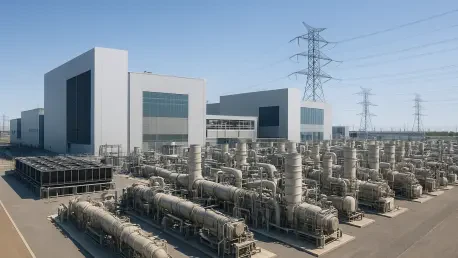
The Colossus supercomputer, situated across facilities in Memphis, Tennessee, and Southaven, Mississippi, utilizes a staggering array of high-performance computing units that require an electrical load equivalent to that of a mid-sized city. To circumvent the limitations of the local utility grid, the project has relied on extensive on-site power generation through dozens of natural gas turbines. This shift toward independent power generation creates a localized industrial hub within residential and commercial zones, fundamentally changing the air quality profile of the region. The primary segments affected include the high-performance computing sector, the independent power market, and the public health monitoring industry which now tracks the fallout of these emissions.
Current analysis of this technological shift reveals a growing reliance on behind-the-meter solutions, where data centers install their own fossil fuel turbines to bypass traditional regulatory queues. This strategy allows firms to maintain operational momentum but creates significant tension with the Clean Air Act, particularly concerning the permitting of private power plants. As of 2026, the regulatory framework struggles to categorize these facilities, which often claim mobile or temporary status to avoid the stringent standards applied to permanent utility installations.
The Intersection of Artificial Intelligence Infrastructure and Environmental Health
The deployment of the Colossus facility has highlighted a growing disconnect between high-tech expansion and community well-being. By installing approximately 35 natural gas turbines at the Memphis site alone, the project introduced a significant source of nitrogen oxides into a region already struggling with industrial pollution. This localized concentration of combustion equipment serves as a primary example of how AI infrastructure can directly impact the environmental health of nearby neighborhoods, often without the exhaustive environmental impact studies typically required for industrial zones.
Moreover, the conflict centers on the transparency of emissions data and the speed at which these facilities are brought online. Community advocacy groups argue that the massive energy demands of supercomputers should not supersede the rights of residents to breathe clean air. This friction has led to a re-evaluation of how data center zoning is handled in urban environments, as the traditional model of a quiet, low-impact server warehouse is replaced by the reality of a loud, high-emission power plant attached to a computational hub.
Emerging Trends and Economic Drivers in High-Scale AI Powering
The Shift Toward Decentralized Fossil Fuel Powering for Data Centers
A prominent trend in the current AI landscape is the strategic decision by firms to bypass traditional utility grids in favor of on-site natural gas turbines. This decentralized approach is driven by the immediate need for electrical loads that local infrastructure often cannot provide without multi-year upgrades. Consequently, AI companies are increasingly becoming their own power producers, a move that prioritizes training timelines and competitive edge over long-term sustainability goals or regional air quality considerations.
This behavior reflects a broader corporate migration toward regulatory environments that are perceived as more favorable or less restrictive. By choosing locations where state-level oversight might offer exemptions for temporary equipment, AI firms can deploy hardware at a pace that traditional environmental permitting would otherwise prevent. This copy and paste expansion strategy allows for rapid scaling across state lines, but it frequently leaves local jurisdictions unprepared for the cumulative environmental impact of multiple unpermitted power units.
Growth Projections for AI Energy Consumption and Regional Health Impacts
Statistical projections for next-generation supercomputers indicate a steady rise in power requirements, which in turn correlates with a projected increase in regional nitrogen oxide emissions. In the Memphis metropolitan area, which was already designated as a challenging environment for respiratory health, the addition of industrial-scale turbine clusters creates a compounding effect. Data indicates that localized ozone levels are directly influenced by these industrial hubs, posing a persistent threat to residents in the 38109 ZIP code and surrounding areas.
Evaluating performance indicators reveals a troubling correlation between the launch of high-scale computing facilities and pediatric health outcomes. Reports have cited a 14% increase in respiratory-related emergency room visits in proximity to industrial data clusters during their initial year of operation. Furthermore, the proliferation of mobile power units—which are often less regulated than permanent fixtures—suggests that regional ozone levels may continue to fluctuate as more data centers adopt this volatile power model to meet the energy-intensive demands of AI training from 2026 to 2028.
Navigating the Challenges of Unpermitted Industrial Emissions
The move fast and break things culture of the technology sector frequently clashes with the rigid, health-focused requirements of environmental justice. In areas known as asthma capitals, such as Memphis, the degradation of air quality is not merely a legal technicality but a direct threat to the longevity of the workforce and the health of future generations. Identifying specific health outcomes attributable to localized turbine clusters remains difficult due to the presence of other industrial sources, yet the sudden spike in emissions from new supercomputer sites provides a clear temporal link that community members and legal experts are now utilizing in court.
To overcome these hurdles, community-led initiatives have deployed independent air sensors to gather real-time data that state agencies may lack. These sensors provide a necessary layer of accountability, often serving as the primary evidence in formal notices of intent to sue under federal standards. By empowering local residents with scientific data, advocacy groups are forcing a transition from passive observation to active legal pursuit, ensuring that corporate giants are held to the same standards as any other heavy industrial polluter.
The Evolving Regulatory Landscape and Environmental Compliance
Legal distinctions between permanent, mobile, and temporary equipment have become the primary battleground for environmental compliance in the AI age. While companies argue that turbines used to bridge power gaps are temporary and thus exempt from certain permits, environmental law centers emphasize that the continuous operation of these units constitutes a permanent source of pollution. This debate has reached a fever pitch as groups like the Southern Environmental Law Center and Earthjustice intervene when state agencies provide exemptions that appear to bypass the intent of the Clean Air Act.
In response to these compliance gaps, new local ordinances are beginning to emerge that seek to redirect tax revenue from data centers back into the communities bearing the health burden. This redirection of funds serves as a partial mitigation strategy for the socio-economic and health impacts placed on vulnerable neighborhoods. However, the ultimate goal for regulators remains the closing of loopholes that allow massive private power yards to operate without the same scrutiny as utility-scale power plants, ensuring a level playing field for environmental protection.
The Future of Sustainable AI Infrastructure and Public Oversight
The transition toward green data centers is gaining momentum as the environmental costs of fossil-fuel-powered AI become impossible to ignore. Future infrastructure projects are expected to integrate renewable energy sources, such as large-scale solar arrays and battery storage, to mitigate the carbon and nitrogen footprints of supercomputing. This shift is not only a matter of corporate social responsibility but also a reaction to the predicted rise in stringent federal oversight as the disparity between data center emissions and utility regulations finally closes.
Growth in the Regulatory Tech sector is providing new tools for automated, real-time monitoring of industrial sites, which will ensure corporate accountability is not dependent on annual inspections. These systems allow for the immediate detection of emissions spikes, providing a data-driven foundation for both corporate self-regulation and government enforcement. As these technologies mature, the goal is to create a transparent ecosystem where the growth of artificial intelligence does not come at the expense of the right to clean air and a healthy environment.
Assessing the Long-Term Viability of the Colossus Model
The investigation into xAI’s environmental footprint in the Memphis and Southaven areas demonstrated that the pursuit of technological speed created significant, measurable strain on public health resources. The research highlighted how the deployment of unpermitted gas turbines contributed to a surge in respiratory distress, confirming that industrial innovation often bypassed the safety of vulnerable populations. It was determined that the localized health crisis in the 38109 area required immediate intervention through both legal challenges and community-led monitoring.
Actionable steps identified by the findings included the necessity for policymakers to eliminate the temporary equipment loopholes that allowed industrial clusters to operate without federal oversight. Stakeholders prioritized the integration of community health safeguards into the core operational strategies of future data center projects. Ultimately, the transition toward renewable energy and the adoption of automated emissions tracking were recognized as the only viable pathways for maintaining the long-term sustainability of the artificial intelligence industry while protecting the fundamental right to clean air.