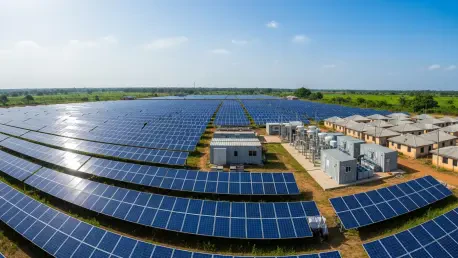

The recent commissioning of a 505kWp solar mini-grid in the Epe Local Government Area represents a pivotal shift in how Nigeria addresses the chronic energy deficit that has long hindered rural development. For decades, remote communities in Lagos State have struggled with the limitations of a centralized power system that frequently failed to reach the most isolated residents, leaving them dependent on expensive and polluting fossil fuel alternatives. This ambitious project, spearheaded by the Rural Electrification Agency through its dedicated Rural Electrification Fund, marks the beginning of a decentralized energy era for the towns of Odogbawojo, Odoshiwola, Odoayan, Ora, and Ibowon. By integrating high-capacity photovoltaic arrays with advanced battery storage technology, the initiative provides a consistent and renewable power source that bypasses the traditional grid’s structural weaknesses. This localized approach not only stabilizes the local power supply but also demonstrates a replicable model for solving energy poverty across the nation.
Economic Empowerment and Social Growth
Business Development: Fueling Local Commerce and Public Services
Small and medium-sized enterprises in these five communities have historically operated under the crushing financial weight of petrol and diesel generators, which often consumed a disproportionate share of their daily revenue. With the arrival of the 505kWp interconnected solar mini-grid, local tailors, millers, and shopkeepers now have access to reliable electricity that allows for predictable production schedules and expanded operating hours. The shift from volatile fuel prices to a stable solar-powered utility enables these entrepreneurs to reinvest their savings into better equipment and additional staff, fostering a micro-economy that is no longer at the mercy of global oil market fluctuations. Moreover, the availability of constant power encourages the establishment of new ventures, such as cold storage facilities for agricultural produce, which were previously impossible to maintain. This transition effectively transforms these rural settlements into vibrant economic hubs where local innovation can finally flourish without the persistent fear of sudden blackouts.
Social Stability: Improving Healthcare and Educational Standards
Beyond individual commercial benefits, the installation of this solar infrastructure provides a transformative foundation for essential public services like healthcare centers and local schools. Medical facilities in the Epe region can now maintain cold chains for life-saving vaccines and power critical diagnostic equipment overnight, significantly improving maternal health outcomes and emergency response capabilities. Educational institutions are equally impacted, as reliable lighting and the ability to power computer labs allow students to engage with modern digital curricula that were once out of reach. This electrification ensures that the quality of life in rural Lagos begins to close the gap with urban centers, reducing the incentive for migration and promoting long-term social stability within the community. By prioritizing the needs of public infrastructure, the Rural Electrification Agency is not just delivering kilowatts; it is securing a future where the most vulnerable citizens have access to the same technological advantages as those living in the heart of the city’s commercial districts.
National Policy and Strategic Frameworks
Policy Alignment: The Renewed Hope Agenda
At the national level, the successful deployment of the Epe mini-grid serves as a concrete manifestation of the Renewed Hope Agenda, which prioritizes universal energy access as a fundamental right for all Nigerians. The federal government has recognized that centralized power distribution alone cannot meet the needs of a sprawling population, leading to a strategic pivot toward decentralized renewable energy systems. From 2026 to 2030, the government plans to accelerate the deployment of similar interconnected grids, targeting over one thousand projects to ensure that even the most remote agricultural belts are integrated into the national economic fabric. This policy shift reflects a deeper understanding of energy as a catalyst for human capital development rather than just a utility service. By focusing on high-impact installations that combine solar power with smart metering, the administration is building a resilient energy landscape that can withstand the logistical challenges of reaching underserved populations while simultaneously meeting ambitious climate targets.
Market Growth: The Interconnected Mini-Grid Acceleration Scheme
Central to the rapid expansion of these energy systems is the Interconnected Mini-Grid Acceleration Scheme (IMAS), a policy framework designed to bridge the gap between traditional utilities and modern renewable developers. This scheme provides a structured environment where private companies can invest in rural infrastructure with a higher degree of certainty regarding regulatory support and financial returns. By offering technical assistance and streamlining the licensing process, the Rural Electrification Agency has effectively lowered the barriers to entry for indigenous energy firms, encouraging them to take a leading role in the nation’s energy transition. The IMAS model promotes a competitive marketplace where innovation is rewarded, leading to more efficient system designs and lower tariffs for the end-users. This regulatory clarity is essential for attracting the large-scale capital investment required to move beyond small pilot projects toward a truly national network of clean energy providers that can supplement the overburdened primary transmission lines.
Collaborative Efforts and Global Support
Strategic Alliances: Private Partnerships and Utility Integration
The realization of the Epe solar project was made possible through a strategic collaboration between A4&T Power Solutions Limited and the Eko Electricity Distribution Company, marking a significant shift toward integrated energy management. This partnership was bolstered by international support from the German agency GIZ and the Nigerian Energy Support Programme, which provided the technical and financial scaffolding necessary to meet global standards. By working together, these entities created a hybrid model that maximizes the strengths of decentralized solar power and traditional distribution networks, ensuring a reliable service for the residents of Odogbawojo. This cooperation also facilitates better customer service and technical support, as the local expertise of the developer is backed by the established infrastructure of a major utility company. Such alliances are critical for the Nigerian power sector, as they demonstrate how diverse stakeholders align their interests to solve complex infrastructure challenges and improve life.
Project Legacy: Future Directions for Decentralized Energy Expansion
The completion of the 505kWp solar project in Epe established a definitive benchmark for how decentralized energy could bridge the gap in rural electrification across Nigeria. By successfully integrating private sector innovation with government oversight and international technical support, the initiative proved that renewable energy systems were not merely experimental but were ready for large-scale adoption. Moving forward, the focus shifted toward optimizing these mini-grids through the introduction of smart grid technology and local capacity building to ensure the infrastructure remained robust against future demands. Policymakers utilized the data gathered from the Epe installation to refine the Interconnected Mini-Grid Acceleration Scheme, making it easier for developers to secure financing and replicate this success in other underserved regions. This proactive stance ensured that the momentum generated by the project led to a broader cultural shift where clean, reliable power became the standard expectation for rural communities.