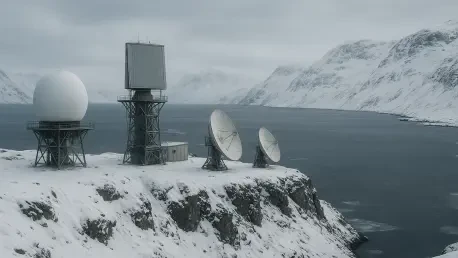

The frozen landscape of the North Atlantic is no longer just a backdrop for scientific research but has become the focal point of a historic security agreement that redefines Western influence in the polar region for decades to come. This tripartite pact between the United States, Denmark, and Greenland represents a fundamental pivot toward a structured defense framework designed to secure the High North against emerging global threats. As the polar ice recedes, the area has transitioned into a primary theater for NATO defense and intense resource competition.
Washington seeks to safeguard its northern flank, while Copenhagen and Nuuk aim to preserve their respective sovereignty and autonomy. This alignment ensures that Greenland is no longer viewed as a target for acquisition but as a critical partner in a regional security architecture. The deal formalizes the presence of American military assets while respecting the established political boundaries of the Kingdom of Denmark. It replaces the previous era of unpredictable territorial claims with a binding multilateral framework. By securing permanent military access, the United States achieves its goals of protecting strategic defense routes and valuable mineral wealth.
The New Arctic Frontier: Geopolitics and Strategic Realignment
The agreement represents a shift from unilateral territorial interest to a cohesive defense strategy involving the three key stakeholders. By integrating Greenlandic needs with American defense requirements, the pact stabilizes a region that was once fraught with diplomatic volatility. This cooperation ensures that the Arctic remains a predictable environment for both military planning and international trade.
Moreover, the significance of the Arctic as a primary theater for NATO cannot be overstated. The alliance now views the region as a vital buffer against external aggression. The strategic interests of Washington, Copenhagen, and Nuuk are now interlinked, creating a unified front that discourages adversarial interference in the Northern Hemisphere.
Strategic Drivers and Economic Projections in the High North
Emerging Defense Trends and the Consolidation of Western Influence
A shift toward permanent security control defines the current approach to countering Russian and Chinese expansionism in the region. The United States now holds a decisive veto over sensitive infrastructure projects and foreign investments, effectively blocking adversarial influence in the Greenlandic economy. This mechanism prevents foreign entities from establishing a foothold under the guise of commercial development.
The pact integrates Greenland more deeply into the NATO security umbrella, stabilizing diplomatic tensions that once clouded the relationship between the three nations. This integration affects commercial behaviors, as Arctic shipping routes and resource extraction activities now operate under a more protected environment. The presence of Western military personnel provides a deterrent against unconventional gray-zone tactics often employed by global rivals.
Market Indicators and the Economic Valuation of the Arctic Corridor
Increased military spending serves as a primary catalyst for infrastructure development across Greenland, potentially transforming its domestic economy. Strategic investments in ports and airfields create a dual-use environment that benefits both defense logistics and civilian transport. Projections suggest that these improvements will lower the cost of doing business in remote areas, encouraging further industrial growth.
The rare earth mineral market stands to gain significantly under protected Western oversight. With global demand for green technology rising, Greenland’s vast deposits are becoming central to supply chain security. The arrival of new diplomatic missions from Canada and France further validates the region’s economic viability, signaling to international investors that the Arctic corridor is a stable frontier for long-term capital placement.
Navigating Complexities: Sovereignty, Diplomacy, and Logistics
Balancing American defense requirements with the red lines of Danish sovereignty remains a delicate diplomatic exercise. While the United States gains necessary military access, Denmark maintains its constitutional responsibility for the island’s foreign and defense policy. This arrangement requires constant communication to ensure that American operations do not infringe upon the legal rights of the Kingdom or the aspirations of the Greenlandic people.
Greenlandic leadership continues to push for greater self-determination even as the foreign military presence expands. Managing local political friction involves ensuring that the pact delivers tangible benefits to the indigenous population, such as job creation and improved connectivity. Furthermore, the technological challenge of maintaining permanent bases in extreme polar conditions necessitates innovative engineering solutions to combat permafrost instability and extreme weather.
The Regulatory Framework: Governance of a Strategic Territory
Legal implications of this tripartite pact extend into international maritime and territorial law, setting a precedent for how non-sovereign territories manage defense agreements. Compliance standards for foreign direct investment have become significantly more rigorous, particularly regarding projects that could serve military purposes for adversaries. These regulations ensure that all commercial activity aligns with the broader security goals of the NATO alliance.
Environmental regulations also play a crucial role in the development of dual-use infrastructure. Because the Arctic ecosystem is fragile, any new construction must adhere to strict sustainability protocols to avoid ecological damage. The Arctic Council and NATO now serve as complementary bodies that uphold these security and environmental standards, ensuring that the pursuit of strategic dominance does not come at the expense of regional conservation.
Future Outlook: The Arctic as a Western-Aligned Stronghold
Long-term projections anticipate a sustained American presence that will likely lead to the evolution of Greenland’s political status within the Kingdom. While complete independence remains a distant goal, the island will gain more influence over its internal affairs as a result of its strategic importance. Global climate shifts will continue to open new navigation routes, making Arctic surveillance technology and satellite communications even more vital for maintaining maritime control.
Responses from Russia and China are expected to be critical, likely manifesting as increased military posturing or diplomatic protests. However, the formalization of American hegemony in the region through a binding agreement makes it difficult for these powers to disrupt the status quo. Future growth will likely focus on sustainable mining practices and high-tech defense systems that can operate reliably in the harsh conditions of the High North.
Conclusion: A Pragmatic Resolution to a Diplomatic Crisis
The transition from annexation rhetoric to a cohesive security partnership provided a stable foundation for Arctic governance. This tripartite agreement successfully preserved the territorial integrity of the Kingdom of Denmark while meeting the strategic defense goals of the United States. It was clear that the pact resolved a potential diplomatic crisis by shifting the focus toward shared interests rather than unilateral acquisition. Stakeholders moved to leverage this new stability to advance sustainable economic projects and modernize regional infrastructure. By integrating Greenland into a multilateral defense framework, the three nations ensured that the Arctic remained a Western-aligned stronghold. Future regional advancements depended on maintaining the balance between security imperatives and local autonomy.