
The economic architecture of Tehran currently rests on a foundation of extreme volatility as the Iranian state grapples with the fallout of six months of naval blockades and a relentless financial assault from Washington. This period marks a turning point in Middle Eastern trade dynamics, often described as an Economic D-Day that seeks to isolate one of the region’s most significant players from the global grid. While the Strait of Hormuz remains a central pillar of Iranian defensive strategy and a vital chokepoint for global energy, the blockade has forced a radical rethinking of regional alliances. Mediation efforts by Pakistan and Qatar represent a flickering hope for stability, yet the immediate reality is one of severe fiscal strangulation.
The Geopolitical Stranglehold on Iran’s Financial Landscape
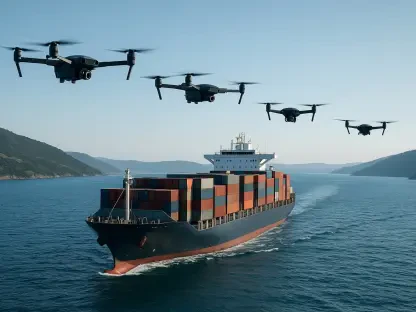
The geopolitical situation has created a stranglehold that affects every facet of the regional energy market. As the naval blockade persists, the role of the Strait of Hormuz has shifted from a mere transit point to the primary lever of Iranian defensive policy. This narrow waterway, which facilitates the passage of a massive portion of the world’s energy supply, is now a site of constant friction. Market players are forced to weigh the risks of transit against the potential for sudden escalations in hostilities that could disrupt global supply chains indefinitely.
Meanwhile, diplomatic intermediaries like Qatar and Pakistan are working behind the scenes to prevent a complete collapse of regional communication. Their involvement is a critical component of the current landscape, as they attempt to balance their own economic interests with the need for a stable Persian Gulf. However, the influence of these mediators is often limited by the scale of the Economic D-Day campaign, which leaves little room for compromise. The resulting tension has transformed traditional trade routes into high-stakes corridors where military presence is as common as commercial shipping.
Navigating the Volatile Iranian Economy: Trends and Projections
Shifting Trade Patterns and the Rise of Defensive Diplomacy
Tehran has responded to these pressures by adopting a strategy of defensive diplomacy, moving away from traditional global trade integration toward a model of survivalist isolation. This transition involves the active pursuit of alternative financial channels designed to circumvent the traditional SWIFT system, often relying on digital assets or decentralized ledgers. This shift is not just a matter of state policy but is reflected in the daily lives of Iranian citizens who are adapting to a new economic reality.
Consumer behavior in the capital has changed dramatically, with a forced prioritization of basic necessities as luxury imports disappear from the shelves. This domestic shift has created a unique market environment where local production is prioritized over foreign brand recognition. While previous memorandums of understanding offer a blueprint for de-escalation, the path toward their implementation is blocked by the current military and political impasse. The emergence of these new trade patterns suggests that even if sanctions were lifted today, the structure of the Iranian market has been fundamentally altered.
Quantitative Analysis of the Iranian Fiscal Collapse
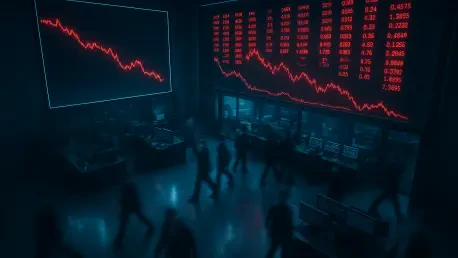
Quantitative data reveals the sheer scale of the fiscal collapse currently unfolding within the country. Inflation has reached a staggering sixty-six percent annually, eroding the purchasing power of the average citizen and destabilizing the local market to an unprecedented degree. Foreign trade has contracted by thirty-five percent, a direct result of the naval blockade and the systematic exclusion of Iranian institutions from global commerce. These indicators highlight the extreme fragility of a system that is being systematically decoupled from the international financial order.
The Iranian Rial continues to perform poorly against the U.S. Dollar, reflecting a lack of investor confidence and the scarcity of foreign reserves. Future growth depends heavily on the potential release of frozen overseas assets, yet such a development remains unlikely without significant concessions regarding the Strait of Hormuz and regional security. Without a breakthrough, the contraction of the Iranian economy will likely continue, further straining the social fabric of the nation and increasing the risk of domestic unrest.
Structural Obstacles to Iranian Economic Recovery
A primary obstacle to any potential recovery is the aggressive campaign by the U.S. Treasury to target third-party financial institutions that attempt to facilitate trade with Tehran. A prime example of this is the recent targeting of Egypt’s Banque Misr, where efforts to sever its UAE-based branches from dollar transactions have disrupted regional liquidity. This strategy creates a chilling effect, as international banks become increasingly reluctant to handle any transactions that might even remotely be linked to Iranian entities.
Within Iran, a leadership dilemma persists between the military posture of the Revolutionary Guard and the executive branch’s desperate need for fiscal relief. This internal friction complicates the decision-making process and often leads to contradictory policies that further confuse international observers. To mitigate these pressures, the state has turned to clandestine trade networks and Hong Kong-based entities to keep some level of commerce flowing through the blockade. These shadow networks are essential for survival but are insufficient to drive a full economic recovery.
The Regulatory War: Sanctions, Compliance, and Financial Warfare
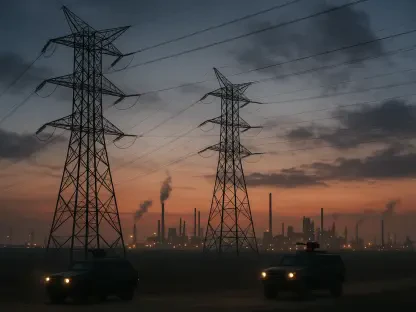
The regulatory war has entered a new phase with the implementation of strict mandates by the U.S. Department of the Treasury. These mandates are designed to ensure that global trade partners like China and India adhere to secondary sanctions or face severe penalties themselves. Navigating this legal landscape has become a primary concern for international banking entities, as the risks of non-compliance often outweigh the benefits of trade with Iran. This has led to a sophisticated level of financial warfare where regulatory compliance is used as a weapon to achieve geopolitical objectives.
The exclusion of Bank Melli from the global ecosystem has further complicated these matters, creating legal hurdles that are difficult to overcome even for the most experienced trade intermediaries. These security measures have effectively created a high-walled financial fortress around the Iranian economy, preventing the flow of legitimate capital. As compliance protocols become more complex, the cost of doing business with Iran continues to rise, making it an unviable option for most global corporations.
Future Prospects: Innovation or Continued Isolation?
Looking toward the future, the prospects for the Iranian state depend on domestic innovation and the potential for a shift in international energy demand. If the isolation continues, Iranian domestic industries will be forced to develop local alternatives to foreign technology and goods, a process that is already underway but remains in its early stages. This push for self-sufficiency could lead to the development of a more resilient, albeit isolated, industrial base. However, the lack of access to global research and development remains a significant hurdle for long-term technological advancement.
Potential market disruptors, such as a complete closure of the Strait of Hormuz, could send global energy prices soaring, potentially giving Iran more leverage in future negotiations. However, the most likely path to growth involves the reintegration of the energy sector into the global market, a goal that remains distant as long as the current sanctions regime remains in place. The influence of global economic conditions and the shift toward renewable energy will also play a role in determining how much leverage Tehran can maintain in the coming years.
Assessing the Path Forward for the Iranian State
The intersection of military tension and extreme financial pressure created a scenario where regional stability hung in a delicate balance. International stakeholders evaluated the effectiveness of the maximum pressure campaign against the resilience of the Iranian state’s defensive policies. Future considerations centered on the development of a multilateral framework that addressed both maritime security and the gradual reintegration of Iranian energy into the global supply. Decision-makers explored the possibility of using technical level agreements as a bridge to formal negotiations. The survival of the Iranian fiscal system depended on the immediate implementation of targeted humanitarian corridors and a sustainable trade mechanism that avoided further escalation in the Strait of Hormuz.