
Donald Gainsborough is a prominent political strategist and the leading voice at Government Curated, where he specializes in the intersection of urban policy and disaster management. With years of experience advising municipal leaders on legislative frameworks for resilient infrastructure, Gainsborough offers a unique perspective on how modern metropolises must adapt to the volatile climate realities of 2026. In this discussion, we explore the recent catastrophic flooding in Istanbul—a city of 16 million people—where torrential rains claimed the life of a teenager, caused widespread structural failures, and paralyzed one of the world’s most vital urban hubs. We delve into the critical need for smarter grid safety, the logistical hurdles of managing thousands of emergency reports, and the urgent necessity of reinforcing public infrastructure like hospitals and schools against extreme weather.
In high-density urban areas, standing water near electrical infrastructure can be fatal for pedestrians. How can municipal policy address these hidden hazards during extreme weather events to prevent tragedies like the one seen in the Fatih district?
The loss of a 14-year-old boy in the Balat area is a harrowing reminder of how our urban environments can turn lethal in a matter of seconds during a storm. When you watch the surveillance footage of a child simply walking through a puddle at a car park entrance and then collapsing, it highlights a systemic failure in how we insulate our power grids from the elements. Policy must move toward a “smart-grid” approach where electrical hubs in flood-prone districts like Fatih are equipped with automatic shut-off sensors triggered by moisture levels. We cannot rely solely on the governor’s office to issue warnings; the infrastructure itself must be sentient enough to de-energize when the water rises. Furthermore, municipal legislation should mandate rigorous, biannual inspections of all street-level wiring to ensure that even during a flash flood, a simple puddle does not become a high-voltage trap.
With over 2,500 emergency reports and nearly 8,000 personnel deployed, how does a city of 16 million balance immediate rescue operations with the long-term need for climate-resilient infrastructure?
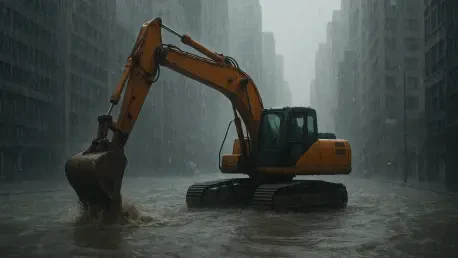
The sheer scale of the mobilization we saw—with 2,000 vehicles and heavy construction machines hitting the streets—shows that Istanbul has a robust reactive capacity, but reacting is no longer enough. When 1,277 separate floods and 15 landslides occur in a single event, the sheer volume of incidents threatens to overwhelm even the most prepared emergency services. From a policy perspective, we have to look at why 800 homes and 280 businesses were inundated and start enforcing stricter “higher ground” mandates for residential zoning, particularly in basement flats. We are currently in a cycle where we spend millions on temporary fixes every time a storm hits, but the real legislative win would be redirecting those funds into deep-bore drainage systems that can handle more than the 100mm of rain that fell in just 12 hours. It is about shifting our mindset from “surviving the night” to “reengineering the city” so that the next time the interior ministry warns of a storm, the city doesn’t have to grind to a total halt.
The flooding didn’t just stop at the streets; it breached hospitals, metro stations, and schools. What does this vulnerability tell us about the current state of public works in major metropolitan hubs?
It is deeply alarming when the very institutions designed to protect the public, such as hospitals and schools, become part of the disaster zone themselves. Seeing floodwaters pour through the ceiling of the Haciosman metro station or witnessing a retaining wall collapse at a primary school in Sultangazi while students are in class suggests that our public works are failing to meet the demands of 2026. Even though no injuries were reported among the children, the psychological and structural toll is immense. We are seeing roads cave in and collapse in districts like Eyupsultan and Gaziosmanpasa because the soil and the foundations simply cannot cope with 194mm of rainfall, as seen in Omerli. We need a massive legislative push to “harden” these essential buildings, ensuring they have independent drainage and reinforced perimeters that can withstand the weight and pressure of such extreme volumes of water.
What is your forecast for the future of urban centers like Istanbul as they face increasingly frequent “once-in-a-century” weather events?
My forecast is that we are entering an era of “restricted urbanism,” where city leaders will have to implement increasingly aggressive measures, such as the 9pm motorcycle ban we saw this week, as a standard safety protocol rather than a last resort. We will likely see a mandatory relocation of residents from basement-level housing in high-risk zones, as the Governor’s plea to move to higher floors becomes a permanent policy rather than a temporary suggestion. Technology will play a massive role, with AI-driven traffic management attempting to solve the 90 percent traffic density issues that currently trap 76 vehicles or more in rising waters. Ultimately, the survival of these mega-cities depends on their ability to become “permeable”—meaning every new road, metro station, and school must be designed to absorb or divert water away from the people it serves. If we don’t act now to update our building codes and infrastructure standards, the economic and human cost of these storms will become an unbearable burden on the state.