
Events like OakFest highlight how botanical research can strengthen community ties while garnering federal recognition for local ecological preservation efforts. Professor David Craig at Willamette University has spent years turning biological research into a powerful tool for environmental advocacy. Known for his signature green glasses and a deep passion for the Oregon white oak, Craig has redefined the role of a biology professor by moving beyond the laboratory and into the heart of community activism. By focusing on these specific trees, he teaches students that nature is not just a subject to be studied but a living partner in historical preservation and ecological health. His work creates a unique intersection where academic knowledge meets tangible, grassroots action in the Willamette Valley. This approach transforms the university into a hub for regional conservation, ensuring that scientific discovery serves the public good while fostering a renewed sense of environmental stewardship through direct engagement with the local landscape.
Historical Records: The Living History of Oregon White Oaks
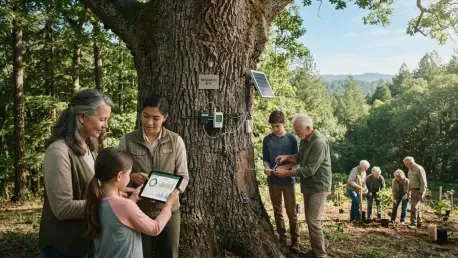
The concept of witness trees serves as the cornerstone of this research, identifying old-growth oaks that have stood for centuries as silent observers of time. Through the science of dendrochronology, or tree-ring dating, researchers discovered that many oaks on the university campus predate European settlement, with some taking root more than 250 years ago. These legacy trees are treated as living archives, holding within their rings a physical record of the environmental and social shifts that have shaped the Pacific Northwest over the generations. The study of these rings provides more than just a timeline; it offers a biological narrative of droughts, fires, and changing climate patterns. By identifying these specimens within modern landscapes like parking lots and campus greens, the program bridges the gap between historical data and present-day reality, allowing students to physically touch the history of the land they inhabit every day and understand its long-term biological resilience.
By studying these specimens, students gain a direct connection to the era of Kalapuya fire management, an Indigenous technology used to cultivate the landscape long before the arrival of settlers. Bringing cross-sections of these fallen giants into the classroom allows for a multidisciplinary approach to history, where abstract concepts of land use become visible and tangible. This bridge between the past and the present helps the community understand the transition from Indigenous stewardship to the semi-industrial transformation of the region, grounding modern conservation in a deep historical context. It is not merely an exercise in botany but a lesson in social justice and cultural heritage that challenges traditional academic boundaries. This specific focus on the Oregon white oak encourages a perspective that values the land as a continuous witness to human activity, urging a more respectful and informed approach to current environmental management and urban planning efforts in the valley.
Community Engagement: Transforming Climate Despair into Action
One of the most significant themes in this pedagogical approach is the rejection of climate despair in favor of hope as an action. Recognizing that students can feel overwhelmed by the scale of environmental crises, the established frameworks for engagement allow anyone to participate in conservation regardless of their expertise. This philosophy is best exemplified by Growing Oaks, a student-led initiative that moves beyond simple land acknowledgment and into what is termed land action. By germinating acorns into saplings, students and volunteers actively work to restore the local ecosystem one tree at a time. This process turns a passive classroom experience into an active contribution to the planet’s future, providing a psychological antidote to the paralysis often caused by global ecological concerns. This model of engagement demonstrates that individual and group efforts can produce measurable benefits, reinforcing the idea that local stewardship is a vital component of successful global health outcomes.
The impact of these efforts extends far beyond the campus borders, influencing local governance and regional biodiversity in significant ways. The Growing Oaks program sets ambitious goals, such as planting 11,000 new trees annually and contributing hundreds of volunteer hours to native plant nurseries across the region. This initiative has even played a role in shaping municipal tree codes in the city of Salem, proving that student-led academic projects can lead to real legislative change. Through these activities, the act of planting a tree becomes a civic duty that strengthens the bond between the university and the broader community. Furthermore, the collaboration with the Grand Ronde Native Plant Nursery highlights the importance of integrating Indigenous knowledge into modern conservation practices. By working alongside tribal experts, the community ensures that restoration efforts are not only biologically sound but also culturally appropriate and deeply respectful of the ancestral heritage of the land.
Cross-Sector Collaboration: Fostering Industry and Scientific Innovation
To ensure the long-term survival of the Oregon white oak, innovative partnerships have been forged with the local wine industry. Because vineyards often occupy the same temperate hillsides where white oaks thrive, collaboration with sustainable winegrowing organizations like LIVE helps vineyard operators manage their environmental footprint effectively. This partnership provides students with professional experience in environmental consulting, showing them how to balance economic interests with ecological preservation. By treating industry and ecology as partners rather than opponents, these programs create a sustainable model for conservation in a working landscape. This approach recognizes that the health of the economy and the health of the environment are interdependent, particularly in regions where agriculture is a primary driver. Students gain insights into how private land management can be leveraged for public ecological benefit, preparing them for careers where navigating such complex interests is essential.
Furthermore, the study of these trees has opened unexpected doors in the field of medicine and genomics, illustrating the vast scope of botanical research. Mentorship of pre-med students has led to projects using oak galls—unusual growths caused by wasps—as a model for understanding tumor biology and cellular anomalies. This multidisciplinary research demonstrates that conservation is a shared language that can connect disparate fields like botany and human medicine. By investigating how these trees respond to parasitic interactions, students explore the fundamental mechanics of cell growth and immune responses. Ultimately, the work at Willamette University serves as a blueprint for how higher education can address global challenges through localized, experiential learning that benefits both the students and the environment they inhabit. This research proves that the Oregon white oak is not just a historical relic, but a vital biological model that can provide breakthroughs in diverse areas of medical and scientific inquiry.
Strategic Pathways: Looking Toward Ecological Resilience
The movement toward witness tree conservation established a clear roadmap for how academic institutions transitioned from passive observers to active ecological agents. This strategy focused on integrating localized historical awareness with modern scientific rigor to create a sustainable framework for regional resilience. Stakeholders discovered that by rooting environmental action in the specific identity of a place, they fostered a more durable commitment from the community. Future initiatives were encouraged to replicate this model by identifying their own local legacy species and building multidisciplinary partnerships across industry and government sectors. The success of these programs demonstrated that the path forward required a blend of Indigenous wisdom, student-led activism, and private enterprise collaboration. These efforts secured a future where botanical research remained a central pillar of civic life, providing a tangible method for communities to mitigate the effects of climate change through deliberate and coordinated land management.