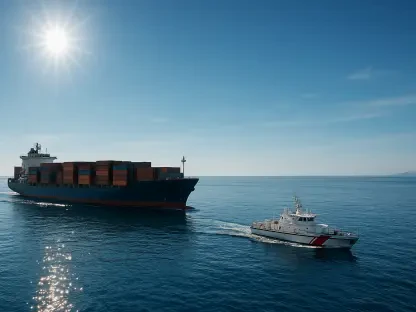

Brussels is increasingly concerned that China’s state-driven industrial overcapacity is being funneled into international markets at prices local manufacturers cannot match. This phenomenon has catalyzed a fundamental transformation in the relationship between the European Union and the People’s Republic of China, which is moving away from the optimism of previous decades toward a more cautious and security-driven rivalry. The strategic pivot was recently solidified through the adoption of a comprehensive recommendation by the European Parliament, which calls for a significantly more assertive stance toward Beijing’s economic and political influence. Led by Belgian MEP Hilde Vautmans and backed by a substantial majority, this legislative move signals a clear mandate for European leadership to prioritize continental sovereignty and economic security. By explicitly linking trade imbalances with deepening geopolitical tensions, the EU is attempting to forge a unified strategy that addresses the complex realities of an increasingly assertive and ideologically divergent global superpower.
Confronting Trade Imbalances and Industrial Overcapacity
The core of the European Parliament’s current concern lies in a dangerously lopsided economic relationship, highlighted by a merchandise trade deficit that has ballooned to roughly €360 billion. Brussels no longer views this widening gap as a natural outcome of market forces or consumer preferences, but rather as a direct consequence of China’s persistent state-driven economic model. By providing extensive government subsidies and favorable credit to domestic firms, Beijing has successfully created massive industrial overcapacity that far exceeds its own domestic consumption needs. This excess production is subsequently redirected into international markets, particularly the European Single Market, at artificial price points that even the most efficient local manufacturers find impossible to match. The resulting distortion threatens the long-term viability of the continent’s industrial base, prompting calls for a more protective and proactive approach to trade governance within the European Commission.
The automotive sector has emerged as the primary theater for this intense economic friction, particularly regarding the rapid expansion of battery-electric vehicles. As Chinese manufacturers aggressively grow their European footprint, the EU has moved beyond mere rhetoric to implement tangible tariffs designed to counter what it describes as unfair competitive advantages rooted in state support. This shift underscores a new and urgent demand for reciprocity, signaling that the era of unrestricted, open-door access for Chinese goods while European firms face barriers in the East is effectively ending. Beyond the immediate crisis in car manufacturing, the Parliament has identified chemicals, heavy machinery, and various renewable energy technologies as high-risk sectors. These areas require robust trade defense measures to prevent a hollowing out of European green-tech industries, which are considered vital for the continent’s competitive edge and for achieving long-term sustainability goals.
The Intersection of Trade and Global Security
A significant element of the new policy recommendation is the explicit and public link between trade relations and European security, specifically concerning the ongoing conflict in Ukraine. The European Parliament has expressed deep frustration with Beijing’s stance of pro-Russia neutrality, pointing to a continuous flow of dual-use technologies and critical industrial components from China to the Russian Federation. These materials, which include advanced microchips, high-end sensors, and specialized machinery, have proven vital for sustaining the Russian military-industrial complex and allowing Moscow to bypass many of the existing Western sanctions. The EU’s stance is hardening significantly, with a clear and unified message emerging from Strasbourg that China cannot realistically expect a stable or friendly economic relationship while simultaneously providing a technological lifeline to a state that is actively undermining the core of European security and stability.
By connecting economic policy to China’s influence over Moscow, the EU is attempting to utilize its substantial market power as a form of diplomatic leverage. The objective of this strategy is to pressure Beijing into using its unique and close relationship with the Kremlin to bring an end to the invasion of Ukraine and restore international law. This approach reflects a growing consensus among European policymakers that regional security is now indivisibly linked to the preservation of the global order. Consequently, the EU is no longer willing to treat its commercial interests and its geopolitical concerns as separate, siloed entities, marking a more realistic and occasionally confrontational phase in its foreign policy architecture. This integration of trade and security tools suggests that future economic agreements will be increasingly contingent upon Beijing’s adherence to international norms and its role in resolving global security crises.
Defending Stability in the Taiwan Strait
The strategic importance of Taiwan represents a third pillar of the hardening stance of the European Union, as the Parliament steps up its defense of the regional status quo. While the EU officially maintains its One China policy, the new legislative recommendation explicitly states that any unilateral change to Taiwan’s status through force or coercion is entirely unacceptable to European interests. This firm position is fueled by a combination of shared democratic values and deeply pragmatic economic necessities, as Taiwan remains the world’s primary source of advanced semiconductors. These chips are the essential components for nearly every modern European industry, ranging from high-end automotive manufacturing to the backbone of telecommunications infrastructure. Any disruption in the Taiwan Strait would have immediate and devastating consequences for the European economy, making the security of the region a direct domestic concern for all member states.
A potential conflict or blockade in the Taiwan Strait would result in a catastrophic collapse of global supply chains, paralyzing major portions of the European industrial landscape overnight. To mitigate this significant risk, the Parliament is calling for deeper and more practical cooperation with Taiwan in specific areas such as supply-chain security, research initiatives, and the protection of critical technology. This de-risking effort aims to reduce the vulnerability of the European market to potential aggression by diversifying its partnerships throughout the broader Indo-Pacific region. By strengthening ties with various democratic actors and expanding trade agreements with reliable partners, the EU seeks to protect its industrial lifeblood from the volatility inherent in cross-strait tensions. This strategic shift represents a move toward a more resilient economic framework that prioritizes security over short-term cost savings in the global supply chain.
Strategic Integration: Navigating Unity and Future Steps
The implementation of this more assertive China policy encountered significant hurdles as various member states attempted to balance their national economic interests with the broader European agenda. Larger nations like Germany and France, possessing extensive industrial ties and multi-billion-dollar investments in the Chinese mainland, initially expressed caution regarding aggressive trade measures that could trigger retaliatory actions. This period required intensive internal diplomacy to align the strategic goals of the twenty-seven member states, ensuring that smaller nations with different risk profiles were also protected under the new security architecture. The resulting consensus provided the European Commission with the necessary leverage to approach Beijing from a position of collective strength. This internal cohesion proved vital for establishing a unified front, signaling to international partners that the era of fragmented European foreign policy was replaced by a more disciplined approach.
Ultimately, the strategic shift necessitated a series of actionable next steps designed to safeguard the European market against future geopolitical volatility. Policymakers prioritized the acceleration of the Global Gateway initiative to secure critical mineral supplies and reduce dependence on a single external source. They also implemented more robust investment screening processes to protect sensitive sectors, such as quantum computing and advanced biotechnology, from foreign acquisition. This proactive stance allowed the European Union to transition from a reactive posture to one characterized by strategic foresight and industrial resilience. By investing in domestic high-tech manufacturing and fostering deeper ties with like-minded democracies in the Indo-Pacific, the continent established a more secure foundation for its prosperity. These measures ensured that Europe remained a formidable actor, capable of defending its democratic values and interests in a competitive global environment.